
Beyond the Digital: Automating Workflows with Physical Services and Social Wisdom
6443_Optimizing Service Selection in Dynamic Workflow Composition Using Social Media to Develop Recommendations.
The paper introduces a framework for automating workflow composition by integrating physical and web services (SOAP and REST) through a generalized semantic service description. It uniquely leverages social media signals, such as Facebook "likes" and Yelp ratings, to provide data-driven recommendations for service selection within dynamic business processes.
TL;DR
Modern business processes are messy hybrids of API calls and physical actions, yet most automation tools only "speak" SOAP. This paper bridges the gap by introducing a generalized semantic service description that treats physical resource changes (like moving a package) the same as data updates. Crucially, it moves beyond functional matching by using social media analytics (Facebook/Yelp) to recommend the highest-quality service providers for any given workflow.
The "Invisible" 82%: Why SOA is Stalling
For years, Service-Oriented Architecture (SOA) promised a world where software could automatically stitch together business processes. However, the authors point out a glaring reality check: while SOAP-based services have machine-readable maps (WSDL), they only represent about 18% of the web. The remaining 82%, mostly RESTful, are "blind" to automated systems.
More importantly, most "business processes" aren't just code. A medical exam requires a physical doctor; a treatment might require a physical delivery. Existing models treat these as "black boxes" or manual interrupts rather than first-class services that can be optimized or substituted.
Methodology: Mapping State Changes and Social Trust
1. The Generalized Service Model
The core innovation is a new OWL-based description that doesn't just look at inputs and outputs, but at Resource State Changes.
- Physical services: Invoking a courier changes the state of a "Package" resource from "At Warehouse" to "At Customer."
- Electronic services: A weather API changes the state from "Unknown Forecast" to "Known."
By abstracting everything into Operation, Resource, and StateChange, the system can compare a physical mail delivery to an electronic email report as potential substitutes in a workflow.
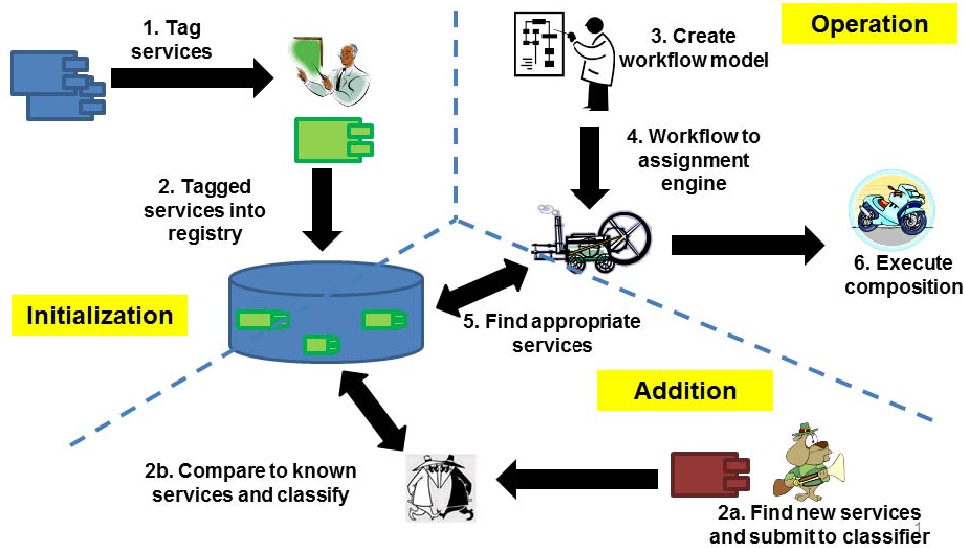
2. The Social Recommendation Engine
Technical matching only identifies who can do a task; social media identifies who should do it. The paper explores two metrics:
- Volume-based (Facebook "Likes"): Captures brand awareness and general popularity. The authors propose a formula to balance the "number of likes" against the "number of providers" to avoid penalizing smaller, specialized workflows.
- Sentiment-based (Yelp Stars): Provides a more granular 1-5 star scale. This allows the system to factor in dissatisfaction—a "dislike" signal that binary systems lack.
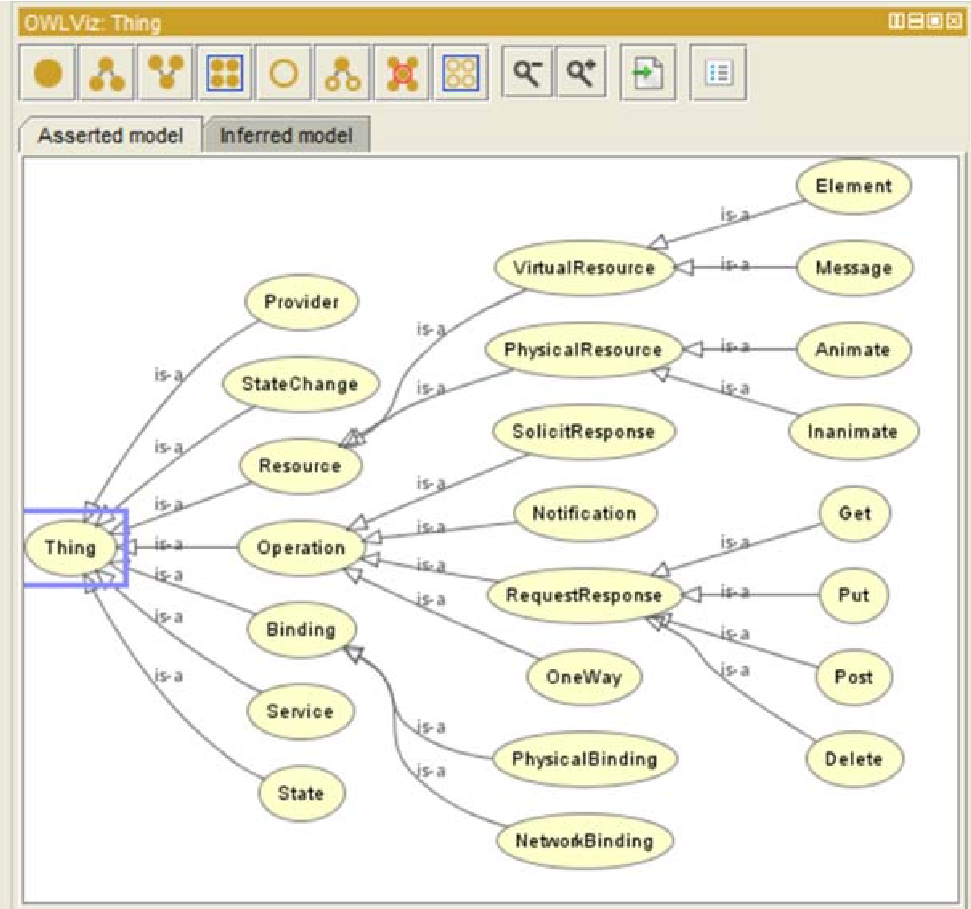
Experimental Insights
The authors validated their model by mapping real-world SOAP and REST services. They discovered:
- The Identity Paradox: Social media handles (like a Facebook Page ID) often don't match legal business names, necessitating a "Social Media Identifier" field in the service description.
- Privacy Bottlenecks: While the "social graph" is powerful, privacy restrictions limit the ability to see what a user's friends like, which is often the most trusted form of recommendation.
- Geography Matters: For physical services, Yelp’s location-aware data was found to be more useful than global social networks for providing context-aware workflow suggestions.

Critical Analysis & Future Outlook
Takeaway: This work transitions workflow management from a purely technical "plumbing" problem to a "Social-Technical" optimization problem. By quantifying the "Effect" of a service rather than just its data schema, it opens the door for truly hybrid automation.
Limitations: The reliance on public APIs for social data is a vulnerability. As platforms like Facebook and Yelp close their "walled gardens," programmatic access becomes harder. Furthermore, the model does not yet account for "review spoofing" or "rating inflation," where a 5-star rating might be bought rather than earned.
Future Work: The next frontier is intent-based composition—where a user simply states "I need a medical checkup and treatment," and the system uses underlying ontologies to discover, rank, and execute every electronic and physical step required without a pre-defined template.