
OriHime: Breaking the Walls of Isolation for Brain Injury Survivors via Telepresence
The telepresence avatar robot OriHime as a communication tool for adults with acquired brain injury: an ethnographic case study
This ethnographic case study explores the use of the OriHime telepresence avatar robot as a social communication tool for adults with Acquired Brain Injury (ABI). By deploying OriHime at a rehabilitation center, researchers facilitated remote participation for home-bound patients, ultimately demonstrating that telepresence can bridge social isolation and motivate physical reintegration into rehabilitation communities.
TL;DR
Acquired Brain Injury (ABI) often leaves survivors trapped in a cycle of isolation. This study investigates OriHime, a telepresence avatar robot, as a bridge between home-bound patients and rehabilitation communities. By allowing patients to "inhabit" a robot at a center, the research proves that digital presence can trigger real-world motivation, leading at least one patient to physically re-enter society.
The Hidden Barrier: Beyond Physical Disability
The struggle of ABI is not just physical—it is deeply psychosocial. Survivors often feel "abnormal" or "handicapped," leading to a retreat from social circles. Current rehabilitation models require patients to make the leap from the safety of home to the unknown environment of a center—a leap often too large for those suffering from chronic fatigue or depression.
The authors' insight was simple yet profound: What if we could lower the cost of presence? By using an avatar, participants can "scout" the social environment anonymously, reducing the anxiety of being perceived as different.
Methodology: The Robot as a Social Proxy
The study utilized an exploratory ethnographic approach, placing the OriHime robot within the Aalborg Rehabilitation Club (ARC).
The Tech Stack
- The Avatar: OriHime (25cm height), capable of nodding, waving, and "clapping."
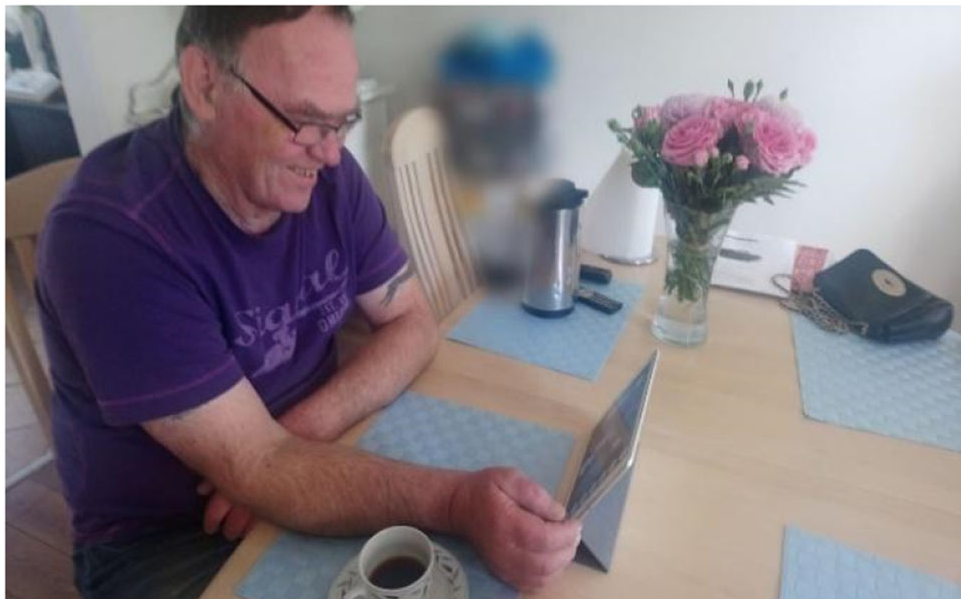
- The Interface: A tablet app that allows the user to see through the robot’s eyes and control its gestures.
- The Mobility: A mobile roller cabinet and wooden box to keep the robot at human eye level.

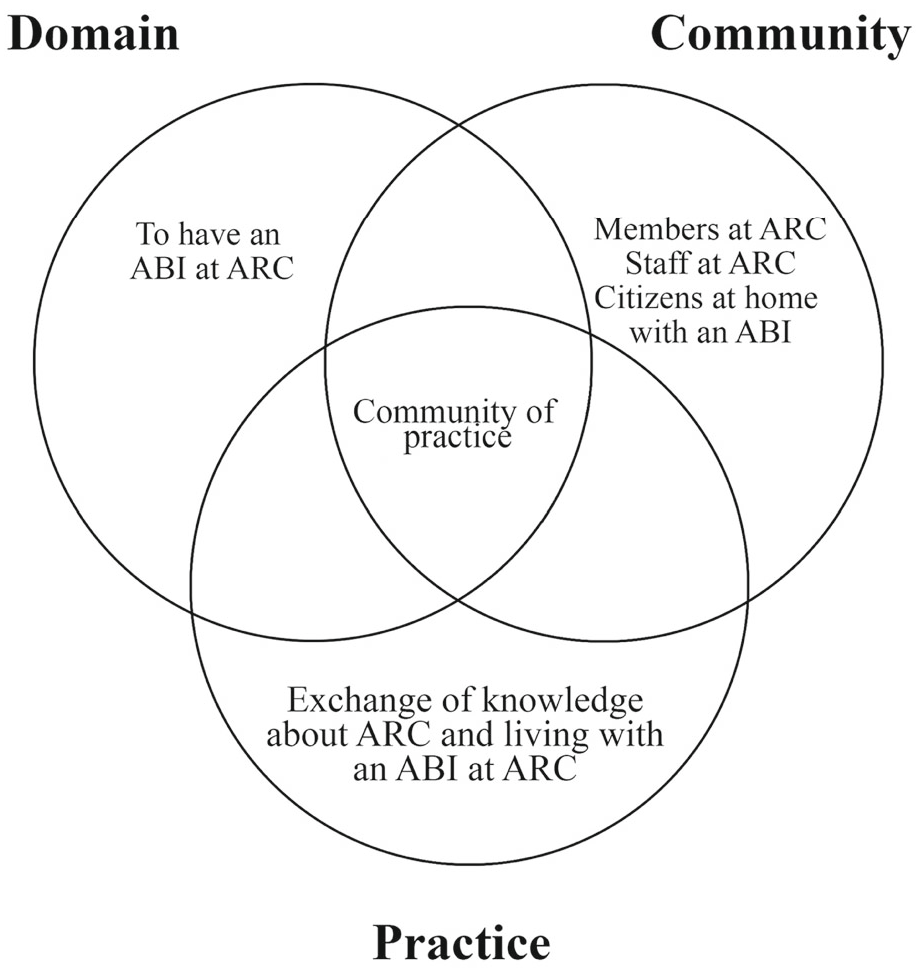
The researchers used Wenger’s Community of Practice framework (see below) to analyze how the robot facilitated three core elements: Domain (shared ABI experience), Community (relationships), and Practice (shared activities like knitting or cooking).
Key Insights: Why "Robot Presence" Beats "Video Calls"
Standard video conferencing (like FaceTime or Skype) is often exhausting for ABI patients because it demands constant eye contact and verbal response. This study found two unique advantages of OriHime:
- Valuing Non-Verbal Interaction: Patients loved that they could "clap" or "wave" using the robot's arms. For those struggling with aphasia or altered voices, these predefined robot gestures allowed them to participate without the stress of speaking.
- The "Safety" of Anonymity: Unlike a video call where your face is visible, the robot is an avatar. This anonymity allowed home-bound patients to observe the "culture" of the club—including hearing jokes and seeing ADL (Activities of Daily Living) in action—without feeling "watched."
Results and Social Impact
The results were overwhelmingly positive in terms of motivation.
- Psychological Comfort: One female participant noted that seeing the ARC visually through OriHime made her "calmer" and ready to visit when she felt physically up to it.
- Physical Reintegration: The ultimate success metric—one patient (C5) officially joined the club physically after a single session, citing her interest in "one-handed knitting" she discovered through the robot.
Critical Insight & Limitations
While the patients thrived, the Mentors (those at the center) faced a learning curve. They reported that talking to a plastic robot was initially "strange" due to the lack of human facial expressions. This suggests that while avatars protect the sender, they must be designed to give better feedback to the receiver to ensure a balanced social exchange.
Furthermore, technical issues like "network-induced lag" remain a barrier to the "seamless presence" required for deep social bonding.
Conclusion
OriHime is more than a toy; it is a social prosthetic. It allows individuals with brain injuries to rebuild their social "muscles" in a safe, controlled environment. Looking forward, the study suggests that integrating telepresence with tailored social worker support could become a standard path for chronic rehabilitation.