
Toward Overcoming Culture and Skill Hurdles: The "Workshop" Approach to HCI
Toward overcoming culture, skill and situation hurdles in Human-Computer Interaction
The paper introduces a formal methodology for designing "Electronic Documents" (e-documents) that overcome cultural and skill hurdles in Human-Computer Interaction (HCI). It leverages a system-theory-based model and the BANCO prototype—an XML/SVG-driven framework—to create adaptive hierarchies of "workshops" tailored to specific professional communities (e.g., glaciologists vs. administrative clerks).
TL;DR
This seminal work addresses a fundamental friction in Human-Computer Interaction: the clash between a user’s professional culture and a system’s rigid computational logic. By modeling interfaces as Electronic Documents (e-documents) and using a hierarchy of Workshops, the authors provide a framework where tools adapt to the user’s specialized notation rather than forcing the user to learn "computer-speak." This is achieved through a robust XML-based architecture called BANCO.
Problem & Motivation: The Alienation of the End-User
Most software systems are designed with a "one-size-fits-all" mentality or via general-purpose usability metrics. However, professional communities (scientists, engineers, clerks) have evolved their own inscriptions—specialized notations, charts, and terminologies—over decades.
The authors argue that when a system forces a glaciologist to use standard WIMP (Windows, Icons, Menus, Pointers) interfaces that don't respect their domain’s graphical language, it breaks their "continuity of reasoning." The hurdle isn't just technical; it's cultural.
Methodology: The "Artisan Workshop" Metaphor
To solve this, the paper refines the PCL (Pictorial Computing Laboratory) model. It views the user not as a "data entry clerk" but as an artisan.
1. The Interaction Model
The system formalizes interaction as a sequence of Visual Sentences (vs). Each vs is a triple:
- i (Image): What is on the screen.
- d (Description): The underlying computer logic.
- <int, mat>: Functions that map the image to logic (interpretation) and vice versa (materialization).
2. Characteristic Patterns (CP)
The core atom of this methodology is the Characteristic Pattern. It ensures that a "pixel structure" recognized by a scientist (e.g., an ablation area on a glacier map) is directly linked to the specific scientific computation required for that area.
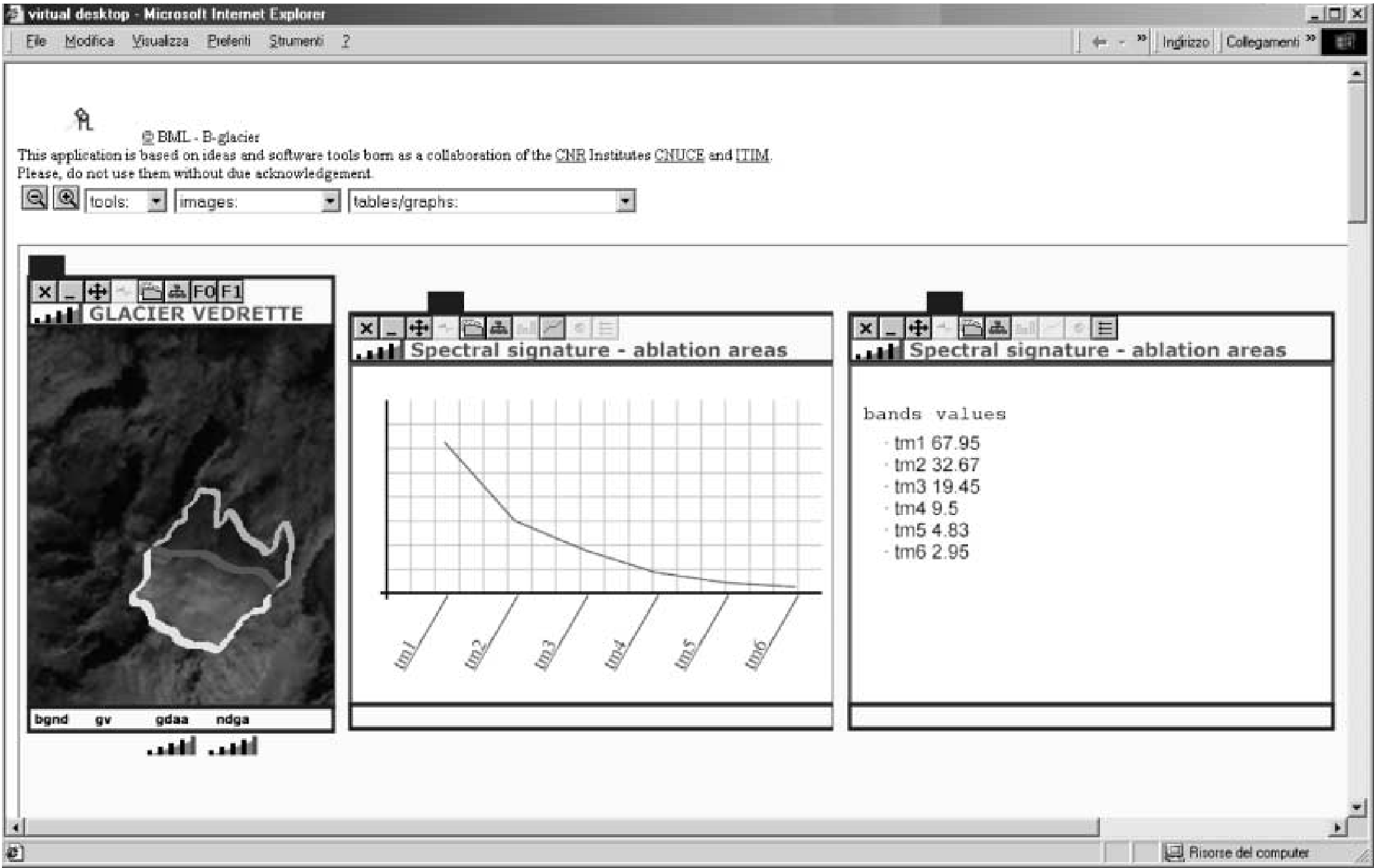 Figure 1: The formal transformation of Visual Sentences.
3. The Hierarchy of Workshops
The paper’s most innovative contribution is the Hierarchy of Workshops. Instead of a single developer building a single app, they propose:
- Software Engineer Workshop: Tools for developers.
- Manager Workshop: Tools for domain experts (e.g., a Senior Glaciologist) to design "Application Workshops."
- Application Workshop: The final tool used by specialized staff, containing only the notations they understand.
Experiments & Results: Validating with BANCO
The authors implemented this via BANCO (Browsing Adaptive Network for Changing user Operativity). Using XML and SVG, BANCO allows for "Local Semantics."
In a case study involving glaciological data, they showed how the same data repository could be presented differently to a Photo-interpreter (who needs spectral analysis tools) and an Environmental Agency Clerk (who needs data summary tables), simply by changing the "Workshop" configuration.
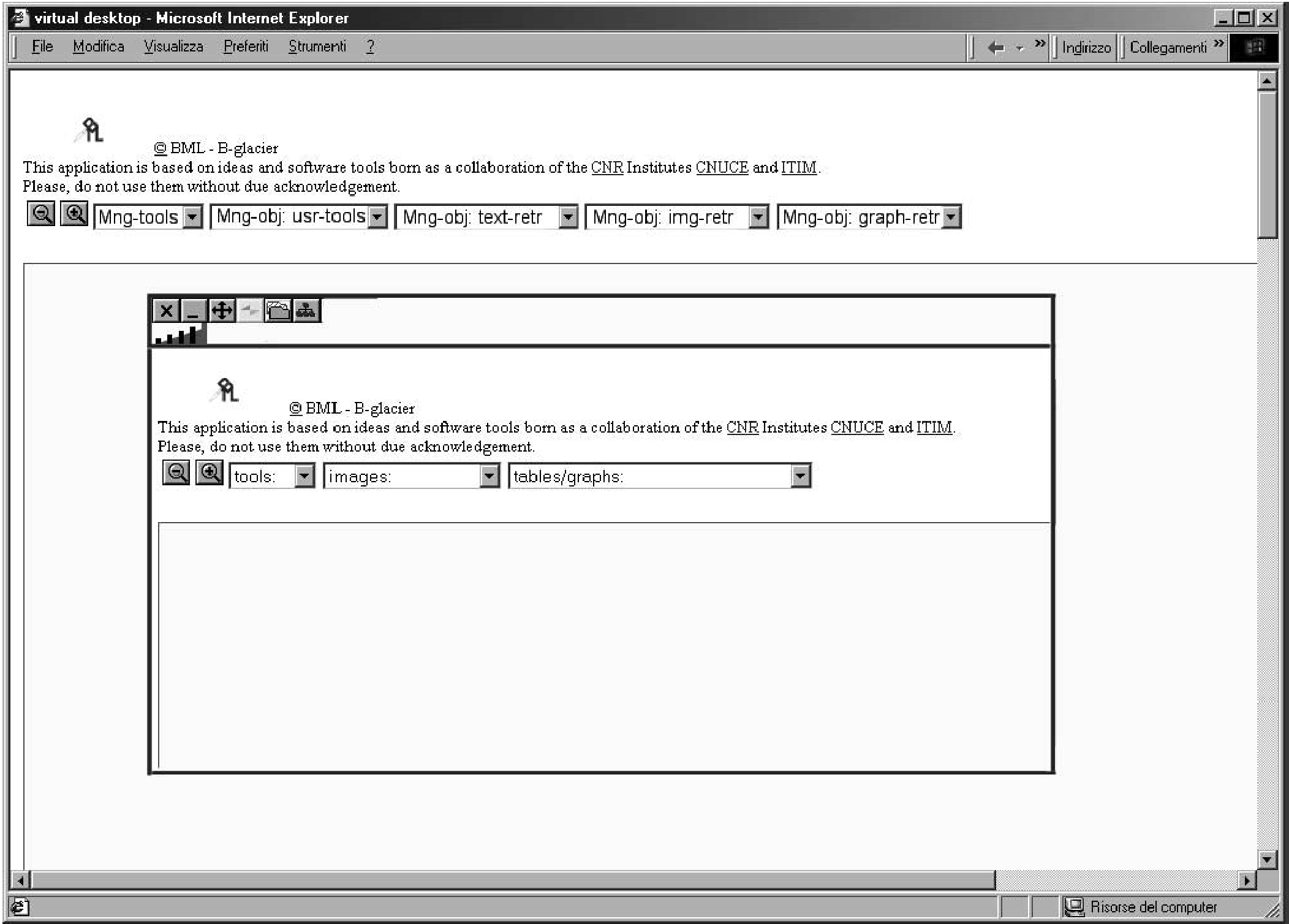 Figure 2: Differentiation between B-glacier (expert tool) and B-monitore (clerical tool).
Key Result: By moving the adaptation logic to the client side (using a 50KB scripting kernel), the system achieved high responsiveness and allowed users to customize their "bench" (workspace) in real-time.
Critical Analysis & Conclusion
The "Why" Behind the Success
The methodology works because it acknowledges that notation is a tool of thought. By elevating the domain expert to a "Manager" who can author the interface, the software engineer is relieved of the impossible task of understanding every professional niche.
Limitations & Future Work
- Technological Context: While XML/SVG were state-of-the-art in 2002, modern applications would likely use React/Vue with JSON. However, the logic of decoupling materialization from semantics remains valid.
- Multimodality: The paper touches on haptic (touch) and aural (voice) signals. The "hapxel" concept (haptic equivalent of a pixel) is an intriguing theoretical framework that warrants further exploration in modern VR/AR contexts.
Final Takeaway
This paper serves as a blueprint for End-User Development. It suggests that the future of HCI is not about more "intuitive" global designs, but about providing meta-tools that allow experts to build their own digital workshops.