
A Decade of Cultural HCI: Why We Are Still Scratching the Surface
An Overview of a Decade of Journal Publications about Culture and Human-Computer Interaction (HCI)
This paper presents a comprehensive meta-analysis of high-level journal publications regarding Culture and Human-Computer Interaction (HCI) from 1998 to 2008. By reviewing 27 selected studies, it categorizes the evolution of the field and critiques the prevailing reliance on quantitative methods and the Hofstede cultural dimensions model.
Executive Summary
TL;DR: This seminal meta-analysis by Clemmensen and Roese dissects 10 years (1998-2008) of journal-level research at the intersection of Culture and Human-Computer Interaction. It reveals a field dominated by quantitative surveys, a heavy reliance on Hofstede’s dimensions, and a significant bias toward English-speaking participants, even when studying non-Western markets.
Positioning: This work serves as a critical "reality check" for the HCI community, highlighting that while interest in globalized software has exploded, the academic rigor in defining and measuring "culture" often remains superficial.
The Localization Paradox: Motivation for the Review
As the global economy transitioned from industrial to knowledge-based, system developers faced a new challenge: how to design for users with vastly different cognitive styles, taboos, and navigation behaviors. However, the authors noticed a disconnect between the need for deep cultural understanding and the methods used to achieve it.
The authors set out to test whether the sub-community had matured, or if it was still relying on "convenience sampling" (e.g., using international students who speak English as proxies for their home cultures).
Methodology: A Meta-Analysis of 10 Hypotheses
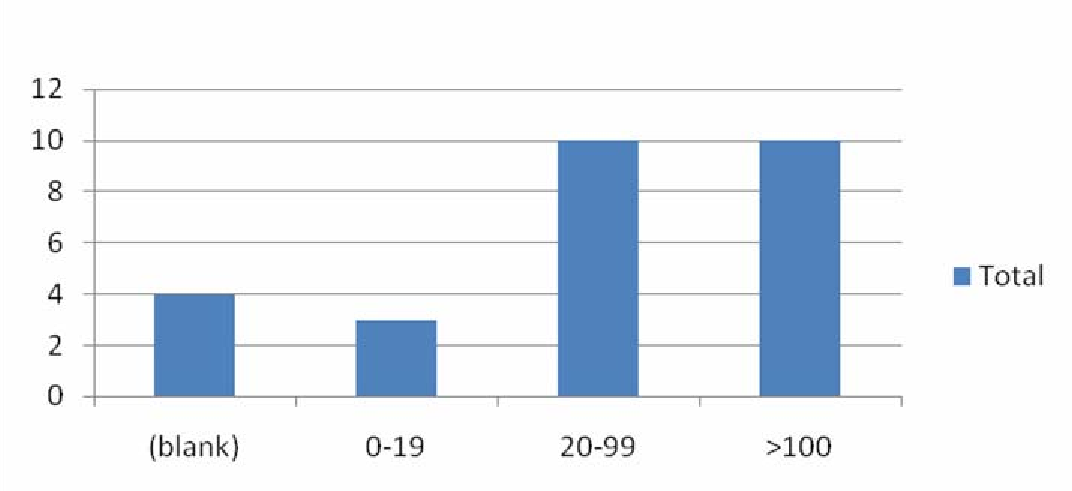
The researchers screened 9 major HCI journals, finding only 27 papers that met strict criteria for "full journal papers" focusing on cultural usability. They analyzed these through 10 hypotheses, looking for the "Who, What, and How" of cultural research.
Key Framework: The Evolution of Themes
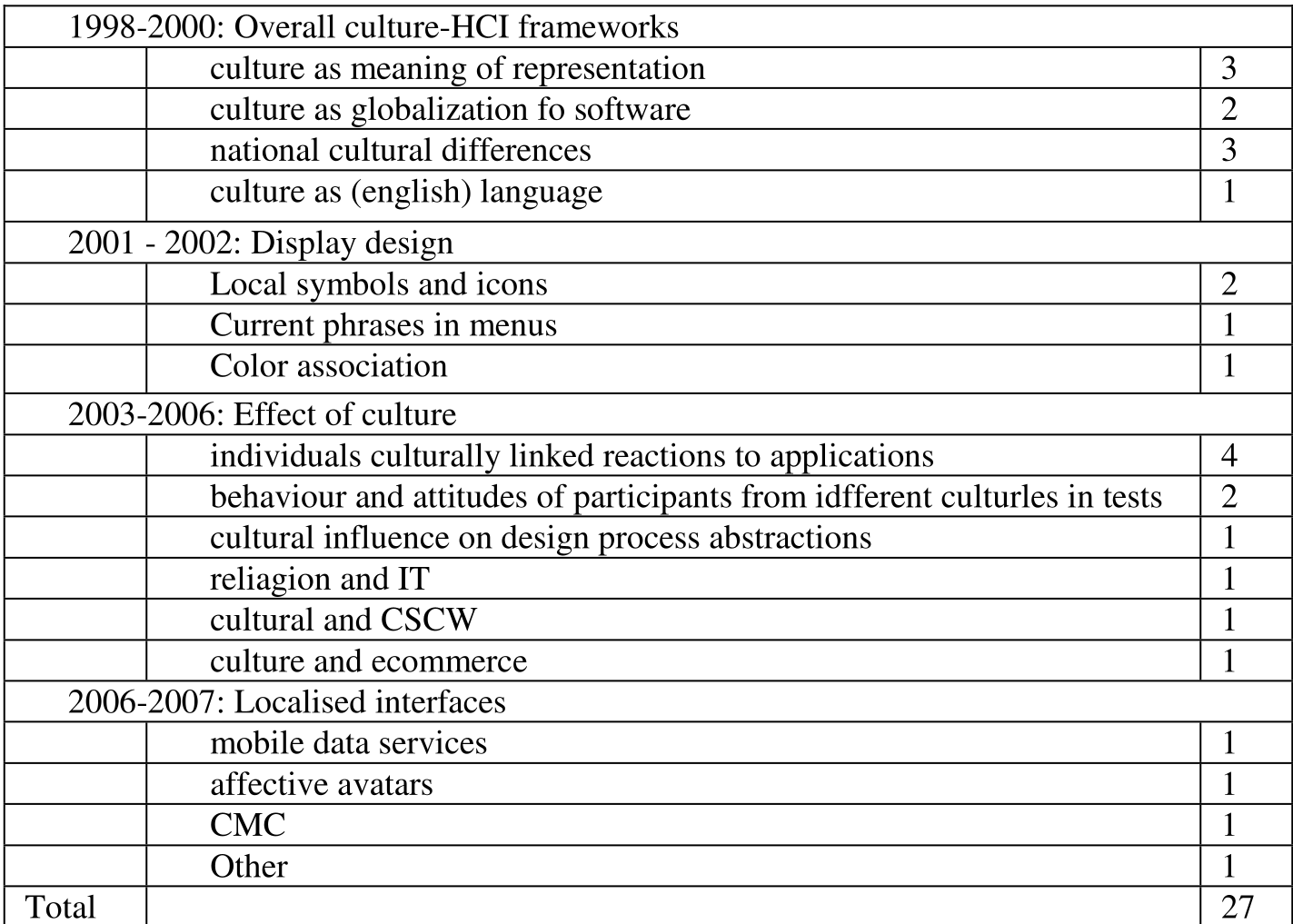
The authors identified four distinct eras in the decade they studied:
- 1998-2000: Establishing frameworks (Culture as meaning/representation).
- 2001-2002: Focus on Display Design (Icons, colors, symbols).
- 2003-2006: The "Effect of Culture" (Behavioral and attitudinal shifts).
- 2006-2007: Localized Interfaces (Mobile data services and affective avatars).
Critical Findings: The "Student and English" Bias
The results revealed several systemic weaknesses in the field’s methodology:
- The Quantitative Trap: 74% of studies were quantitative. While easier to scale, they often fail to capture the "Why" behind user behavior—a gap that only qualitative field studies can bridge.
- The Language Barrier: Despite studying diverse cultures (China, India, Thailand), less than 33% of studies allowed participants to use their local language. This introduces a massive selection bias, as participants were often chosen specifically because they could speak English.
- The Model Monopoly: Geert Hofstede’s "Cultural Dimensions" remains the go-to framework. While useful, the authors argue that many researchers use "Culture" as a buzzword without applying any theoretical model at all (nearly 45% of papers).
Experimental Results & SOTA Comparison
The paper highlights that two of the most prestigious journals, Human-Computer Interaction and Transactions on HCI (TOCHI), published zero papers on this topic during the review period. Instead, the journal Interacting with Computers (IwC) emerged as the primary hub for cultural HCI research.
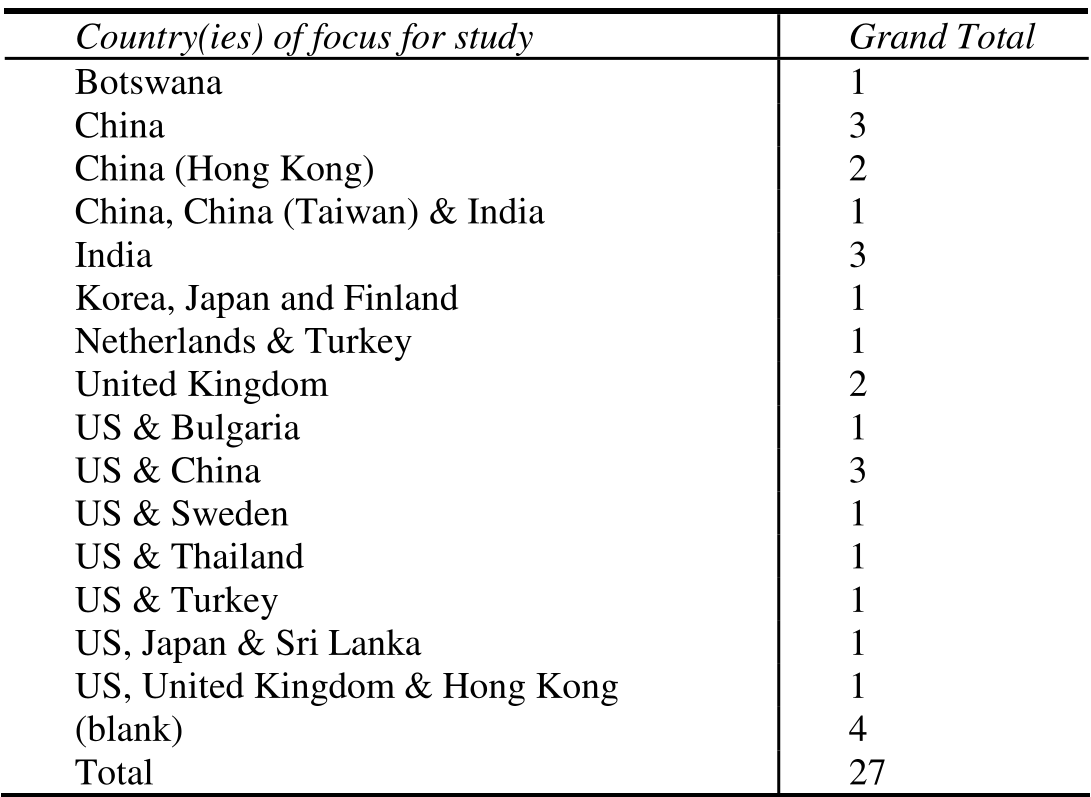
The "SOTA" at the time was moving toward Culture-Centered Design (CCD), which looks at the design process itself rather than just the end product. However, as the table below shows, the focus remained heavily skewed toward the US and China, neglecting much of the Global South.
Critical Analysis & Conclusion
Takeaway for Modern Researchers
This review is a reminder that Methodological Convenience ≠ Scientific Validity. If we only test English-speaking university students, our "Global" design is merely a "Western-lite" design.
Limitations
The study is limited to high-level journals, potentially missing more innovative or "raw" methodologies often found in conference proceedings (like CHI or CHIuXi).
Future Outlook
The authors conclude with a strong recommendation: More qualitative, empirical work. To truly understand how a user in rural India or a worker in Botswana interacts with a system, researchers must leave the lab, hire local moderators, and conduct contextual inquiries in the local tongue. In the age of AI and LLMs, this advice is more relevant than ever—understanding the "Cultural Context" is the final frontier of truly personalized technology.