
Bridging the Digital Persona: A Transfer Learning Framework for Computational CyberPsychology
An Overview of Transfer Learning and Computational CyberPsychology
The paper introduces a conceptual framework for Computational CyberPsychology (CCP), integrating Transfer Learning to predict user psychological traits from web behaviors. It specifically leverages Domain Adaptation and Importance Sampling to address the scarcity of labeled psychological data by "borrowing" knowledge from related digital domains.
TL;DR
Computational CyberPsychology (CCP) aims to decode human personality and mental health through the "digital breadcrumbs" of web behavior. However, the field is plagued by a lack of labeled data. This paper proposes a unified Transfer Learning framework that allows researchers to train models on data-rich environments (like undergraduate social media logs) and successfully apply them to data-poor target populations, effectively solving the "Cold Start" problem in psychological modeling.
The Core Challenge: The "Label Desert" in Psychology
In traditional machine learning, we assume that our training data (Source) and testing data (Target) are Independent and Identically Distributed (IID). In the real world of psychology, this is rarely true.
If you build a model to detect stress levels in undergraduate students, will it work for CEOs? Likely not. The feature distributions—online hours, communication styles, and game-playing habits—shift significantly. Furthermore, getting a CEO to sit through a 2-hour Big Five personality inventory is nearly impossible. This creates a "Label Desert" where we have plenty of raw web logs (Target) but no psychological "ground truth" labels to train on.
Methodology: How Transfer Learning Rescues CCP
The authors propose that instead of abandoning the mismatched data, we should "borrow" knowledge. They define a CCP framework based on three mathematical components:
1. The CCP Transfer Objective
The optimization goal is defined as:
- Part 1 (Supervised Risk): Learning from the few labeled samples in the target domain.
- Part 2 (Transfer Risk): The crucial "bridge." It measures how well we are mapping the source distribution to the target distribution.
- Part 3 (Regularization): Prevents the model from becoming overly complex or overfitting to the source domain.
2. Handling Distribution Shifts
When the features are the same but the behavioral patterns differ (e.g., both groups use email, but one uses it more frequently), the paper suggests Sample Selection Bias correction. By using algorithms like KLIEP (Kullback-Leibler Importance Estimation Procedure), the model can automatically calculate which source samples are most "relevant" to the target domain and give them higher priority during training.
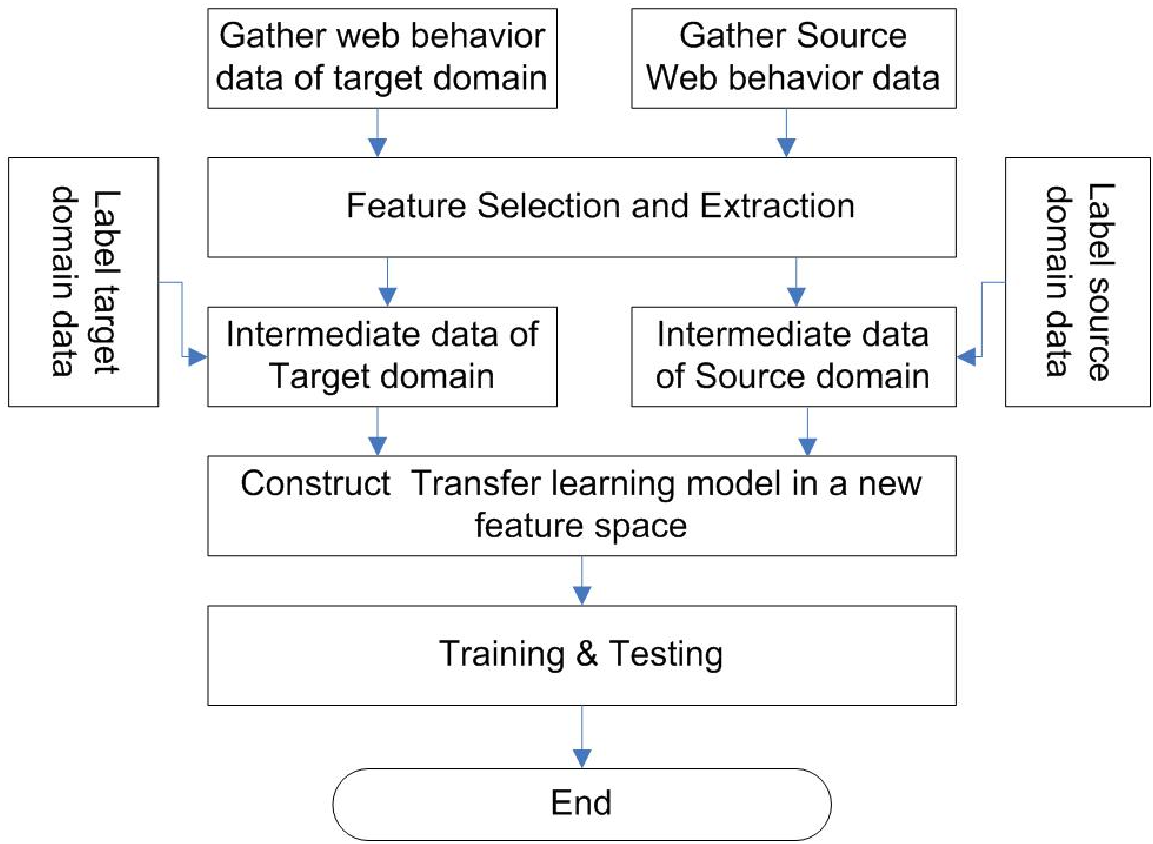 Figure 1: The proposed workflow for CCP, from data collection to cross-domain prediction.
Real-World Applications: SNS vs. Gateways
The paper provides a compelling scenario:
- Source Domain: Social Network Sites (SNS) where thousands of users have taken "just-for-fun" personality quizzes (Plenty of labels).
- Target Domain: Corporate Gateway logs (Zero labels, but highly accurate behavior data).
By using Heterogeneous Transfer Learning, specifically methods like Matrix Factorization, the framework can find a "Latent Space" where common features between SNS interactions and professional gateway usage overlap. This allows the model to predict the personality of a professional user based on patterns learned from social media enthusiasts.
Critical Insight & Conclusion
The true value of this work lies in its transition from qualitative psychology to quantitative engineering. By formalizing the "Transfer Risk," Guan and Zhu provide a roadmap for building non-intrusive, scalable mental health monitoring systems.
Takeaway: We no longer need every user to fill out a survey. If we have a "Source" population that has already done the work, Transfer Learning acts as the mathematical translator that brings those insights into new, unlabeled digital frontiers.
Limitations
- Privacy Ethics: Moving psychological models from one domain to another raises significant consent issues.
- Semantic Drift: The meaning of a "like" or an "email" can change over time, requiring constant recalibration of the transfer function.