
What’s Up: Engineering Spontaneous Social Networks via P2P Overlays
What's up: P2P spontaneous social networking
The paper presents "What’s Up", a peer-to-peer (P2P) platform designed for spontaneous social networking in infrastructure-less environments like conferences and expositions. Built on the SCOPE architecture, it facilitates decentralized VoIP, IM, and community management across diverse operating systems including mobile platforms.
TL;DR
"What’s Up" is a decentralized social networking platform that bypasses the need for centralized servers and stable Internet. Designed for high-density events like conferences, it uses a hierarchical P2P architecture (SCOPE) to provide VoIP, instant messaging, and community management directly over ad-hoc wireless connections.
Background & Positioning
In the era of Web 2.0, social giants like Facebook and LinkedIn redefined connectivity. However, these platforms share a common "Achilles' heel": they are tethered to the cloud. In scenarios like large-scale expositions or emergency zones where Internet access is "collided" or non-existent, these tools become useless. "What’s Up" shifts the paradigm from Centralized-Cloud to Spontaneous-Local, positioning itself as a robust alternative for transient, infrastructure-heavy social environments.
The Problem: The Bottleneck of Centralization
The authors identify two primary pain points in current social networking:
- Infrastructure Dependency: Most networks require a backbone. In a crowded conference hall, Wi-Fi access points often fail, and cellular networks become congested.
- Configuration Friction: Deploying a private, temporary social network for a 3-day event usually involves complex server setups and user registration hurdles.
Methodology: The SCOPE Architecture
The "secret sauce" of What’s Up is the SCOPE (Service Classified Overlay for P2P Environment) architecture. Unlike flat P2P networks where every node is equal, SCOPE adopts a Hierarchical P2P model.
1. Super Nodes (SN)
The system distinguishes between "Client Nodes" (mobile devices with limited power) and "Super Nodes" (laptops with higher compute/storage). Super Nodes handle the heavy lifting of routing and request processing.
2. Service-Classified Sub-overlays
Instead of one massive, messy network, SCOPE organizes "Virtual Sub-overlays" tailored to specific service classes (e.g., one for VoIP, one for Search). This prevents broadcast storms and optimizes lookup times.
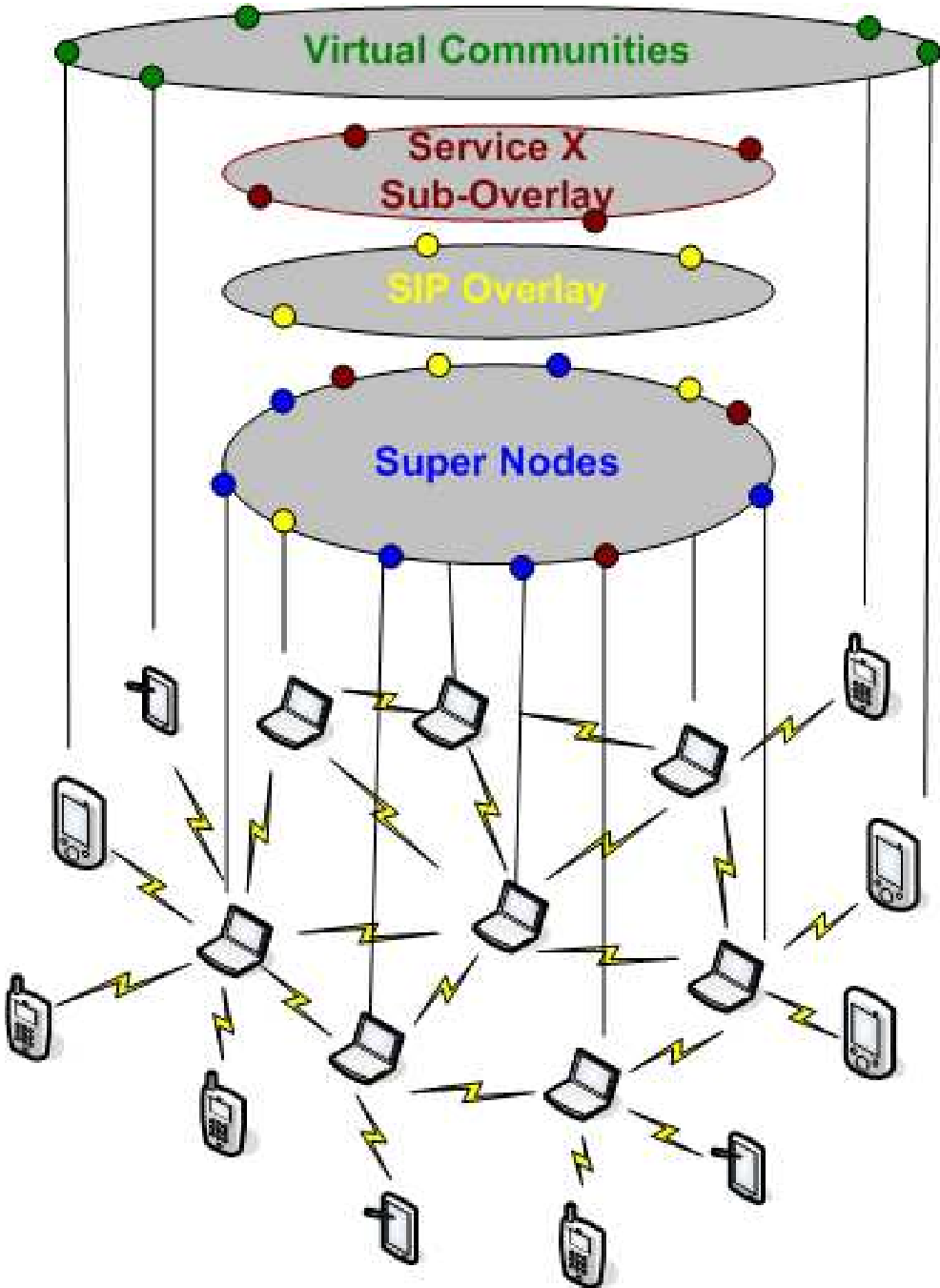 Figure 1: The SCOPE architecture demonstrating the separation of service overlays and the role of Super Nodes.
3. Adapted OpenDHT
By modifying the standard OpenDHT (Distributed Hash Table), the authors optimized the system for Ad-hoc networks, where nodes frequently join and leave (churn). This ensures that even if a peer moves out of range, the "social fabric" remains intact.
Real-World Scenarios & Experiments
The authors demonstrated the platform through a professional conference use case:
- V-Card Sharing: Attendees can exchange business cards via profile-based search without a centralized directory.
- Dynamic Communities: Organizers create sessions as "virtual communities" where attendees receive real-time alerts for talks.
- Interactive Feedback: Built-in polling and commenting allow for "Best Paper" voting directly over the P2P mesh.
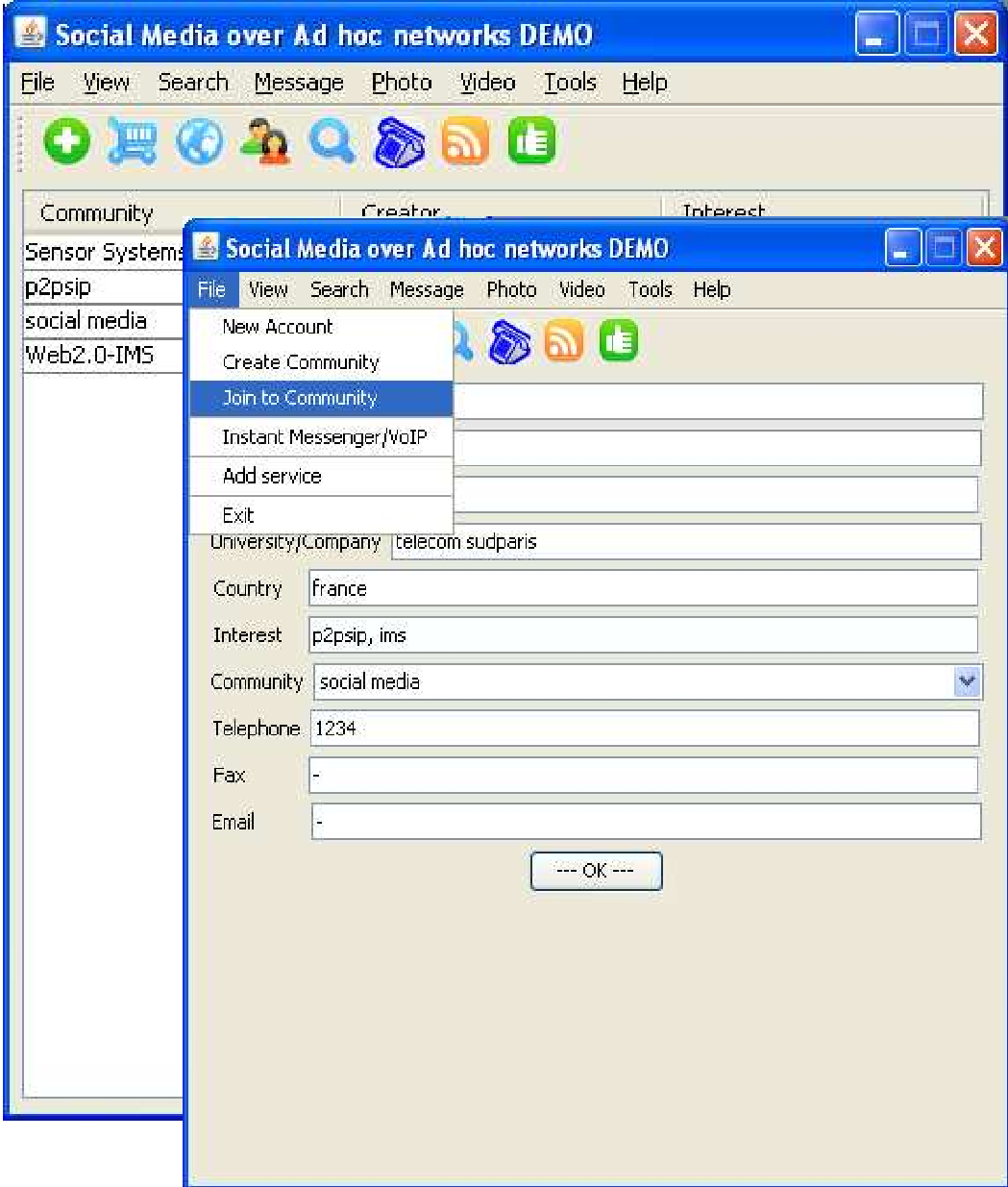 Figure 2: The cross-platform UI of the What's Up agent on mobile and desktop.
The prototype’s ability to run on legacy mobile systems like Symbian and Windows Mobile alongside Linux/Windows highlights its Inductive Bias toward wide-scale accessibility in diverse hardware environments.
Critical Analysis & Conclusion
Takeaway
"What’s Up" successfully proves that high-level social features (VoIP, Feeds, Search) do not require a central authority. By leveraging a hierarchical DHT, the system scales better than traditional broadcast-based ad-hoc networks.
Limitations
A notable bottleneck is the reliance on laptops as Super Nodes. In a modern context, most attendees carry powerful smartphones that could technically act as SNs, yet the 2008-era software constraints limited this role to Windows/Linux machines. Furthermore, security and data persistence in a fully decentralized environment remain open challenges.
Future Outlook
This work predates the modern "Local-first" software movement but provides the foundational P2P logic that modern dApps (Decentralized Applications) often lack. As Web3 and Edge Computing evolve, the SCOPE architecture’s "service-classified" approach remains a highly relevant blueprint for efficient localized networking.