
Pace My Race: Turning Recommender Systems into Virtual Marathon Coaches
Pace my race: recommendations for marathon running
The paper introduces "Pace My Race," a novel in-race recommender system for marathon runners using XGBoost and high-resolution Strava data. It provides real-time finish-time predictions and personalized pacing adjustments at critical milestones (10km, 21km, 30km) to help runners avoid "hitting the wall."
TL;DR
Running a marathon is as much a mental game as it is physical, and "hitting the wall" (a sudden, catastrophic slowdown) is the runner's greatest fear. This paper proposes a real-time recommender system that uses heart rate, cadence, and pace data to predict finish times more accurately than current industry standards. More importantly, it offers adaptive pacing recommendations during the race to guide struggling runners to their best possible finish.
The Problem: The Static Pacing Trap
Most marathon strategies are "set and forget." Runners use formulas like the Riegel predictor before the race to pick a target time. However, once the starting gun fires, everything changes.
Current in-race tech is surprisingly primitive:
- Linear Extrapolation: Most sports watches simply multiply your current average pace by 42.2km. This ignores the inevitable fatigue of the final 10km.
- Lack of Adaptability: If a runner starts too fast, there is no intelligent system to tell them exactly how much to slow down to save their race.
- Context Blindness: Standard trackers don't correlate your heart rate (effort) with your pace (output) to see if you are "over-revving" your engine.
Methodology: Seeing the "Wall" Before You Hit It
The authors leveraged a dataset of 7,931 marathon finishers (via Strava) containing high-resolution metrics.
1. Feature Engineering
Instead of just looking at speed, the model tracks:
- Pace: How fast you are moving.
- Heart Rate (HR): How hard the cardiovascular system is working.
- Cadence: Steps per minute, a proxy for running form and efficiency.
2. The Predictive Engine
The researchers built separate XGBoost models for 500m intervals throughout the race. By using short-term (1km), medium-term (5km), and race-to-date windows, the model identifies "at-risk" signatures—such as a rising heart rate while pace remains constant—which signal an unsustainable effort.
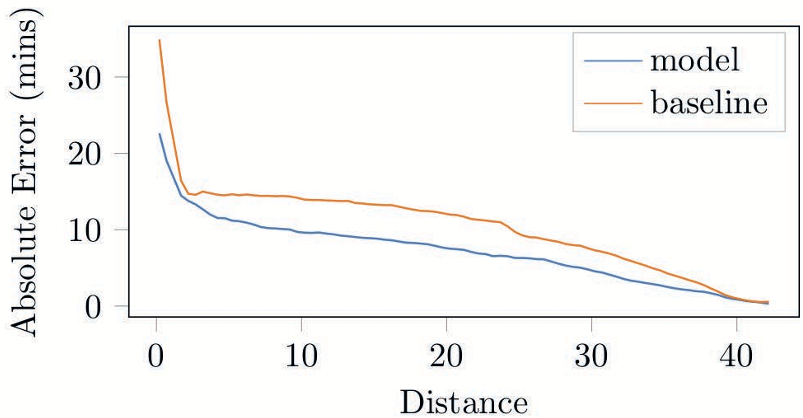 Figure 1: Typical race profiles showing the relationship between Heart Rate, Cadence, and the "Positive Split" slowdown.
Experiments & Results: Outperforming the Baseline
The system was tested against the "Even Pace" baseline (the method used by most race organizers).
- Accuracy: The model improved finish-time predictions by over 4 minutes during the critical middle stages of the race.
- Identifying Slowdown: By using the
tsfreshlibrary for time-series feature extraction, the model could predict a "positive split" (slowing down in the second half) much earlier than traditional methods. - Validation: They proved that their pacing recommendations closely mirrored the strategies of "resilient" runners—those who were predicted to fail but successfully adjusted their pace to finish strong.
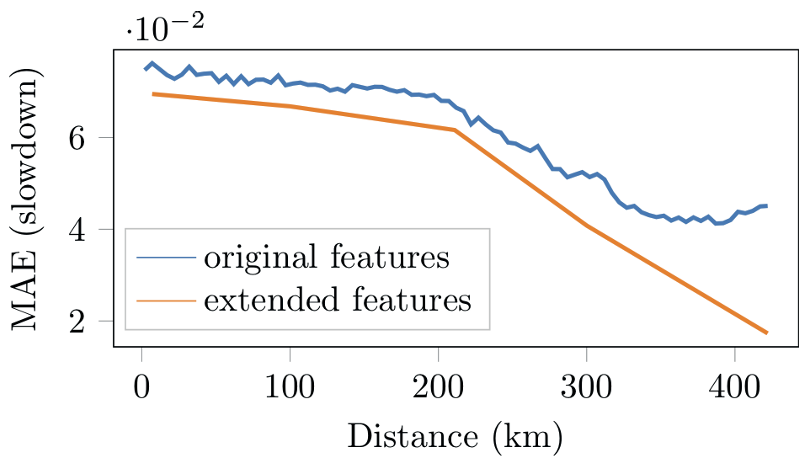 Figure 2: Mean Absolute Error (MAE) of the model vs. the traditional pacing baseline.
The Power of Explainability
A runner is unlikely to follow a "black box" instruction to "Slow down by 10 seconds per km" when they feel good at the 15km mark. To solve this, the authors used the decision paths of XGBoost to provide Explainable AI (XAI):
- “Your heart rate is 5% higher than usual for this pace; slowing down now will save you 10 minutes at the finish.”
- “Similar runners who maintained this cadence saw a breakdown in form after 30km.”
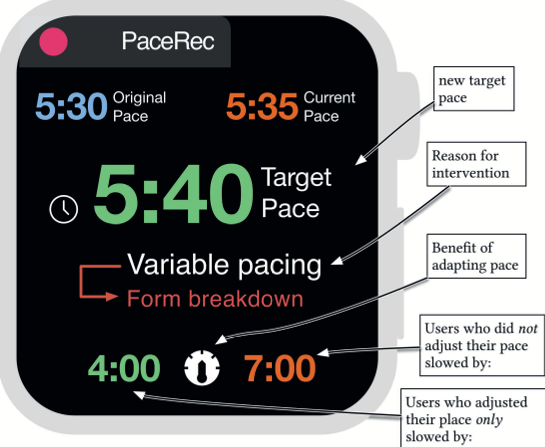 Figure 3: Mockup of the "Pace My Race" recommendation as it would appear to a user mid-run.
Critical Insight & Future Work
The core genius of this work is User-Based Collaborative Filtering applied to biology. By finding "neighbors" (runners with similar HR/Pace profiles), the system can recommend a path already proven successful by someone else in a similar physical state.
Limitations: The current model lacks historical training data. If the system knew a runner's typical "Easy Run" heart rate, it could refine its sustainability predictions even further.
Conclusion: "Pace My Race" represents a shift from passive data logging (Smartwatches as "mirrors") to active coaching (Smartwatches as "mentors"). For the millions of recreational runners who struggle with pacing, this could be the difference between a new Personal Best and a painful walk to the finish line.