
The Cost of a Click: How Income Levels and Monetary Rewards Shape Crowdsourcing Quality
Paid Crowdsourcing, Low Income Contributors, and Subjectivity
This paper investigates the impact of economic demographics on the quality of subjective crowdsourcing tasks, specifically emotion annotation. By comparing contributors from various GDP regions, the study reveals that low-income workers, driven by monetary incentives, tend to provide lower-quality, repetitive results compared to high-income counterparts.
TL;DR
Is more data always better? Not if it's bought for pennies in a subjective market. This research uncovers a troubling correlation in crowdsourcing: workers from low-income regions (GDP < $10K), driven by the pressure of low per-task payments, often resort to "spamming" subjective tasks like emotion annotation. In contrast, high-income contributors provide more diverse and nuanced data, suggesting that the "monetary incentive" is a double-edged sword for scientific integrity.
Background: The Invisible Labor of AI
Most of our modern AI models are built on the backs of "crowd workers"—thousands of individuals who label text, images, and audio. However, the economics are lopsided. With a median wage of roughly as negligible, it represents a more significant incentive in lower GDP regions. But does being "eager to work" translate to "high-quality data"?
The "Joy" Spam: Why Subjective Tasks are Broken
In objective tasks (e.g., "Is there a car in this image?"), requesters can use "Gold Standard" questions with known answers to filter bad actors. But in subjective tasks, such as emotion annotation, there is no absolute "truth."
The authors observed a startling trend:
- The Behavior: Workers from low-income countries were labeling almost 90% of random terms as "Joy" or "None."
- The Logic: It is the fastest path to payment. By selecting the same radio button repeatedly, a worker maximizes their hourly rate, even if the data becomes scientifically useless.
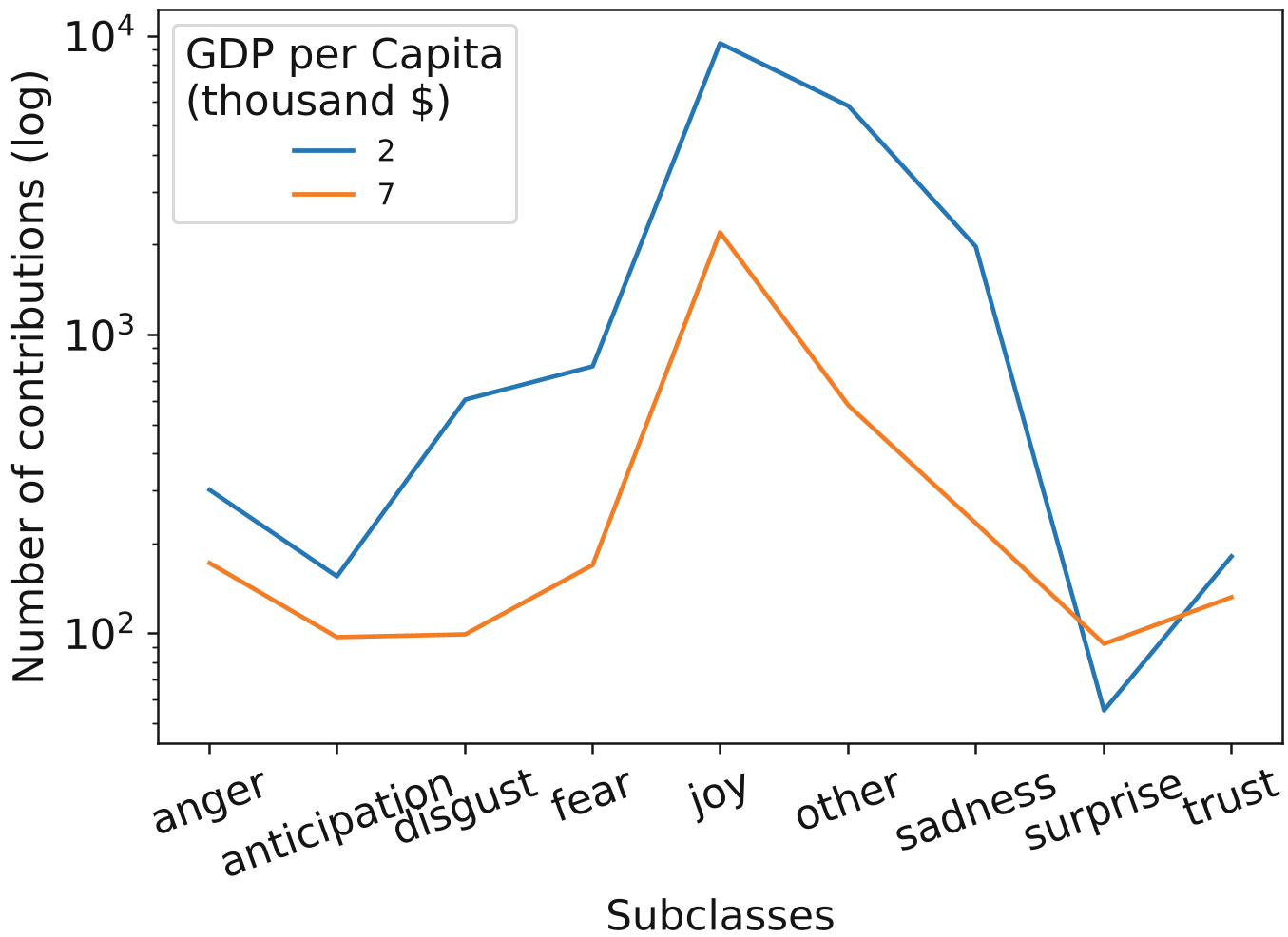 Figure 1: The task interface allows for easy but potentially dishonest rapid-fire selection.
Methodology: High-Income vs. Low-Income Validation
To test the hypothesis that income drives this "dishonesty," the researchers ran a controlled experiment. They compared the initial results with a new group consisting only of workers from countries with a GDP per capita higher than $30,000.
Key Metrics:
- Distribution Control: They set a threshold of 40%. If a worker labeled more than 40% of their tasks with a single emotion, they were flagged as a potential spammer.
- Majority Agreement: They measured how many terms received an 80% consensus.
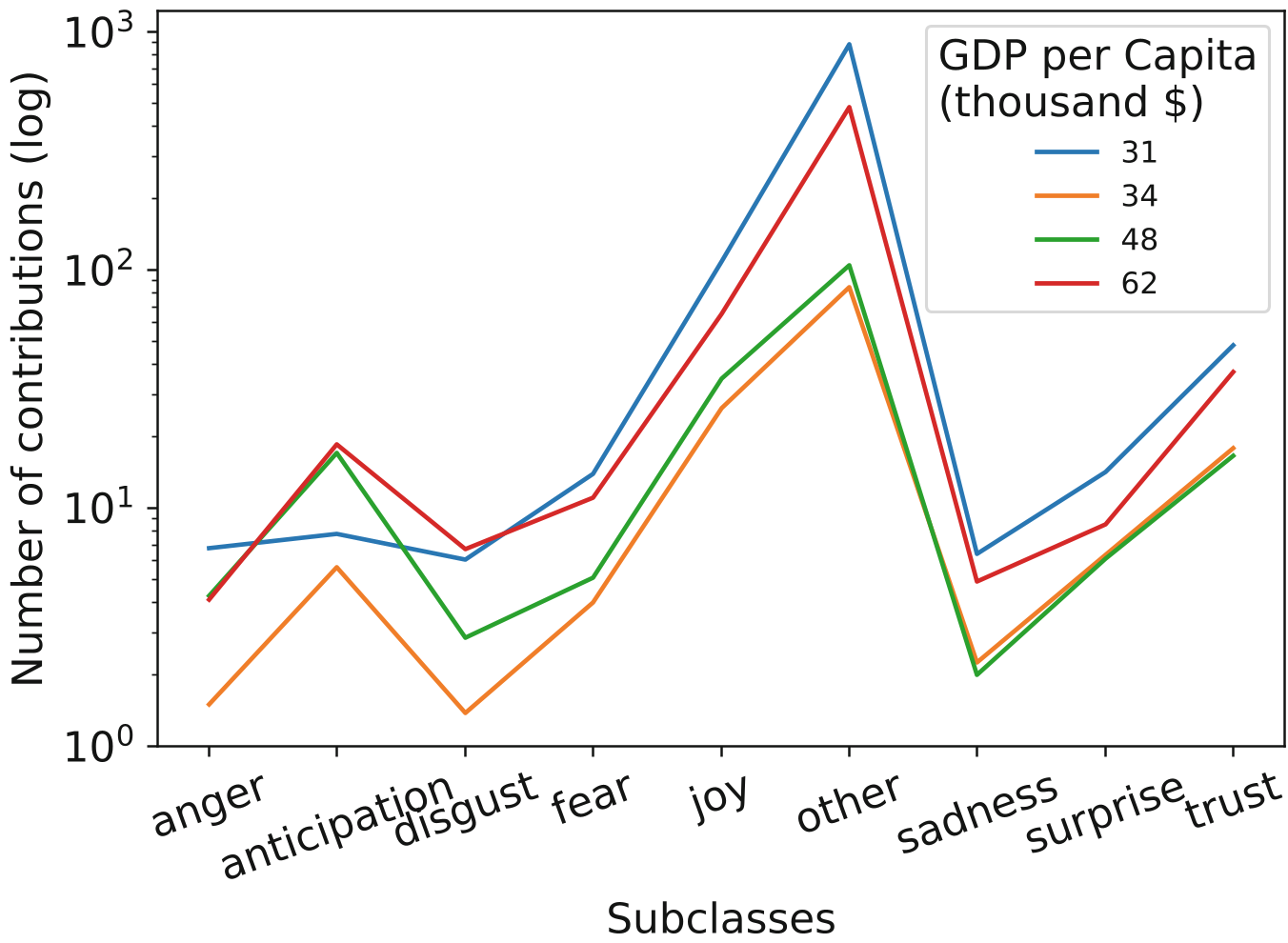 Figure 2: The distribution of emotional labels across different subclasses.
Results: The GDP-Quality Gap
The findings were stark. In the "high-income" task, the annotations were widely distributed across eight emotions. The "Joy" emotion, which dominated the low-income results, dropped to the third most frequent subclass.
- Eligibility Rate: In the global task, only 36 out of 187 workers (19%) were deemed "eligible" after filtering for spam-like behavior.
- Data Loss: This filtering process reduced the valid dataset from 50,000 annotations to a mere 11,000.
Critical Insight: The "Honesty" Filter
The study highlights a fundamental flaw in paid crowdsourcing: Extrinsic motivation (money) often crowds out intrinsic motivation (interest in the task).
When the payment is vital for survival, the worker's goal is to finish as many tasks as possible. When the payment is "pocket money" or if the task is voluntary, the worker is more likely to engage with the actual content.
Limitations & Future Work
The authors acknowledge that GDP is a proxy for income, not a direct measure of an individual's financial status. Furthermore, "subjectivity" itself is hard to quantify—one person's "Joy" is another's "Neutral."
Future research needs to move beyond GDP and look at demographic intersectionality (age, sex, education) and explore gamification or ethical rewards that encourage quality over quantity.
Conclusion
This paper serves as a warning for AI researchers: Cheap data is often expensive in the long run. If your model is trained on "Joy" labels that were only clicked to earn a cent, your model isn't learning emotion—it's learning the economics of poverty. To build better NLP systems, we must rethink how we incentivize the humans behind the machine.