
Paradoxes in Social Networks: Why More Options Can Make Everyone Worse Off
Paradoxes in social networks with multiple products
The paper investigates counterintuitive phenomena in social networks where agents adopt products based on their neighbors' choices. Using a threshold-based social network game model, it identifies four types of paradoxes (Vulnerability, Fragility, Inefficiency, and Unsafeness) where expanding or contracting choice sets leads to sub-optimal stable states for all agents.
TL;DR
In a world obsessed with choice and connectivity, this paper reveals a dark side of social influence. By modeling social networks as strategic games, the authors prove that adding a new product or a new friendship can trigger a chain reaction that lowers the utility for every single person in the network. This "Freedom-of-Choice" paradox suggests that the growth of social networks can be inherently inefficient.
Context: Beyond the Braess Paradox
Most of us are familiar with the Braess Paradox in traffic engineering: adding a road can increase overall travel time. However, social networks operate on the opposite logic of "Join the Crowd" (positive externalities) rather than congestion (negative externalities). While we might think having more options is always better, the interaction between individual thresholds and neighbor influence creates complex dynamics where local "improvements" lead to global disasters.
Problem: The Fragility of Choice
The authors identify a critical gap in prior work: most diffusion models focus on how a product spreads (the "What"), but not on the strategic welfare of the adopters (the "Why"). In these social network games, an agent's satisfaction is the weighted sum of neighbors who choose the same product, minus a personal adoption threshold. The problem is that a new, seemingly attractive product can lure an agent away from a globally optimal stable state, causing their neighbors to lose support and eventually forcing the entire network into a state where everyone's payoff is lower than before.
Methodology: Mapping Modern Paradoxes
The paper formalizes these phenomena into four distinct categories of "Deceptive" network behaviors:
- Vulnerability: Adding a product to one person's set leads to a new Nash Equilibrium where everyone loses.
- Inefficiency: Removing a product makes everyone better off—the "Less is More" principle.
- Fragility: A stable network becomes permanently unstable (cycling between choices) when a product is added.
- Unsafeness: A stable network loses its equilibrium when a choice is removed.
The Model Architecture
The game defines the payoff for a player choosing product as: Where is influence and is the resistance (price/preference).
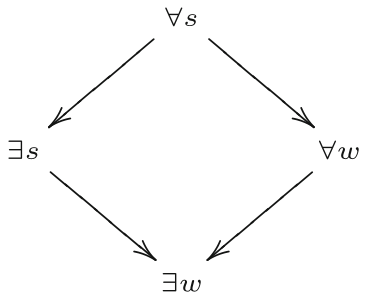 Figure 1: The logical implications between various types of network vulnerability and inefficiency.
Key Results & Insights
1. The Multi-Product Requirement
Interestingly, the authors prove that these paradoxes aren't trivial. Theorem 1 states that if there are only two products, a network cannot be universally "Vulnerable" to worsening payoffs. It takes the complexity of at least three choices to trigger these destructive cascades.
2. The Cycle Exception
Simple cycle networks (where influence flows in a single loop) are found to be remarkably robust. They are not vulnerable to these paradoxes because their equilibrium structure is too rigid for the "cascade of worsening" to take hold.
3. Visualizing a Vulnerable Network
 Figure 2: In this example, adding product to Node 4 triggers an improvement path that eventually reduces the payoffs for Nodes 5 and 6, while others remain unchanged.
Deep Insight: Limits of Interconnectivity
The most striking takeaway is the analysis of edge addition. The authors show that adding a "friendship" (an edge in the graph) can be just as damaging as adding a product. In modern social media, "people you may know" suggestions are designed to increase connectivity, but this research provides a mathematical foundation for why such increased connectivity might actually diminish the collective utility of the user base by forcing them out of stable, specialized product clusters.
Conclusion & Future Outlook
This paper serves as a theoretical warning for platform designers and economists. When designing "markets for attention" or social platforms, the goal shouldn't just be maximizing choices or connections.
Future Directions:
- Computation: How hard is it to detect if a network is vulnerable?
- Obligatory Selection: What happens if agents must choose a product (no "opt-out" strategy )? Early evidence suggests this makes paradoxes even more prevalent.
By identifying the "Join the Crowd" paradoxes, Apt, Markakis, and Simon have provided a rigorous framework for understanding why, sometimes, the best way to help a community is to limit its options.