
ParkForU: Optimizing Urban Parking through Dynamic Matching and Price Regulation
ParkForU: A Dynamic Parking-Matching and Price-Regulator Crowdsourcing Algorithm for Mobile Applications
ParkForU is a dynamic parking-matching and price-regulation system designed for smart cities. It utilizes a Multi-Attributive Utility Function and a reverse auction scheme to provide personalized parking recommendations and enables providers to dynamically adjust prices based on real-time crowdsourced demand.
TL;DR
Finding a parking spot in a crowded city often feels like a gamble between distance and cost. ParkForU moves beyond simple map-pin displays by utilizing a reverse-auction matching algorithm that ranks parking spots based on individual user utility. Crucially, it introduces a dynamic price-regulator that allows parking providers to adjust rates in real-time based on crowdsourced demand, resulting in up to 100% profit increases for high-end providers and better success rates for drivers.
Contextual Positioning
Within the landscape of Smart City IoT, this work bridges the gap between expensive hardware infrastructure (like SFPark's ground sensors) and unfiltered crowdsourced data. It transitions from a "Search and Find" model to a "Match and Regulate" model, positioned as a SOTA improvement over static allocation algorithms like ParkMatch.
The Core Friction: Overchoice and High Costs
Current solutions suffer from two extremes:
- High Infrastructure Costs: Wireless sensors and beacons require massive capital expenditure.
- Cognitive Overload: Apps like SpotHero present an "overcrowded map" (see Figure 1), forcing drivers to manually compare dozens of pins while driving, which increases stress and traffic congestion.
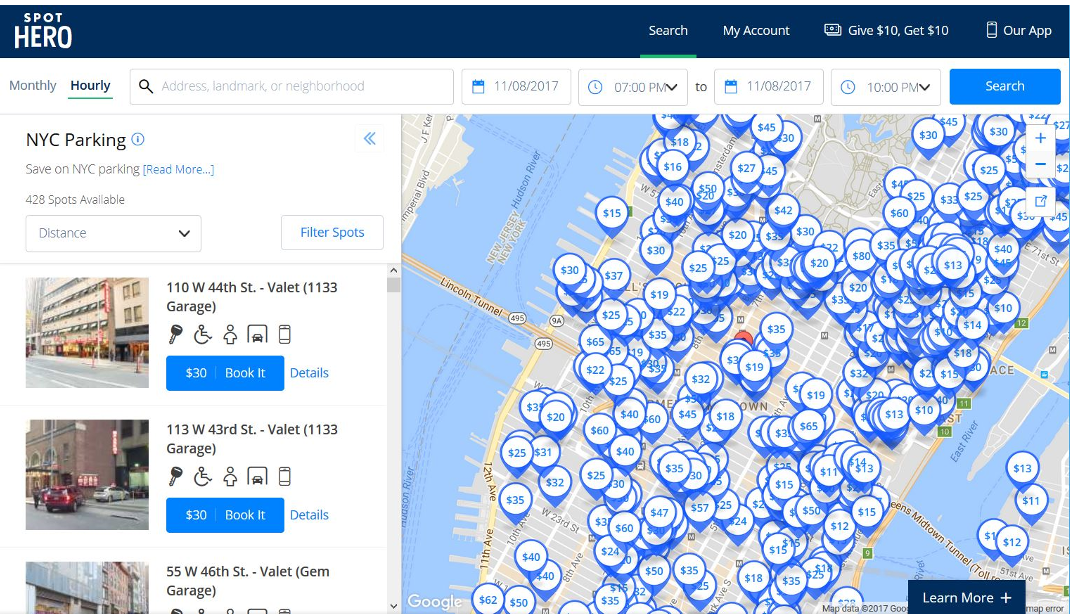 Fig 1: The "Pin-Map" problem where users struggle to filter options manually.
Methodology: The Reverse Auction Logic
ParkForU treats the parking search as a Reverse Auction. The driver is the auctioneer looking for the "lowest bid," where the "bid" is defined by a Multi-Attributive Utility Function :
Why this works:
- Personalized Weights: Users define how much they value money vs. walking time ( and ).
- Normalization: The algorithm normalizes these attributes to ensure a fair comparison.
- Dynamic Feedback Loop: Unlike previous models, every time a driver rejects a top-ranked spot, that provider receives a "decline" count.
Figure: The ParkForU framework showing the feedback loop between Driver Preferences and Provider Pricing.
Experiments & Results: A High-Profit Equilibrium
The researchers tested three driver profiles: Price-focused, Balanced, and Distance-focused.
1. The Profit Breakthrough
The most striking result was for High-Priced Parking Providers. Under static pricing (ParkMatch), they were often ignored. However, by allowing ParkForU to dynamically lower their prices when "Declines" hit a threshold, they became competitive and saw revenue gains of nearly 100%.
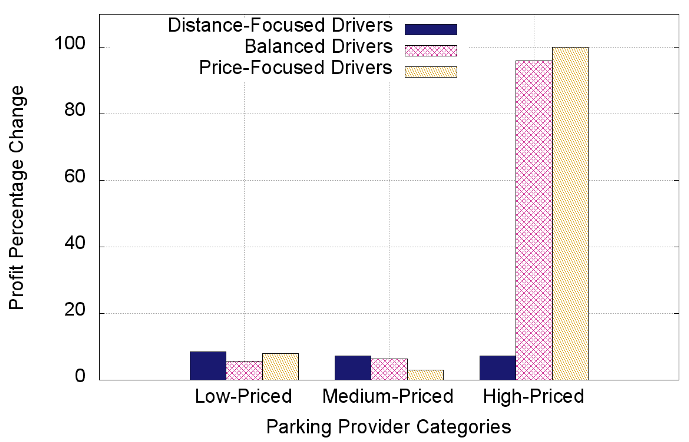 Fig 2: Profit percentage change of ParkForU vs. ParkMatch across different pricing models.
2. Reducing System "Dropouts"
When prices are static, many drivers hit a "Satisfaction Threshold" where they simply give up and leave the system. ParkForU significantly decreased this "dropout" rate (see Fig 7 in paper) by incentivizing providers to lower prices to meet driver demand.
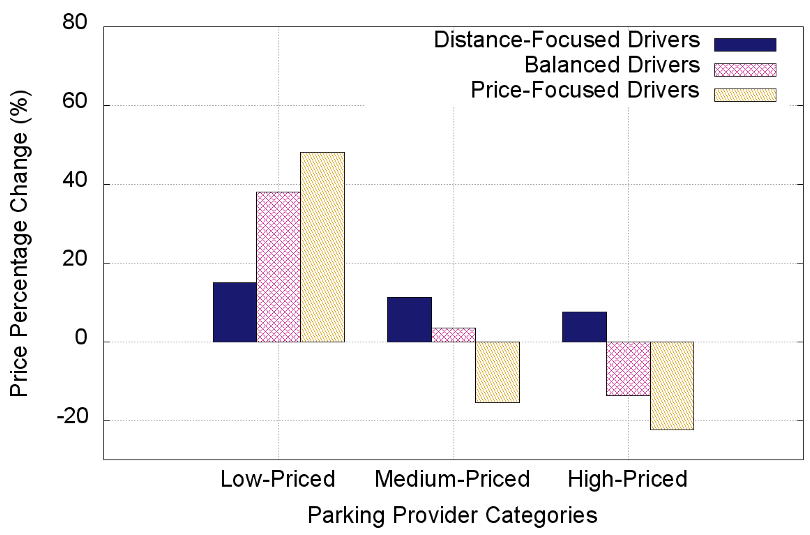 Fig 5: How ParkForU forces market adjustment—low-priced spots raise rates while high-priced spots lower them to optimize occupancy.
Critical Insight & Conclusion
The genius of ParkForU lies not just in the matching, but in the information asymmetry reduction. By informing parking providers why they weren't chosen (high price via "declines"), the system enforces a self-regulating market that stabilizes urban traffic.
Limitations: The model currently relies on a linear utility function. Real-world preferences might be non-linear (e.g., a "hard cap" on walking distance). Future iterations incorporating Reinforcement Learning could further refine the price adjustment thresholds () to maximize city-wide traffic throughput.
Final Takeaway: This research proves that "smart" parking doesn't require "smart" pavement—it requires a smart algorithm that understands the economic incentives of both drivers and providers.