
People, Plans and Place: Bridging the Rural Information Gap in Transport Disruptions
People, Plans and Place: Understanding and Supporting Responses to Rural Public Transport Disruption
This paper presents the development of "GetThere," a multi-channel Real-Time Passenger Information (RTPI) system designed to mitigate public transport disruptions in rural areas. By employing a co-design methodology with 69 interviews and 9 focus groups, the authors create a crowdsourced platform that integrates smartphone applications and SMS services.
TL;DR
Rural public transport is precarious; a single canceled bus can disrupt an entire day's plans or even lead to life-altering decisions like moving house. This paper explores the "GetThere" system—a co-designed, crowdsourced RTPI (Real-Time Passenger Information) platform that leverages local kinship networks and smartphone data to help rural dwellers navigate transport disruptions when official data fails.
Background: The Invisible Crisis of Rural Transport
While metropolitan areas enjoy high-frequency transit and sophisticated apps like Waze or Citymapper, rural areas are often left in the dark. The authors identify two systemic barriers:
- Low Passenger Incentives: Operators see little ROI in providing high-tech data for routes with few riders.
- Sparsity: Data collection is difficult in geographically isolated regions.
The result? Transport Poverty. Without reliable information, passengers lose trust in public systems, further declining usage in a vicious cycle.
Methodology: Listening to the "Wild"
The researchers didn't just build an app; they conducted extensive field research across the Scottish Borders, Aberdeen, Leeds, and the Isle of Tiree.
Key Behavioral Insights
- Time Buffering: The most common coping strategy where passengers "build in time" at either end of a journey, essentially living in a state of constant transit anxiety.
- Kinship Networks: In the absence of official apps, rural dwellers rely on "strong ties" (family) and "weak ties" (the man with the snow-plow) to navigate disruptions.
- The Impact Spectrum: Minor disruptions lead to "micro-adaptations" (calling for a lift), while frequent major disruptions lead to "life-changing events" (buying a car or relocating).
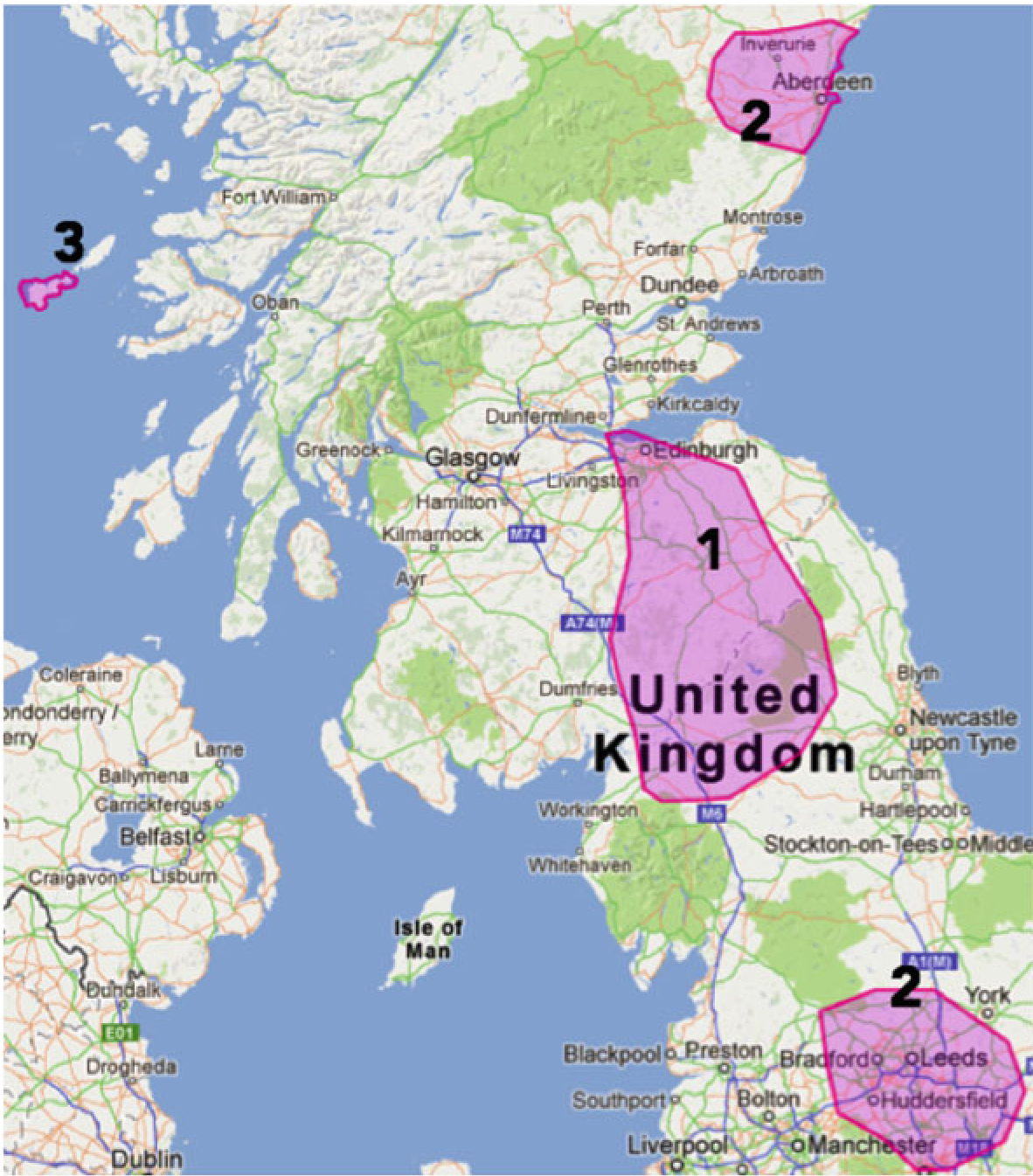 Figure 1: Geographic distribution of the study areas covering various rural intensities.
The Solution: The "GetThere" System
The authors adopted a Meta-design approach, moving away from static software toward a "living" ecosystem where users contribute data.
System Architecture
The prototype consists of two main pillars:
- Smartphone App: For reporting disruptions, validating existing alerts, and viewing bus locations via crowdsourced GPS.
- SMS Service: Crucial for rural areas with spotty 4G/5G coverage, allowing for an ad-hoc chat system among passengers on the same route.
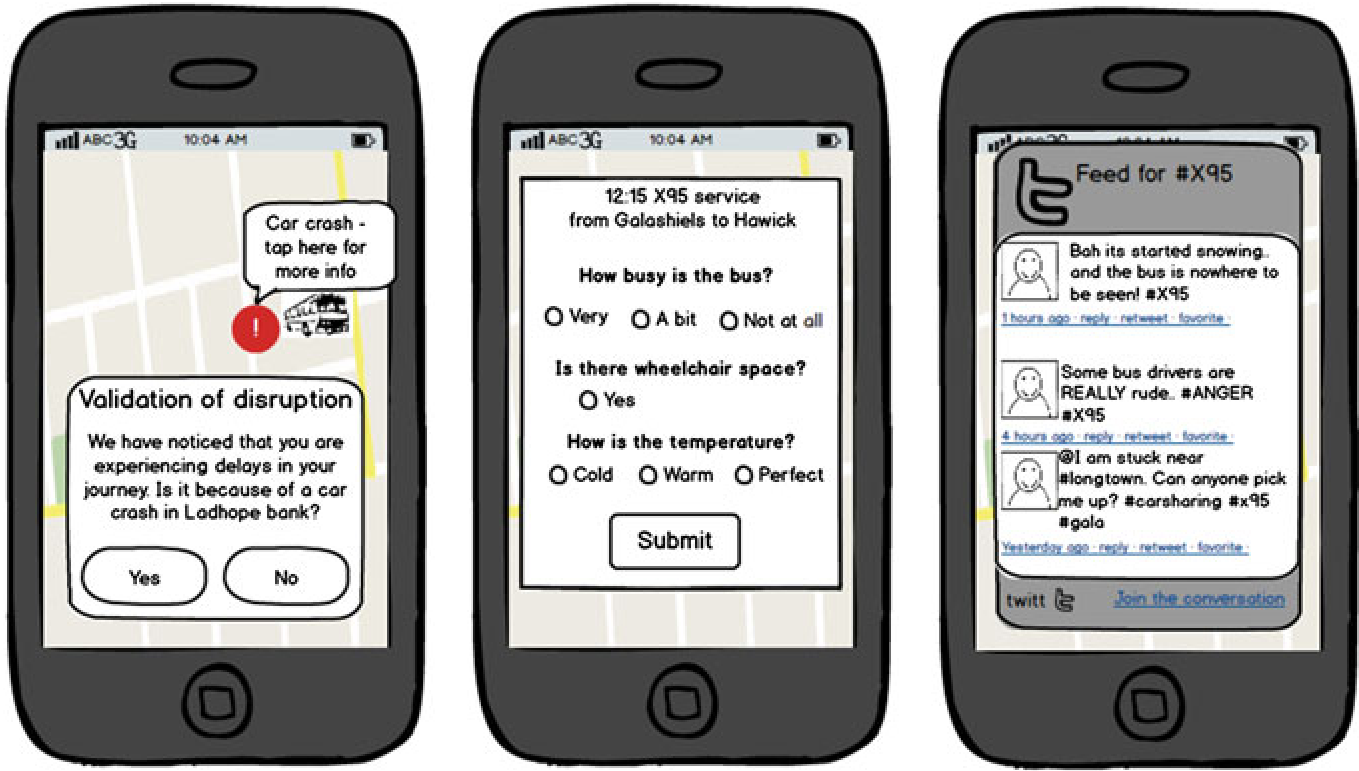 Figure 2: Participants engaged in co-designing the digital interface to ensure it meets actual rural needs.
Experimental Results & User Perception
One of the most profound findings was how information changes perception. When presented with a mock-up of a system that provided real-time info across all modes, participants ranked the reliability of public transport as equal to that of a private car. The "fear" of the unknown disruption was the primary deterrent, not the bus itself.
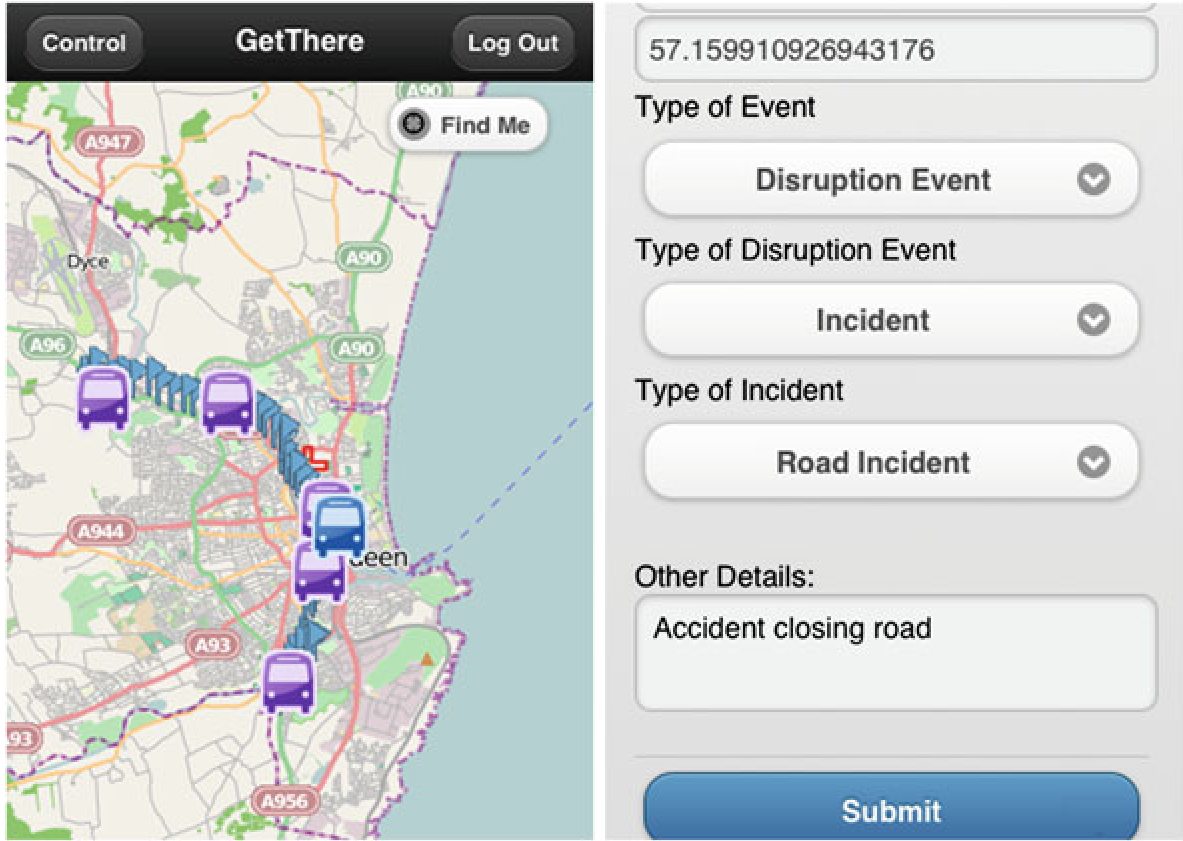 Figure 3: The GetThere prototype showing disruption reports and information quality metrics.
Critical Analysis & Conclusion
Takeaway
The paper proves that in resource-scarce environments, Social Capital is as important as Technical Capital. By digitizing "kinship networks," the GetThere system effectively turns every passenger into a mobile sensor, filling the gaps left by budget-strapped operators.
Limitations & Future Work
- Critical Mass: Crowdsourcing requires a minimum density of active users to be reliable. In "extreme-rural" areas, this might still fail.
- Incentivization: Why should a frustrated passenger take the time to report a delay? Future versions must explore "gamification" or reciprocity mechanics.
The "GetThere" project marks a significant shift in Intelligent Transport Systems (ITS)—moving from "centralized control" to "distributed community resilience."