
Trust Over Encryption: Why Social Dynamics Drive Higher Education Marketing on SNS
Perceived security, privacy, and trust concerns within Social Networking Sites: The role of Information sharing and relationships development in the Malaysian Higher Education Institutions' marketing
This study investigates how perceived security, privacy, and trust within Social Networking Sites (SNSs) influence information sharing and relationship development in the context of Malaysian Higher Education Institutions (HEIs). The researchers propose a conceptual model linking these psychological factors to student enrollment and employee applications, validated through a survey of 66 participants from local universities.
TL;DR
Higher Education Institutions (HEIs) are increasingly moving their marketing to Social Networking Sites (SNSs). This study reveals that while technical security is a concern, social trust—the trust in other members and the platform—is the actual engine driving information sharing and student enrollment. In the Malaysian context, developing relationships with alumni and faculty through Facebook is 35% more likely to influence enrollment than generic institutional branding.
The Digital Marketing Dilemma in Academia
Universities are no longer just centers of learning; they are global brands competing for a dwindling pool of top-tier talent and students. While "Digital Natives" spend hours on Facebook and YouTube, HEIs struggle to convert "likes" into "enrollments."
The core issue? The Privacy-Trust Gap. Existing literature suggests that students are willing to share information but remain wary of how institutions and other users handle their private data. The researchers sought to understand if these security fears actually stop students from forming the relationships necessary to choose a university.
Methodology: Mapping the Student Mindset
The researchers proposed a model (Figure 1) that tests four psychological pillars: Perceived Security, Perceived Privacy, Trust in the Site, and Trust in Members.
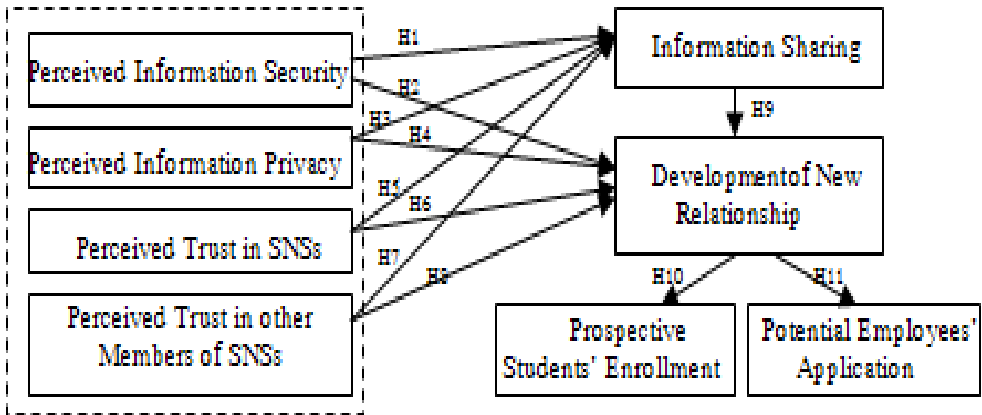
Using a cohort from Malaysian universities, the study employed Cronbach’s alpha (0.8758) to ensure data reliability and Factor Analysis to distill 38 variables into 7 core components, including "Privacy Protection," "New Relationship Confidence," and "Enrollment Impact."
Decoding the Results: Trust is Social, Not Technical
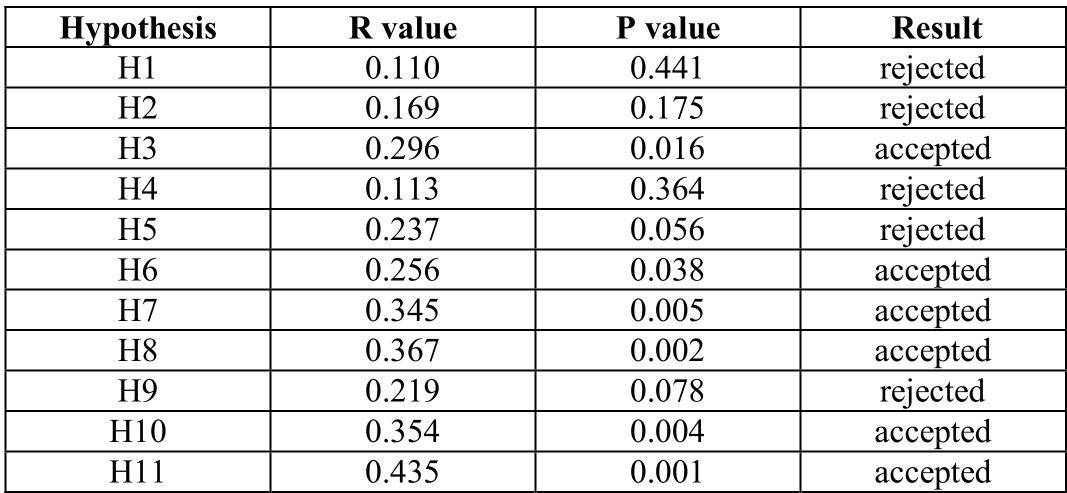
The study’s hypothesis testing (Table 2) yielded some counter-intuitive results that challenge traditional cybersecurity-first marketing:
- Security vs. Privacy: Perceived Security (H1, H2) was rejected as a significant influencer. Surprisingly, users don't need to feel "totally safe" from a technical standpoint to start a relationship; they just need to feel their privacy is respected.
- The Peer Effect: Trust in other members (H7, H8) was a massive winner. If a prospective student trusts the alumni or current students they meet on the page, they are significantly more likely to share information and eventually apply.
- Enrollment Conversion: The strongest correlations were found in H10 and H11. Developing a relationship with a faculty member or an admission officer via SNS directly boosts enrollment confidence (56-65% agreement among respondents).
Critical Insight: The "Human" Factor in HEI Marketing
The data suggests a "Poor Correlation" between simple information sharing and relationship development. This means simply posting content isn't enough. Relationships are built through interactions with people (Faculty, Alumni, Staff), not the platform itself.
Strategic Takeaways for HEIs:
- Prioritize People over Posts: Instead of institutional announcements, facilitate "AMA" (Ask Me Anything) sessions with alumni.
- Social Trust > SSL Certificates: While data encryption matters, users care more about "Social Trust" (e.g., "Will I be embarrassed by what others post about me?").
- The Power of Recognition: 60.6% of users feel safe using their real names; marketing should leverage this by encouraging real-name testimonials and identity-based networking groups.
Conclusion & Limitations
This study confirms that SNSs are a potent marketing tool for HEIs, provided they focus on the Human-to-Human (H2H) trust factor.
However, the study is limited by its sample size (n=66) and geographical focus on Malaysia. Future research should explore how the rise of "Shadow Profiles" and algorithmic bias in 2024-2026 affects these trust dynamics. For now, the message for universities is clear: Build a community, not just a profile.