
PERIKLIS: Re-imagining Electronic Democracy for the 21st Century
PERIKLIS - Electronic Democracy in the 21st Century
This paper introduces PERIKLIS, an e-democracy and e-government platform designed to foster citizen participation in municipal activities through a Service-Oriented Architecture (SOA). By integrating location-based services, social networks, and mobile technologies, PERIKLIS establishes a transparent communication channel between residents and local authorities for tasks such as problem reporting and electronic voting.
TL;DR
The PERIKLIS platform is a digital gateway designed to transform "weak democracy"—where citizens only interact with government every few years—into a vibrant, participating ecosystem. By utilizing Service-Oriented Architecture (SOA), it connects social networks and mobile geo-location with municipal services, making civic engagement as easy as updating a status or taking a photo.
The "Weak Democracy" Problem
Despite the proliferation of digital tools, many citizens feel disconnected from their local governments. The paper identifies a significant "technological divide" driven by:
- Infrastructure Costs: Traditional e-gov systems are often too expensive for smaller municipalities.
- Friction: Citizens have no time for complex forms or specialized software.
- Isolation: There is a lack of real-time feedback loops between a reported street problem and the municipal team assigned to fix it.
The authors argue that for democracy to be "strong," it must be integrated into the daily digital routines of the people.
Methodology: Bridging the Gap with SOA
The heart of the PERIKLIS platform is its architecture. Unlike monolithic legacy systems, PERIKLIS adopts a Service-Oriented Architecture (SOA), which allows it to be modular, scalable, and interoperable.
Core Components
- Social Integration: Users log in via familiar social networks, removing the barrier of creating new government-specific accounts.
- Geo-Location Services: When a resident reports a pothole or a broken streetlight, the system automatically captures the GPS coordinates, routing the task to the correct department.
- Analytics Engine: The platform uses Big Data techniques to analyze voter behavior and community alliances, helping authorities predict future needs.
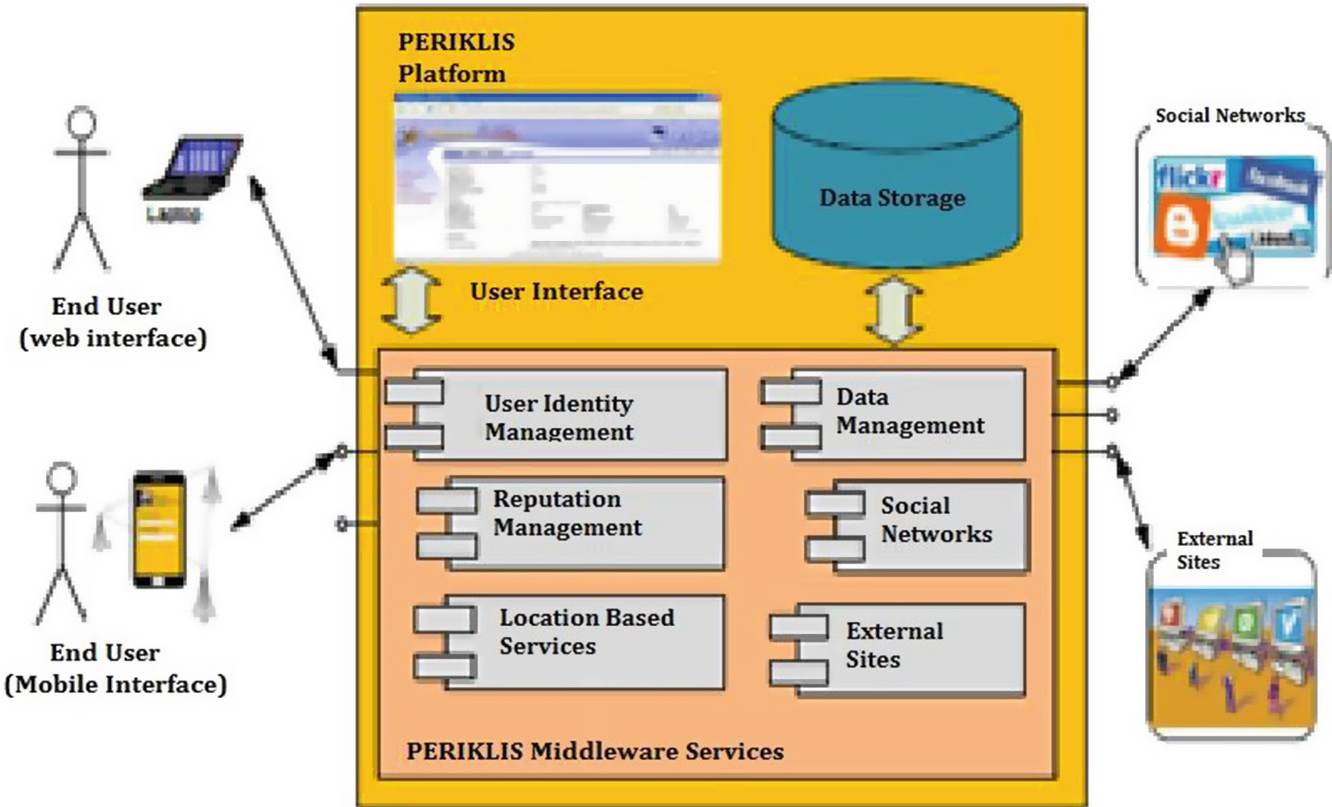 Figure 1: The high-level SOA design of the PERIKLIS platform showing the interaction between core and added-value services.
Real-World Impact: The Maroussi Pilot
The theory was put into practice in the Municipality of Maroussi (Athens, Greece). The platform demonstrated that digital services could:
- Increase Sustainability: By using open-source tools and cloud storage, the system reduced initial investment costs.
- Enhance Integrity: During elections, mobile-based observation allowed for early alerting of polling issues, increasing public confidence.
- Improve Urban Conditions: Direct data exchange between residents and road maintenance teams led to faster resolutions of neighborhood problems.
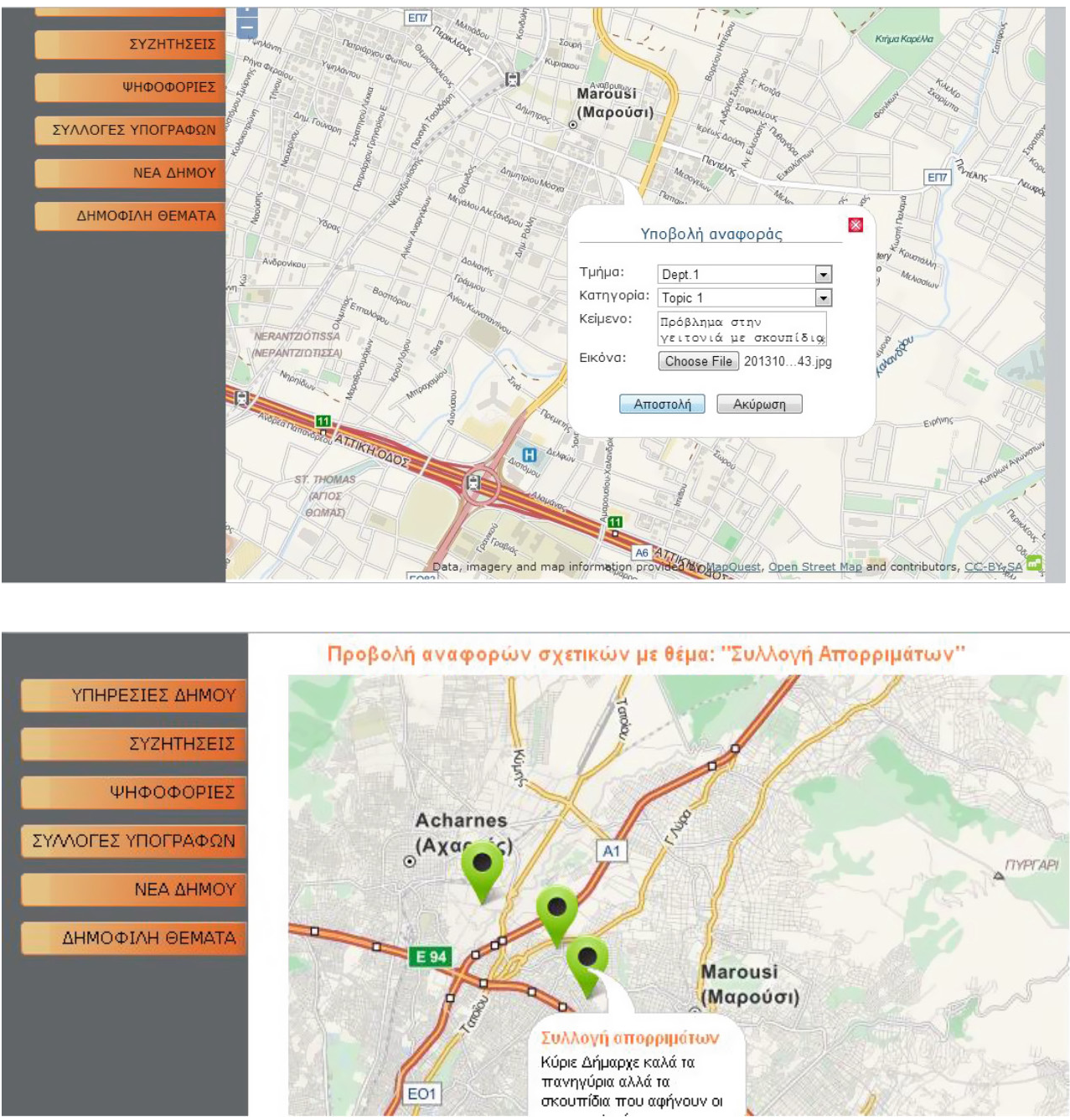 Figure 2: The PERIKLIS Web Interface (left) and Mobile Interface (right) designed for ease of use by residents.
Academic Insight & Future Outlook
The PERIKLIS project highlights a crucial shift in E-Government research: the focus is moving from availability of services to sophistication of interaction. By treating democracy as a "grid" of services (similar to cloud computing), the authors provide a framework that could theoretically link multiple municipalities into a unified, transparent network.
Limitations: While the platform effectively uses Web 2.0, the authors note that cultural and linguistic barriers still exist for older populations and those in lower socioeconomic areas. Future iterations will need to address the "digital inclusion" factor to ensure no resident is left behind.
Conclusion
PERIKLIS is more than just an app; it is an organizational catalyst. It proves that when governments adopt the flexibility of modern software design (SOA) and the reach of social media, they can move from being "providers of services" to "partners in the community."