
Beyond Words: Decoding Personality Through the Hidden Logic of Grammar
Personality Profiling from Text and Grammar
This research proposes a methodology for personality profiling by analyzing English grammatical structures, specifically utilizing Part-of-Speech (POS) n-grams. The study demonstrates that syntactic style is a robust predictor for the Big Five personality traits, achieving significant improvements in classification accuracy over traditional semantic-only approaches.
TL;DR
Can the way you arrange your parts of speech reveal your inner psyche? This research suggests the answer is a resounding yes. By moving beyond what individuals say (semantics) to how they structure their sentences (syntax), the author utilizes POS n-grams to predict the "Big Five" personality traits. The results show that grammatical "fingerprints" significantly enhance the accuracy of personality classifiers compared to traditional word-count methods.
Background: The Limits of Content-Based Profiling
In the digital age, personality assessment is a goldmine for everything from human resources to targeted marketing. However, asking people to fill out questionnaires is slow and often inaccurate due to "self-enhancement" bias—people lie to look better.
While previous AI models used "Bag of Words" (BoW) to analyze text, these models are often brittle. They rely on specific vocabulary that changes based on the topic or geography. This paper argues that syntax is the window to the soul: two people may talk about the same topic, but their unique grammatical choices—their "style"—remain persistent over time.
Methodology: The Power of Syntax
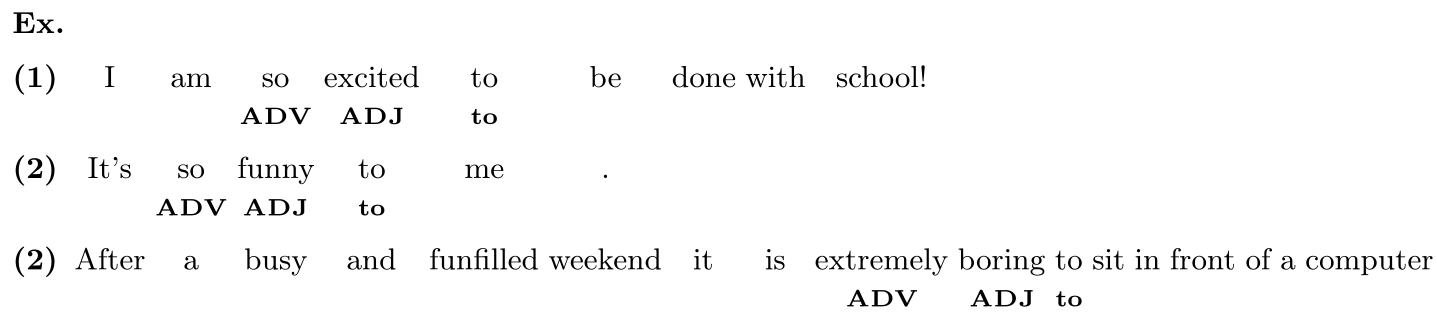
The core innovation here is the use of Part of Speech (POS) n-grams. Instead of looking at the word "excited," the model looks at the pattern ADV + ADJ.
The Workflow
- Data Collection: Essays and personality scores from 2,588 participants.
- Feature Extraction: Traditional features (Sentiment, BoW) are compared against syntactic features (POS n-grams).
- Classification: Using Support Vector Machines (SVM) to categorize subjects into "High" or "Low" scores for each of the Big Five traits (Extraversion, Agreeableness, Conscientiousness, Neuroticism, and Openness).
The author posits that certain grammatical structures are "stylistic markers." For instance, extraverts don't just use different words; they structure their modifiers differently, often "piling on" adverbs to emphasize points.
Experimental Results: Grammar Wins
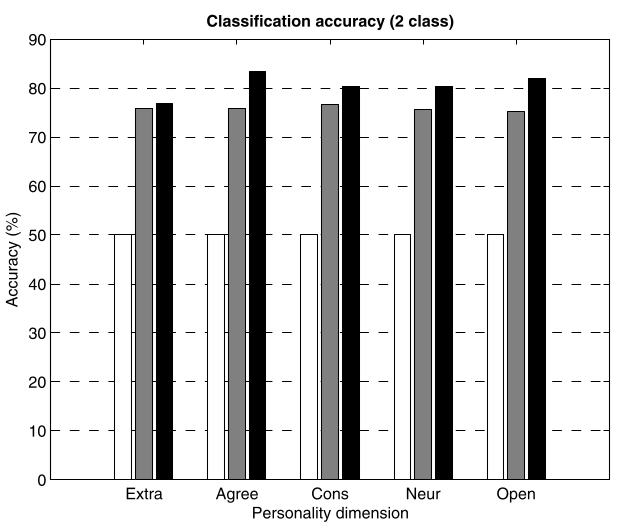
The study conducted 5-fold cross-validation on a binary classification task. The results were striking: the addition of POS n-grams improved the prediction for almost all personality dimensions.
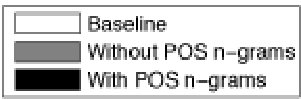
- Neuroticism & Conscientiousness: Showed marked improvement when syntactic patterns were included.
- Extraversion: Interestingly, while it correlated with specific patterns like
ADV + ADJ + to(e.g., "so happy to..."), it was the most challenging trait to classify with syntax alone.
A Deep Dive into Extraversion
The paper provides a fascinating table showing how extraverts use intensifiers. It appears that gregarious individuals use localized grammatical "clusters" to drive their points home, rather than focusing on precise verb selection.
Critical Insight & Future Outlook
This research moves the needle from content analysis to behavioral linguistics.
The value-add: By focusing on POS tags, the model becomes more resistant to "topic drift." Whether you are writing about a movie or a scientific discovery, your preference for specific syntactic structures remains relatively stable.
Limitations
- Context Sensitivity: While syntax is more stable, the author admits that lexical proximity still matters (e.g., the context of "Hurricane" vs "Louisiana").
- Dynamic Nature: Language and personality are not static; they evolve. A longitudinal study would be required to see if these syntactic markers shift as a person matures.
Summary
The implementation of syntactic features represents a major step toward deception-resistant personality profiling. In fields like criminal investigation or antiterrorism, where subjects may intentionally choose their words to deceive, their underlying "grammatical style" remains a much harder signature to mask.