
The Legacy of Computing: How the Charles Babbage Institute Built the Archives of the Future
10510_A Perspective on the History of the Charles Babbage Institute and the Charles Babbage Foundation.
This paper provides a comprehensive historical retrospective of the Charles Babbage Institute (CBI) and its Foundation (CBF), detailing their evolution from a 1970s visionary concept by Erwin Tomash into a premier global center for the history of information processing. It outlines the establishment of scholarly programs, archival strategies, and key research milestones achieved in collaboration with the University of Minnesota.
TL;DR
In an industry obsessed with the next "big thing," the history of how we got here is often discarded as obsolete data. This paper recounts the 20-year journey of the Charles Babbage Institute (CBI), an organization that transformed the "ephemera" of the computer revolution into a rigorous academic discipline. By bridging the gap between Silicon Valley business and University-led scholarship, CBI created the blueprint for preserving the digital age.
Problem & Motivation: The Threat of Digital Amnesia
By the mid-1970s, computing pioneer Erwin Tomash realized a disturbing trend: the records of the very industry he helped build—Engineering Research Associates (ERA), Sperry Rand, and others—were disappearing. Unlike traditional sciences with centuries of established archives, computing history was:
- Voluminous: A single firm like IBM could generate millions of feet of records.
- Inaccessible: Corporate policies often barred historians from sensitive technical documents.
- Ephemeral: Early software, manuals, and internal memos were seen as waste rather than heritage.
Tomash’s insight was that only a "catalyst" organization—one that was fiscally sound, interdisciplinary, and academically grounded—could prevent a total loss of the industry's foundational memory.
Methodology: The "Participatory Management" of History
The core of CBI’s success lay in its unique organizational structure. Rather than just a library, it functioned as a research hub. The methodology followed a three-fold mandate:
- Archival Center: Developing a "National Collecting Strategy" to identify where significant records lived.
- Clearinghouse: Acting as a map for researchers to find materials in other repositories globally.
- Research Center: Actively interpreting history through oral interviews and published scholarly works.
The Architecture of Preservation
The paper highlights a critical shift in the 1980s: the integration of Historians and Archivists. While historians (like Director Arthur Norberg) focused on interpretation and the "Why," archivists (like Bruce Bruemmer) solved the "How" of managing massive data volumes.
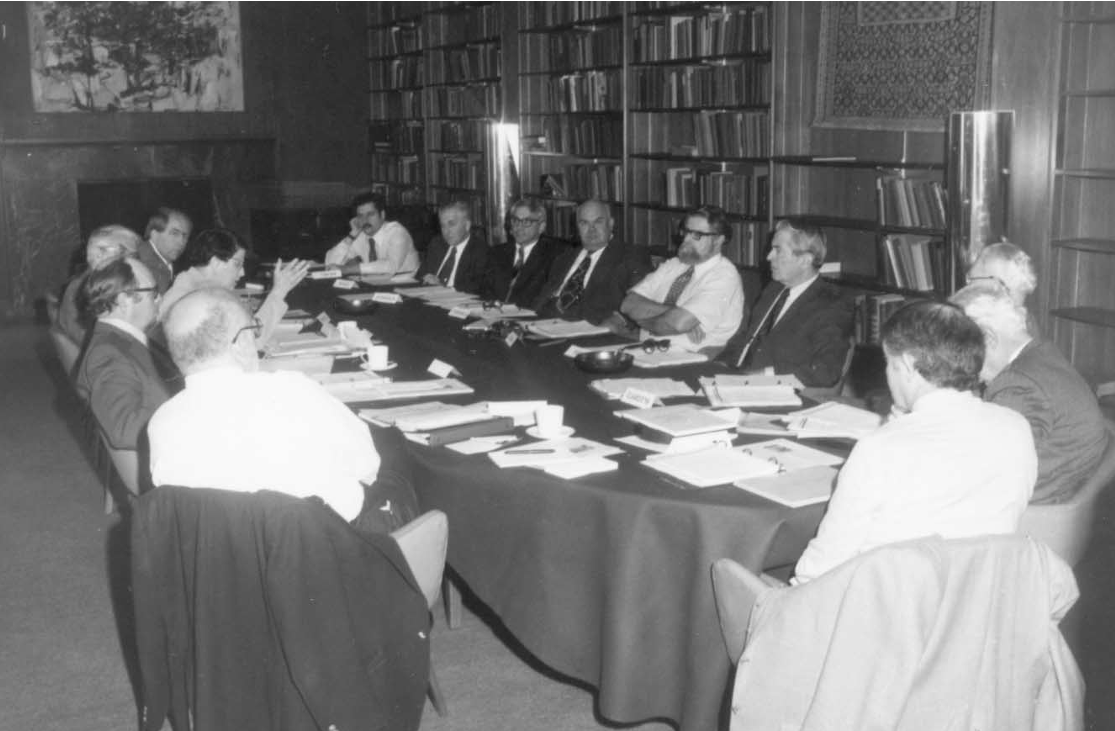 Figure 1: The 1978 Advisory Committee at Rockefeller University, featuring Nobel laureates and industry titans—the "Founding Fathers" of computer history.
Key Research Clusters: From von Neumann to DARPA
CBI didn't just collect boxes; they ran sophisticated research projects that redefined our understanding of technology:
- The von Neumann Project: Explored how numerical methods changed to accommodate the stored-program computer.
- The DARPA Study: A deep dive into the Information Processing Techniques Office (IPTO), tracing the roots of networking (ARPANET) and AI.
- The CDC Case Study: A landmark project with Control Data Corporation to create "appraisal criteria" for high-tech business records, essentially teaching companies what was worth saving.
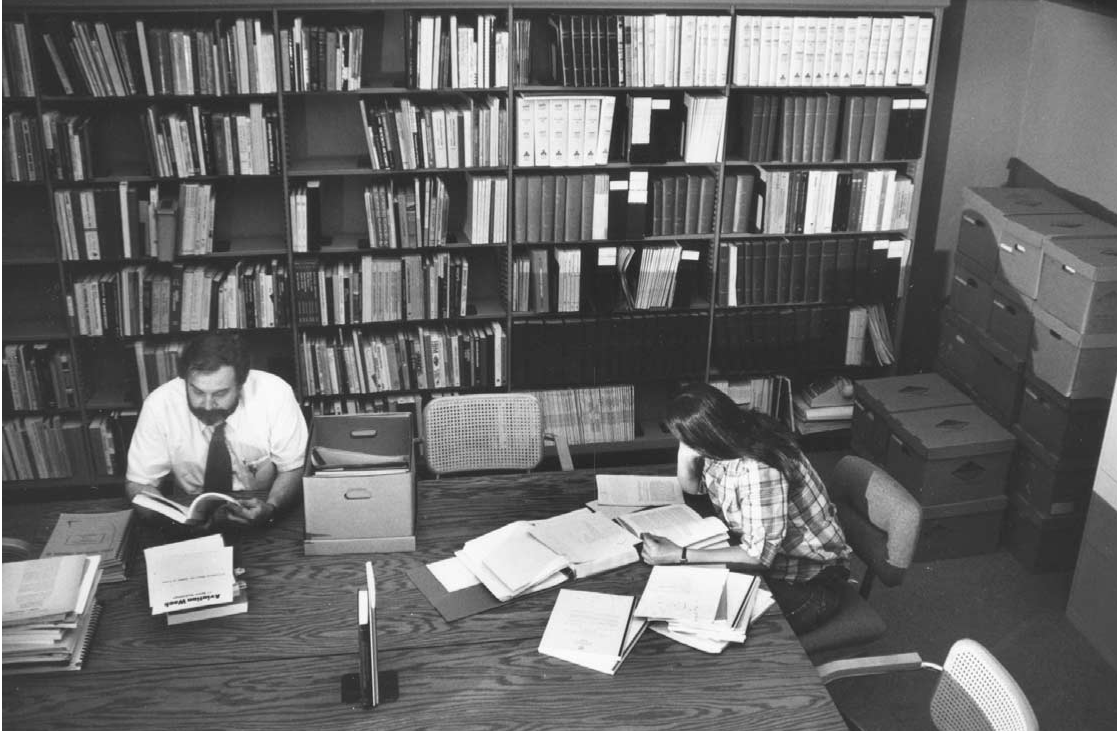 Figure 2: Researchers in the early 1980s at the University of Minnesota, turning raw technical manuals into historical narratives.
Experiments & Results: Quantifying a Legacy
CBI’s impact is visible in the sheer scale of its accomplishments:
- Institutional Stability: Successful relocation to the Andersen Library at the University of Minnesota, featuring state-of-the-art underground storage caverns.
- Academic Credibility: Establishing the ERA Land-Grant Chair and the Adelle and Erwin Tomash Fellowship, which has trained a generation of historians.
- Quantifiable Coverage: A national survey involving 14,000 questionnaires mapping the "topology" of computer history across the US.
| Program Element | Objective |
|---|---|
| Oral History | Recording the first-hand experiences of pioneers like Grace Hopper. |
| Software History | Moving beyond hardware to document the evolution of code and algorithmic thought. |
| Archival Guides | Publishing "The High-Technology Company" to standardize archival practices. |
Critical Analysis & Conclusion: The Burden of Success
The "delightful burden of success," as Norberg puts it, is that more preservation leads to more demand. As the paper concludes, the task is never done.
Takeaway: The Charles Babbage Institute proves that the history of technology is not a passive collection of old machines, but an active, ongoing research program. Its biggest contribution was not just the archives themselves, but the professionalization of the field.
Limitations: The paper reflects a period where hardware was the primary focus; however, the recent pivot toward Software History and Internet-based authority files (like the Iterations journal) shows the Institute is adapting to the challenges of the 21st century.
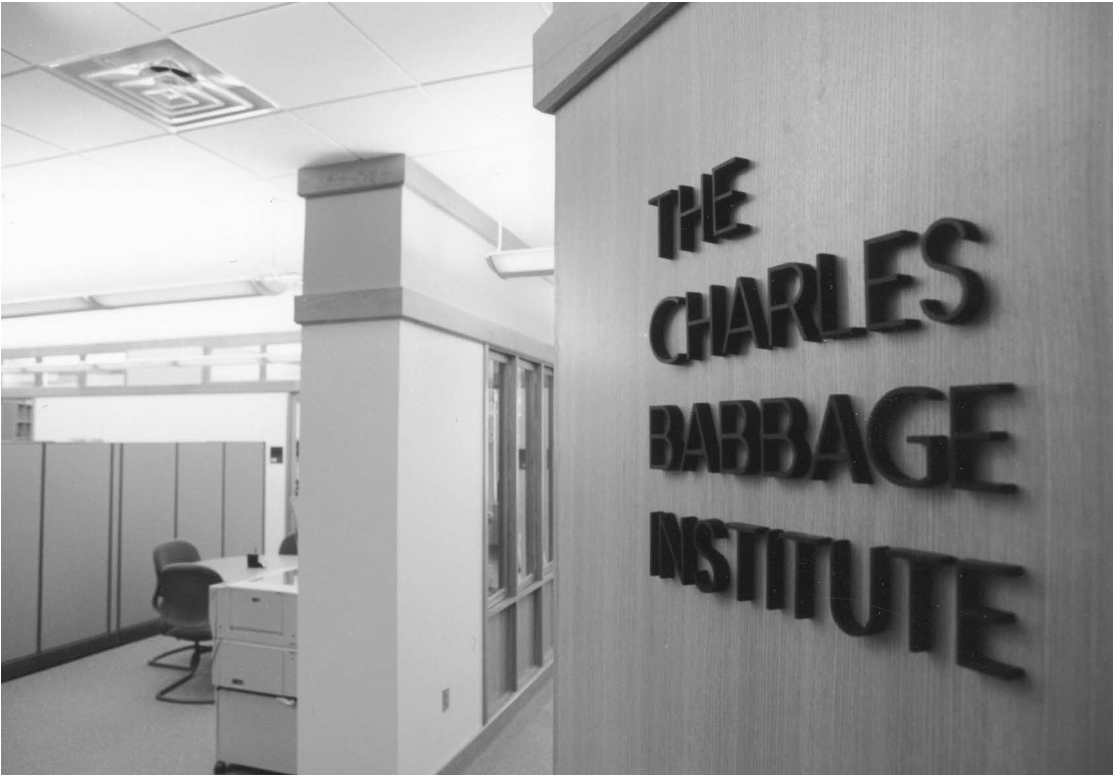 Figure 3: The entrance to the new CBI home (2000), symbolizing the permanence of computing's past in the library of the future.