
Persuasive Sociometry: Breaking the Walls of Social Exclusion in Classrooms
Towards persuasive sociometric technologies for inclusive educational seings
This paper introduces the concept of "Persuasive Sociometric Technologies" to enhance social inclusion in primary schools. By combining real-time social sensing with persuasive feedback loops (positive reinforcement and reciprocity), the researchers aim to motivate pro-social behaviors and challenge negative stereotyping among children.
TL;DR
Researchers have moved beyond "fixing" the excluded child to "persuading" the entire peer group. By using real-time social sensing and gamified visual feedback, this study demonstrates a significant reduction in social rejection (48% drop in "least-liked" ratings) by turning social interactions into a rewarding, visible "village-building" game.
The "Group Problem" of Social Exclusion
For decades, technology for social inclusion focused on assistive tools—helping a child with autism or a learning disability "fit in." This paper argues that such an approach is fundamentally flawed. Social exclusion isn't just about the excluded; it's about the excluders.
Exclusion is a group phenomenon driven by negative stereotyping (based on socio-economics, race, or perceived "slowness") and intergroup dynamics. The authors' first study, using a "Drawing-Telling" method, revealed that 9-year-olds often exclude peers not due to a lack of social skills, but because of rigid "in-group/out-group" mentalities.
Persuasive Sociometric Technologies: The Methodology
To combat this, the researchers proposed Persuasive Sociometric Technologies. These systems sense social interactions and provide "just-in-time" recommendations to encourage pro-social behavior.
The Experiment: The Peer-Interview Game
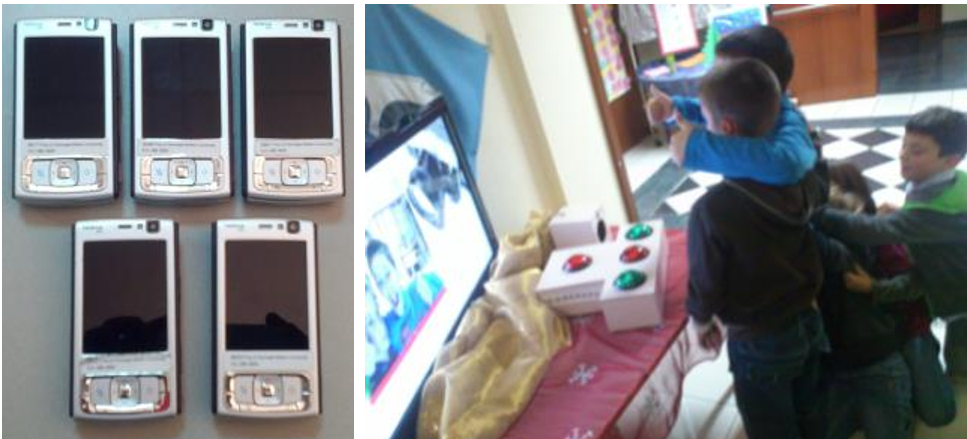
In a "Wizard of Oz" setup (where researchers simulated the tech's intelligence), children participated in a peer-interview game. The core intervention involved a visual feedback screen projected in the classroom.
Two Persuasive Pillars:
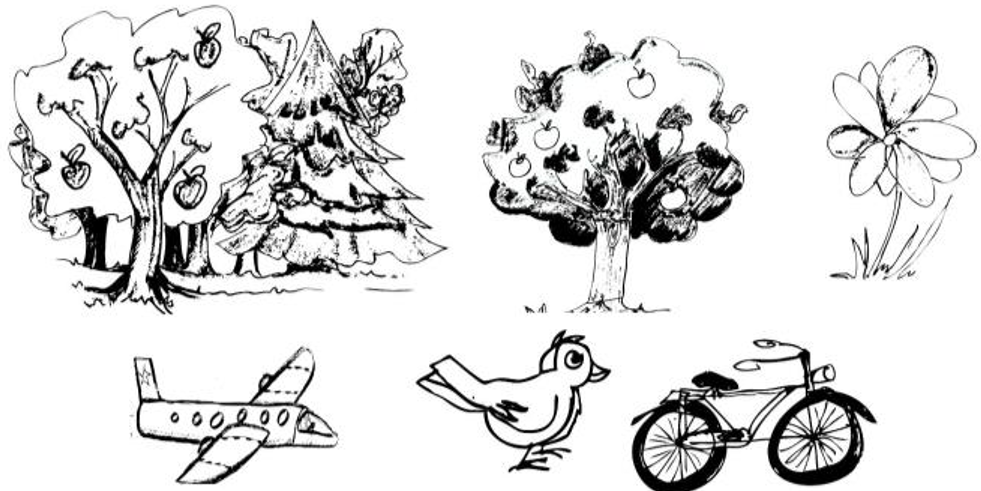
- Positive Reinforcement: Children earned "points" (visual items like trees, birds, or cars) for their virtual village when they interviewed "lucky charms"—peers they had previously ignored or disliked.
- Reciprocity: If Child A interviewed Child B, a path appeared. If Child B interviewed A back, flowers bloomed along that path, visually rewarding mutual interest.
Key Results: Quality Over Quantity
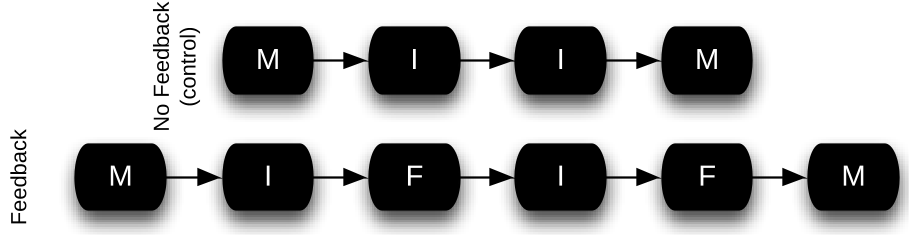
The results were striking. While the feedback group conducted fewer total interviews than the control group, the quality of their interactions was much higher.
- Perception Shift: Nearly 50% of the "least-liked" nominations were removed in the feedback group by the end of the study.
- Intrinsic Motivation: Children initially talked to "lucky charms" just to get points, but soon began deriving genuine pleasure from learning about their peers' lives—such as discovering shared interests in pets or empathetic responses to a peer’s family struggles.
Critical Insight: The "Observer Effect"
A fascinating finding was that simply knowing their social behavior would be made visible to the group changed how children acted even before the feedback was shown. This "social translucence" increases accountability and encourages children to present their "best selves" to the community.
Conclusion & Future Outlook
This work proves that stereotypes in childhood are not static. By making "invisible" social networks visible and rewarding inclusive behavior, we can nudge children toward empathy.
Limitations: The study utilized a "Wizard of Oz" approach, meaning real-time automated sensing in a noisy classroom remains a technical challenge. Future work must focus on making these sensors (Bluetooth, RFID) seamless and privacy-compliant for long-term use.