
UPCASE: Bridging the Gap Between Wearable Sensors and Social Presence
Pervasive and mobile computing
The paper introduces UPCASE, a context-aware system for mobile devices that uses internal and Bluetooth-connected sensors to infer user activities. Utilizing decision tree induction (ID3/C4.5), the system classifies contexts (e.g., walking, running, idle) in real-time and automatically publishes them to social networking platforms like Twitter and Hi5. It achieves high classification accuracy (up to 99%) while maintaining low processing overhead and sufficient battery life for daily use.
TL;DR
The UPCASE project presents a robust architecture for real-time context inference on mobile devices. By fusing data from internal and Bluetooth sensors (accelerometers, light, sound) and using local decision tree classifiers, the system can identify user activities like "running" or "working" with nearly 100% accuracy and publish updates automatically to social networks—all while maintaining a 15-hour battery life.
Context Awareness: The Motivation
The dream of "situated computing" is to have our technology understand our environment as well as we do. If you are driving, your phone should be silent; if an elderly person falls, an emergency alert should trigger. However, the path to this has been blocked by three main hurdles:
- Data Noise: Raw signals from accelerometers and microphones are incredibly messy.
- Resource Constraints: Processing these signals on a mobile device usually drains the battery in hours.
- Privacy and Latency: Sending raw data to the cloud for processing is slow and exposes personal habits.
The authors of the UPCASE project argued that the mobile phone should not just be a terminal, but a localized "inference engine."
Methodology: From Raw Signals to Social Updates
The UPCASE architecture is a masterclass in efficient pipeline design, divided into four critical layers:
1. Acquisition and Feature Extraction
The system doesn't just look at the last "ping" of data. It captures windows of sensor readings (e.g., 32 samples for FFT analysis). The most distinctive "insight" here is the use of Variance and Fast Fourier Transforms (FFT) for motion activity.
- Variance distinguishes between "moving" and "static."
- FFT (harmonics between 0.5Hz and 2Hz) distinguishes between "walking" and "running."
2. The Inference Engine: Decision Trees
Why decision trees? They are lightweight, human-readable, and incredibly fast to traverse. The system uses ID3 and C4.5 algorithms. The system allows users to "train" it by manually setting a context (e.g., "I am currently at the gym"), allowing the tree to adapt to individual behavior patterns.
 Above: The layered architecture from raw sensors to high-level context publication.
Experiments and Performance Metrics
The researchers tested the system in "real-world" settings—classrooms, basements, and open-air environments.
- Accuracy: The C4.5 classifier achieved 99.63% accuracy for "running" and over 90% for "walking" and "resting."
- Overfitting: The ID3 algorithm showed a tendency to over-fit (becoming too specific to training data), whereas C4.5 provided a more generalized and robust model.
- Latency: The entire sensing-to-inference loop takes roughly 415ms. While context publication to external APIs (Twitter/Hi5) takes about 1-2 seconds, the local processing is fast enough to feel instantaneous.
 Above: Confusion matrix showing high accuracy levels across user activities.
Impact: The Automation of Social Networking
The most practical application presented is the integration with Twitter, Hi5, and SAPO Messenger. By using REST APIs, the phone automatically updates the user's status message (e.g., "André is Walking") without the user ever touching the screen.
This "Zero-Touch" interaction model represents a shift toward more proactive mobile services. Beyond social media, the authors note the potential for sequence clustering (using Markov chains) to identify broader user profiles—differentiating between a "working citizen" and a "playing child" based on daily context transitions.
Critical Insights & Future Outlook
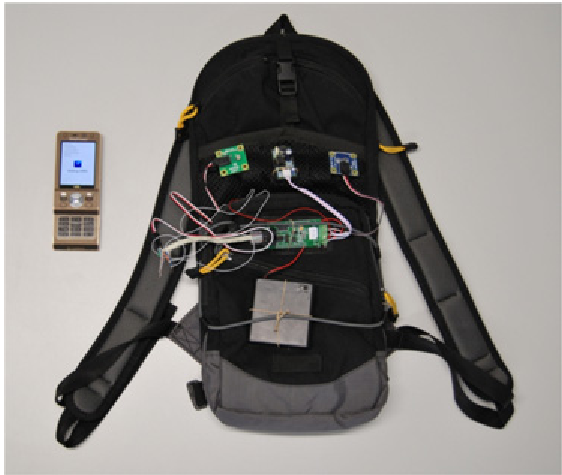
While the 2010 tech stack (Java ME, Nokia N95) seems dated, the architectural principles remain highly relevant.
- Edge Intelligence: UPCASE was an early proponent of what we now call Edge AI—keeping data on-device.
- Limitations: The external sensor node (Bluetooth) remains a bottleneck for power and ergonomics. In modern contexts, we see these "external" sensors now integrated into smartwatches (Apple Watch, etc.).
- The Future: As we move toward LLM-integrated mobile assistants, the "context features" extracted by systems like UPCASE will likely serve as the "Prompt Context" that allows AI to truly understand our daily lives.
Conclusion
UPCASE proved that meaningful context awareness is possible on resource-constrained devices. It laid the groundwork for an era where our devices are no longer passive tools but active observers of our physical environment.