
ADSS: Uncovering the "Monday Bias" in Global Pesticide Application
Analysis of Pesticide Application Practices Using an Intelligent Agriculture Decision Support System (ADSS)
The paper presents an intelligent Agriculture Decision Support System (ADSS) designed to integrate and analyze multi-decadal, non-standardized pest-scouting and meteorological data in Pakistan. Using hierarchical clustering and visualization, it identifies that pesticide application is driven by traditional weekday beliefs rather than scientific pest population thresholds (ETL).
TL;DR
Agriculture produces mountains of data, but much of it remains "dirty" and underutilized. This paper introduces an Intelligent Agriculture Decision Support System (ADSS) that digitized six years of cotton pest-scouting data in Pakistan. The shocking reveal? Farmers aren't spraying based on pest counts—they are spraying based on centuries-old traditions that favor Mondays, leading to wasted chemicals and lower yields.
Background: The Cotton Paradox
Cotton is the world’s "dirtiest" crop, consuming 16% of global insecticides while occupying only 2.5% of land. In Pakistan—the world's 4th largest producer—data showed a baffling anomaly: As pesticide usage increased, cotton yield actually decreased.
To solve this, the authors built a massive Data Warehouse (ADSS) to move beyond "expert opinion" and subjective decision-making into the realm of Cognitive Data Mining.
Methodology: From Raw Sheets to Knowledge
The ADSS doesn't just store data; it cleanses and visualizes it through a strict 12-step engineering pipeline.
1. Data Cleansing & The BSN Approach
Dealing with "Syntactically Dirty Data" (lexical errors) and "Semantic Anomalies" (duplications) is the first hurdle. The authors employed the Basic Sorted Neighborhood (BSN) approach to identify duplicate records without the extreme computational cost of traditional sorting.
2. Cognitive Visualization
The system links hierarchical clustering with visualization tools (like HCE 3.5). The goal is "Cognitive Data Mining"—allowing human experts to see patterns that algorithms might find, but humans must interpret.
 Figure 1: The 12-step development process of the ADSS, from User Needs to OLAP Deployment.
The "Monday" Discovery: Culture vs. Science
The core of the study involved analyzing three activities: sowing, spray frequency, and spray volume across different weekdays between 2001 and 2006.
The Clustering Result
While pest life-cycles follow biological rhythms, farmer behavior followed a different drum. Hierarchical clustering showed that Monday was the dominant cluster for all major agricultural activities.
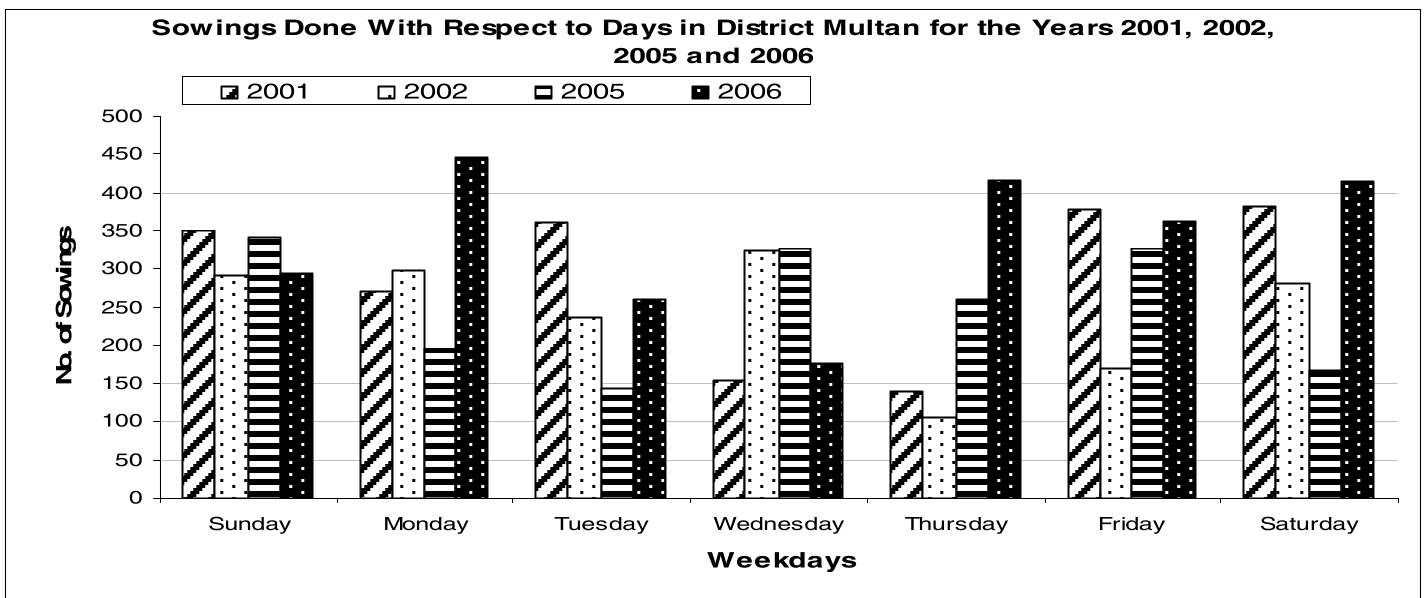 Figure 2: Analysis of sowing distribution across weekdays, showing a lack of scientific correlation.
Why Monday?
The authors trace this to Vedic Muhurt Astrology and deep-rooted caste-based community behaviors. In local traditions, Monday is considered "fruitful" for agriculture. By spraying on Mondays regardless of whether the Economic Threshold Level (ETL) had been crossed, farmers were:
- Applying pesticides when unnecessary (wasting money).
- Applying sub-lethal doses that allow pests to develop resistance.
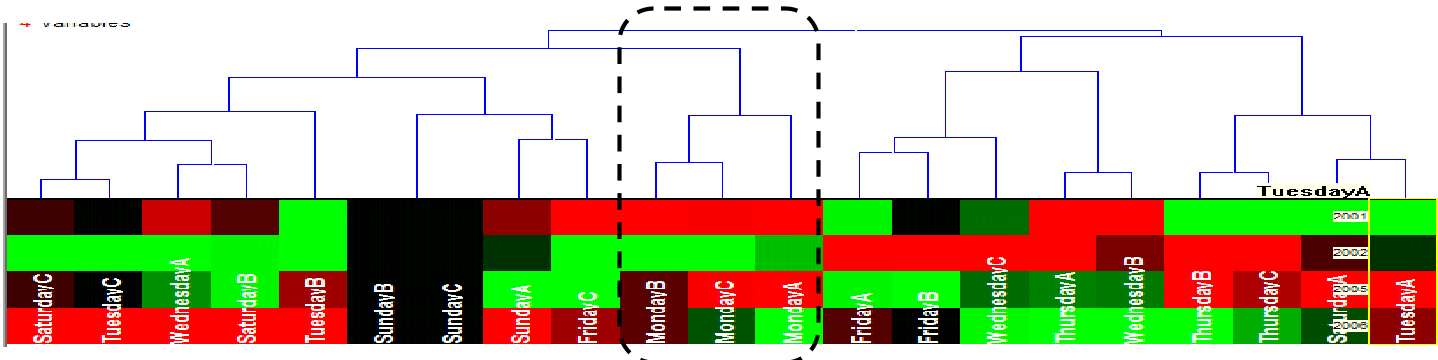 Figure 3: Dendrogram showing the semantic clustering of agricultural activities strictly on Mondays.
Critical Insight & Conclusion
This paper serves as a vital reminder that Technical Solutions (pesticides) are often subverted by Human Heuristics. The negative correlation between yield and spray found in Fig-1 of the paper is a direct consequence of ignoring biological thresholds in favor of astrological ones.
Key Takeaways:
- Data Integration is King: Integrating meteorological data with pest scouting is essential for a holistic view.
- The Visualization Gap: Without visual clustering, the "Monday bias" would have remained hidden in rows of spreadsheets.
- The Future: ADSS aims to introduce animation and natural visual queries to make these insights accessible to the farmers themselves, potentially breaking centuries of non-optimized tradition.
Final Thought: If we want to feed the world sustainably, we must use Data Science not just to track nature, but to correct human error.