
Decoding Medical Chatter: How Social Network Design Shapes Pharmaceutical Discussions
Pharmaceutical drugs chatter on Online Social Networks
This study investigates the impact of Online Social Network (OSN) characteristics—such as platform type (General vs. Health), moderation, registration requirements, and format (Review vs. Q&A)—on pharmaceutical drug discussions. By analyzing datasets from 10 OSNs including Twitter, WebMD, and Drugs.com, the authors identified how platform design dictates the nature of medical "chatter," significantly affecting drug types discussed and sentiment polarity.
TL;DR
Not all social media "chatter" is created equal. This research reveals that the structural DNA of a social network—whether it requires a login, moderates posts, or uses a Q&A format—drastically changes what drugs people discuss and how they talk about them. While Twitter is a hub for "slang, jokes, and ads," specialized sites like WebMD foster deep, subjective exchanges about side effects and physician strategies.
Context: The Rise of Medicine 2.0
We live in an era of Medicine 2.0, where patients are no longer passive recipients of information but active "citizen scientists" crowdsourcing their own health trials. However, for clinical researchers and healthcare providers, the "noise" in social media is a major hurdle. This paper addresses a critical gap: How does the platform's architecture bias the medical data we extract?
Problem: The Hidden Bias of Digital Spaces
Existing research often treats "social media data" as a monolithic entity. However, the authors argue that the environmental constraints (Affordances) of an OSN act as an inductive bias. For instance, does the lack of anonymity on Google+ suppress discussions about sensitive medications like antidepressants? Does the "noise" of Twitter make it useless for serious adverse drug event (ADE) detection?
Methodology: Mapping the Medical Web
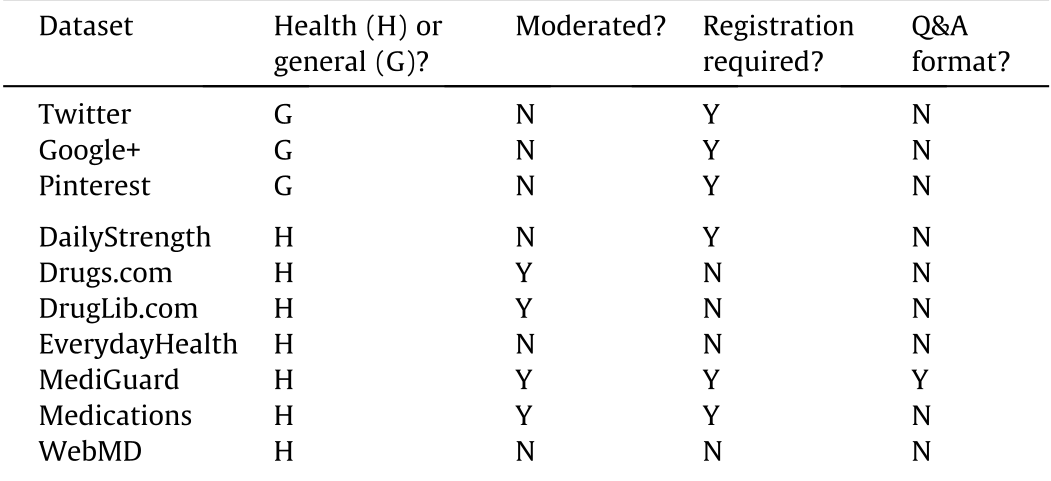
The researchers analyzed ten OSNs categorized by four characteristics:
- General vs. Health-Specific (e.g., Twitter vs. DailyStrength)
- Moderated vs. Unmoderated
- Registration Required vs. Public
- Review vs. Q&A Format
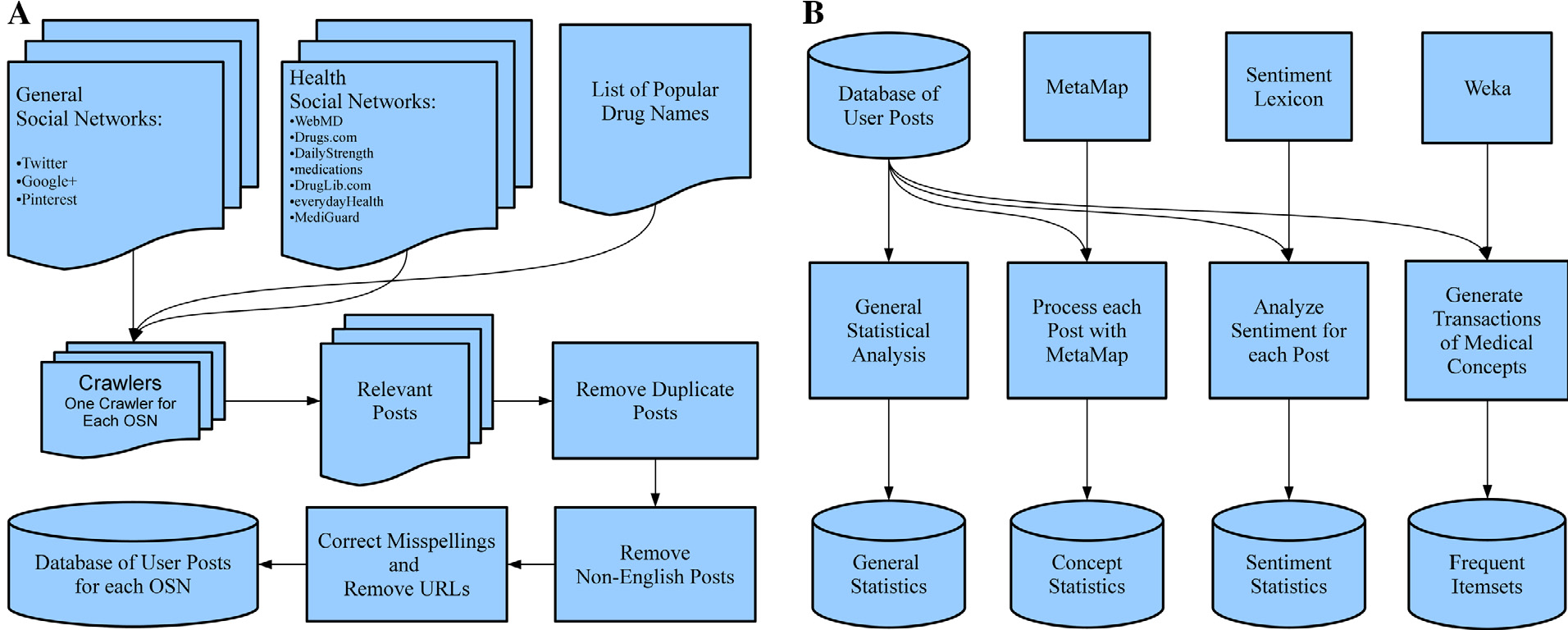
They utilized MetaMap to translate messy social posts into formal UMLS (Unified Medical Language System) concepts and applied SentiWordNet for sentiment analysis.
Core Insights: Where You Post Matters
1. The "Slang" vs. "Sufferer" Divide
General OSNs (Twitter, Pinterest) are outliers in medical content. The analysis found a massive surge in mentions of Genitourinary tract agents (like Viagra) in General OSNs (+590% relative to baseline), often used in jokes or spam. Conversely, Health OSNs are centers for Psychotherapeutic agents, where users discuss chronic management of depression and anxiety.
2. The Impact of Moderation and Registration
One of the most striking findings is the "Self-Censoring" effect of platform structure:
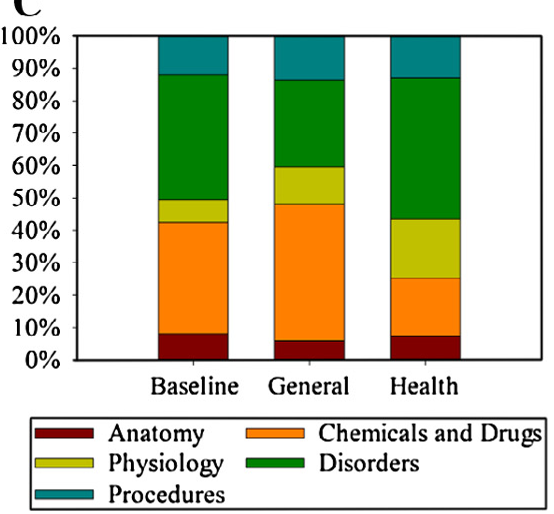
- Registration & Moderation: These act as "objectivity filters." Sites that require accounts or review posts show significantly higher objectivity and more mentions of "Chemicals and Drugs" and "Procedures."
- Anonymity & No Moderation: These sites are the go-to for sensitive, subjective "chatter." Users prefer non-moderated spaces when discussing mental health, leading to a higher density of Disorder and Physiology concepts.
3. Review vs. Q&A Formats
The format dictates the intent. Q&A formats (like MediGuard) saw a 243% increase in posts related to coagulation modifiers (e.g., Warfarin)—drugs that require strict management and professional advice. Review formats are more emotional, showing a 144% increase in negative polarity as users vent about side effects.
Results & Statistical Battlegrounds
The study proved that medical content in Health OSNs is relatively similar to each other but entirely distinct from General OSNs. As shown in the multidimensional scaling (MDS) plot below, platforms cluster based on their moderation status and drug category frequencies.
Critical Insight & Future Outlook
Takeaway for Researchers: If you are mining for Adverse Drug Reactions (ADRs), unmoderated health review sites are your "Gold Mine" for raw, subjective symptoms. If you are looking for Public Health Trends or Breaking News, Twitter's high objective/news-oriented density is superior.
Limitations: The study acknowledges the "Spam" problem on Twitter and the technical limits of MetaMap in handling colloquialisms (e.g., mapping the pronoun "I" to the element "Iodine").
Conclusion: This work serves as a manual for "Digital Phenotyping." It moves the field from "what are people saying" to "how does the platform influence what can be said." For future Health OSN designers, the lesson is clear: if you want high-quality, objective medical data, build in moderation and registration; if you want deep patient support, prioritize anonymity.