
Intelligent Event Reporting: Solving Redundancy and Credibility in Mobile Crowdsourcing
A Photo-Based Mobile Crowdsourcing Framework for Event Reporting
The paper introduces a comprehensive Mobile Crowdsourcing (MCS) framework for event reporting that utilizes a two-stage pipeline: a Deep Learning-based Photo Type Prediction (PTP) to filter false submissions and an A-Tree hierarchical data structure for Data Aggregation (DA) to minimize redundancy. Leveraging ResNet-18 and SIFT descriptors, the system achieves over 91% accuracy in verifying event credibility while ensuring high utility coverage of urban incidents.
TL;DR
As urban populations swell, traditional fixed IoT sensors struggle to keep up with dynamic city events. This paper presents a photo-based Mobile Crowdsourcing (MCS) framework that uses Deep Learning to filter out fake reports and a hierarchical A-Tree structure to eliminate duplicate photos. The resulting system ensures that city authorities receive only credible, diverse, and high-utility visual data.
The Urban Sensing Dilemma
By 2050, nearly 70% of the world will live in cities. Monitoring public safety, traffic, and environmental hazards traditionally requires thousands of fixed sensors—a deployment nightmare that is both expensive and inflexible. While everyone has a smartphone (a "mobile sensor"), crowdsourcing often leads to a "data swamp": hundreds of photos of the same pothole, or worse, unrelated "spam" photos that waste bandwidth and human attention.
Methodology: The Two-Pillar Defense
The authors address the noise in MCS data through two distinct phases:
1. Photo Type Prediction (PTP) - The Credibility Filter
To ensure a user isn't uploading a selfie when they should be reporting a fire, the framework employs a Convolutional Neural Network (CNN). After testing multiple architectures, the authors found that a ResNet-18 model (both fine-tuned and trained from scratch) outperformed custom models, achieving over 95% accuracy. This phase categorizes photos into specific events (Fire, Flood, Damage) or "Normal," discarding anything that doesn't match the task.
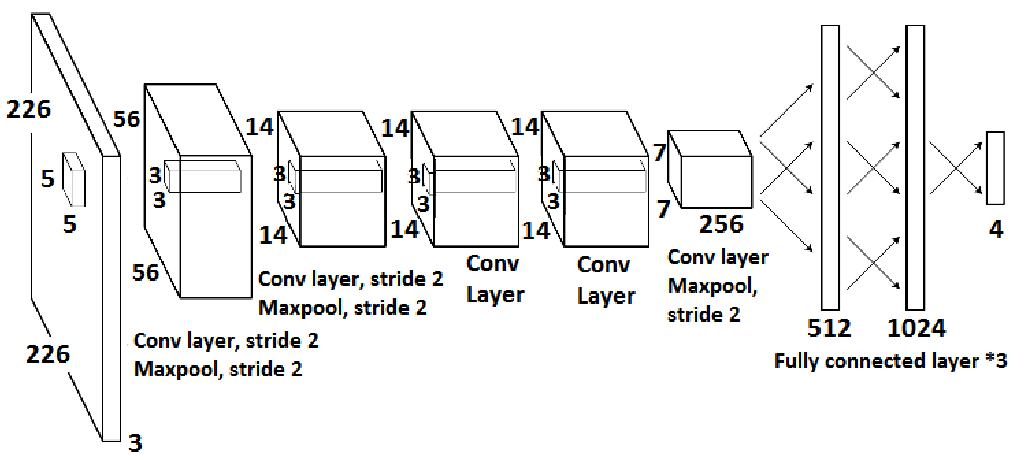 Fig 4: The custom 8-layer CNN structure used for comparison against ResNet-18.
2. Data Aggregation (DA) - The Redundancy Pruner
Even if 50 photos are legitimate, a requester only needs a few unique angles. The authors introduce the A-Tree, a hierarchical data structure where each layer represents a constraint:
- Temporal (Time): Are the photos taken too close together?
- Spatial (GPS): Are the photos from the exact same coordinates?
- Visual Similarity (SIFT): Do the photos contain the same visual features?
The A-Tree treats photos as leaves; if a new photo's metadata matches an existing branch, it is flagged as redundant.
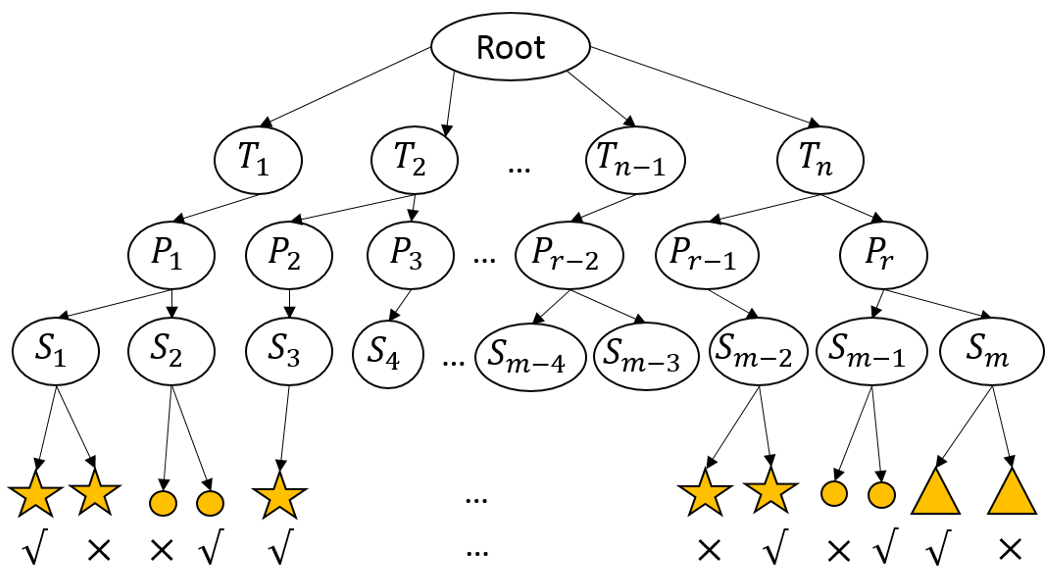 Fig 3: The A-Tree hierarchical structure for diverse data selection.
Experimental Insights
The study reveals a critical trade-off in urban computing: Model Training Time vs. Accuracy. While ResNet-18 from scratch achieved the highest accuracy (95.14%), it required significantly more training time compared to the fine-tuned version.
Furthermore, for visual matching, the authors utilized SIFT (Scale-Invariant Feature Transform). They discovered that using 10 keypoints for matching was the "sweet spot"—providing maximum accuracy in detecting duplicates without over-consuming computational resources.
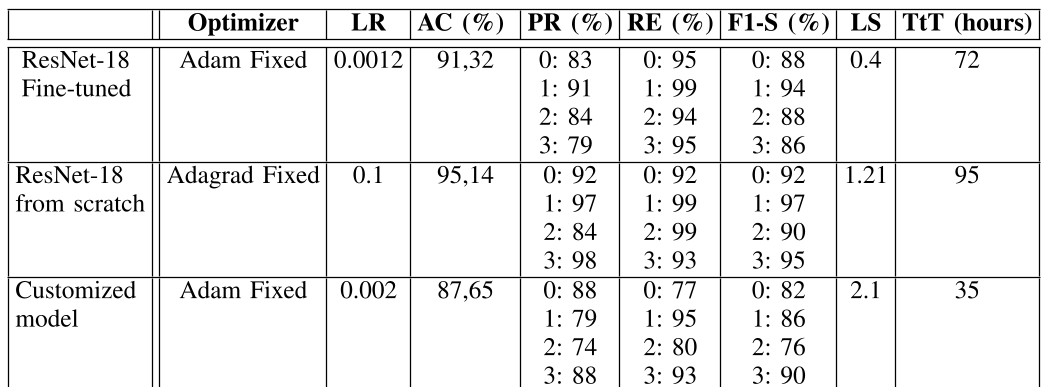 Table II: Comparative performance of different CNN models for event classification.
Critical Analysis & Conclusion
Takeaway
The framework successfully moves MCS from simple "data collection" to "intelligent data curation." By filtering at the source and using structured hierarchy to manage redundancy, the framework significantly reduces the "cognitive load" on city emergency responders.
Limitations & Future Work
One inherent challenge noted is that the A-Tree selection is order-dependent (NP-hard logic); the sequence in which photos arrive can change which specific photo is kept as the "representative."
Looking forward, the authors aim to integrate Edge Computing. By running the PTP phase on the user's device or a nearby cell tower, the system could prevent redundant data from ever reaching the core network, saving massive amounts of bandwidth in high-density urban emergencies.
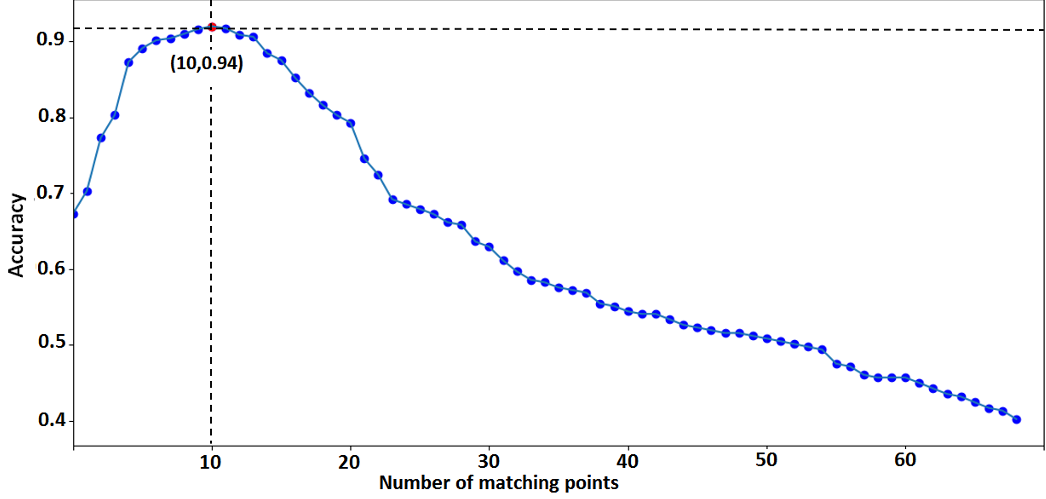 Fig 8: Practical implementation of the reporting platform showing real-time classification.