
PIXEE: Redefining Social Connectivity Through Affective Interfaces and Public Displays
PIXEE: pictures, interaction and emotional expression
PIXEE is an interactive public display system that combines sentiment analysis, computer vision, and musical composition to visualize and re-classify the emotional content of social media images. The system allows users to interact with a 5m x 2m projected surface, using gestures to experience and modify the emotional mapping (color and sound) of shared photos.
TL;DR
PIXEE is an ambitious cross-disciplinary project that transforms social media from a private, often isolating experience into a collective emotional journey. By projecting social media feeds onto massive interactive walls and layering them with sentiment-driven colors and sounds, PIXEE encourages users to explore, "play" with, and re-classify the emotions behind the images they share.
Context: Beyond the "Like" Button
In an era where digital interaction is often reduced to an algorithmic "approval," PIXEE asks a fundamental question: Can technology catalyze deeper emotional intelligence? Most social platforms ignore the nuances of human feelings—such as the ability to feel sorrow and optimism simultaneously. The authors argue that by placing social media content into a public, interactive setting, we can shift from "connected but alone" to genuine interpersonal resonance.
Pain Points & Motivation
The researchers identified two primary failures in current media systems:
- Diluted Engagement: Real-time sharing can actually detract from face-to-face interaction.
- Lack of Emotional Nuance: Contemporary tools do not support "mixed" emotions or the subversion of sentiment (e.g., using a sad image to convey a defiant sense of strength).
The motivation was to create an Affective Probe—a system that doesn't just analyze population trends but serves as a mirror for human reflection.
Methodology: The Architecture of Emotion
The PIXEE system stands on a triad of technologies: Computer Vision, Sentiment Analysis, and Generative Audio.
1. Sentiment Analysis & The Affect Grid
The core logic is based on Russell’s Circumplex Model, which maps emotions across two axes: Arousal (Excitement to Calm) and Valence (Positive to Negative). The system scrapes images from platforms like Weibo and Instagram, analyzing captions via the LIWC (Linguistic Inquiry and Word Count) tool to assign a preliminary color and percussive "musical motif."
2. Interaction Design
Users interact with a 5-meter-wide projected surface using depth cameras (Kinect-style sensors). A key feature is the Affect Grid Interface, where users can touch and drag an icon to change a photo's emotional classification.
 Figure 1: The large-scale interactive display in a warehouse setting.
3. Emotional Composition
Collaborating with professional composers, the team created 16 distinct four-part harmonies corresponding to the sectors of the affect grid. This turns the act of browsing photos into a percussive and melodic performance.
Field Observations: Unexpected Emotional Play
The most striking results came from how participants subverted the system. Instead of simply confirming the AI's sentiment analysis, users engaged in:
- Creative Identity Mapping: Capturing their own image while it was projected onto a textured wall to "wear" their digital identity.
- Emotional Irony: One participant labeled a skeleton image as "happy," explaining it represented a liberating breakup. This demonstrated that users value the ability to represent complex, conflicting feelings.
- Collective Peeking: Because the walls were often irregular (brick or wood), users developed a "peeking" gesture, literally pulling back visual layers to see the origin of an image.
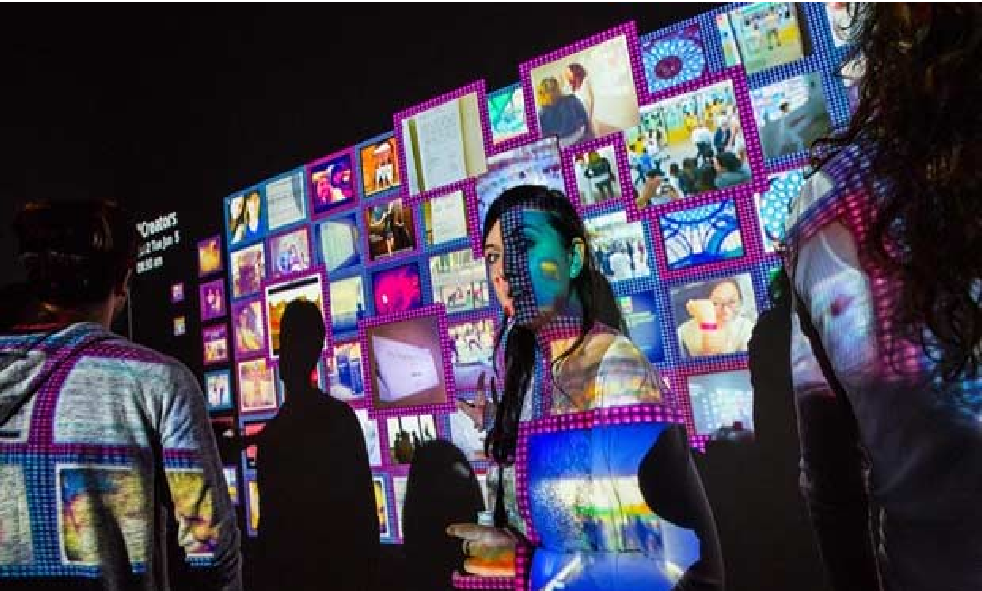 Figure 2: The Affect Grid allows users to manually adjust the valence and arousal of a shared image.
Critical Analysis & Conclusion
PIXEE demonstrates that Sentiment Analysis should not be a "black box" solution. Instead, it is most effective when it is a starting point for human intervention.
Key Takeaways:
- Public is Personal: Large-scale displays can create "true social settings" for digital content that otherwise stays buried in personal feeds.
- Cultural Fluidity: The team noted that color associations (e.g., Red for excitement) vary across US, China, and Korea, highlighting the need for localized affective design.
- Limitation: The reliance on text-based sentiment (captions) is a bottleneck; future iterations would benefit from direct image-based emotion recognition.
In conclusion, PIXEE moves the needle from "information presentation" to "emotional expression," suggesting a future where our public spaces are as emotionally resonant as our personal lives.