
Beyond the Tool: Negotiating Cultural Dynamics in CCMS Implementation
Planning for the Shaping Force of Cultural Dynamics in a Component Content-Management System Implementation
This research presents a framework for the successful implementation of Component Content-Management Systems (CCMS) in technical communication organizations. It introduces the concept of "cultural dynamics" as a critical shaping force and proposes a combination of organizational assessment and "diffusion enablers" to overcome common human-centric barriers in technology adoption.
TL;DR
Switching to a Component Content-Management System (CCMS) is often marketed as a technical migration, but in reality, it is a massive cultural disruption. This paper argues that the "information transfer" approach—simply giving people manuals and tools—is why many projects fail. Instead, success requires treating the system as a social construct and using "diffusion enablers" to bridge the gap between technical capability and human buy-in.
The "Tool-Centric" Trap
Many technical communication leaders fall into the trap of believing that a "rapid deployment" of a CCMS will solve their content woes. They treat the transition like a software installation when it’s actually a sociotechnical overhaul.
The author points out a critical flaw in current thinking: the Information Transfer Model. This model assumes that if you give experts enough data about a new tool, they will logically adopt it. However, practitioners know that fear of role changes, history of being "undervalued" by the organization, and rigid habits of practice are much more powerful than the product's feature list.
Methodology: The CCMS as a Social Construct
The paper utilizes Activity Theory to explain that a CCMS doesn't exist in a vacuum. It is part of an "activity system" involving:
- The Subject: The writers and editors.
- The Community: Engineering and marketing teams.
- The Rules: Implicit habits of practice (e.g., "Reviewers always send feedback late").
- Division of Labor: Who has the "expertise" and power in the group.
The Activity System Framework
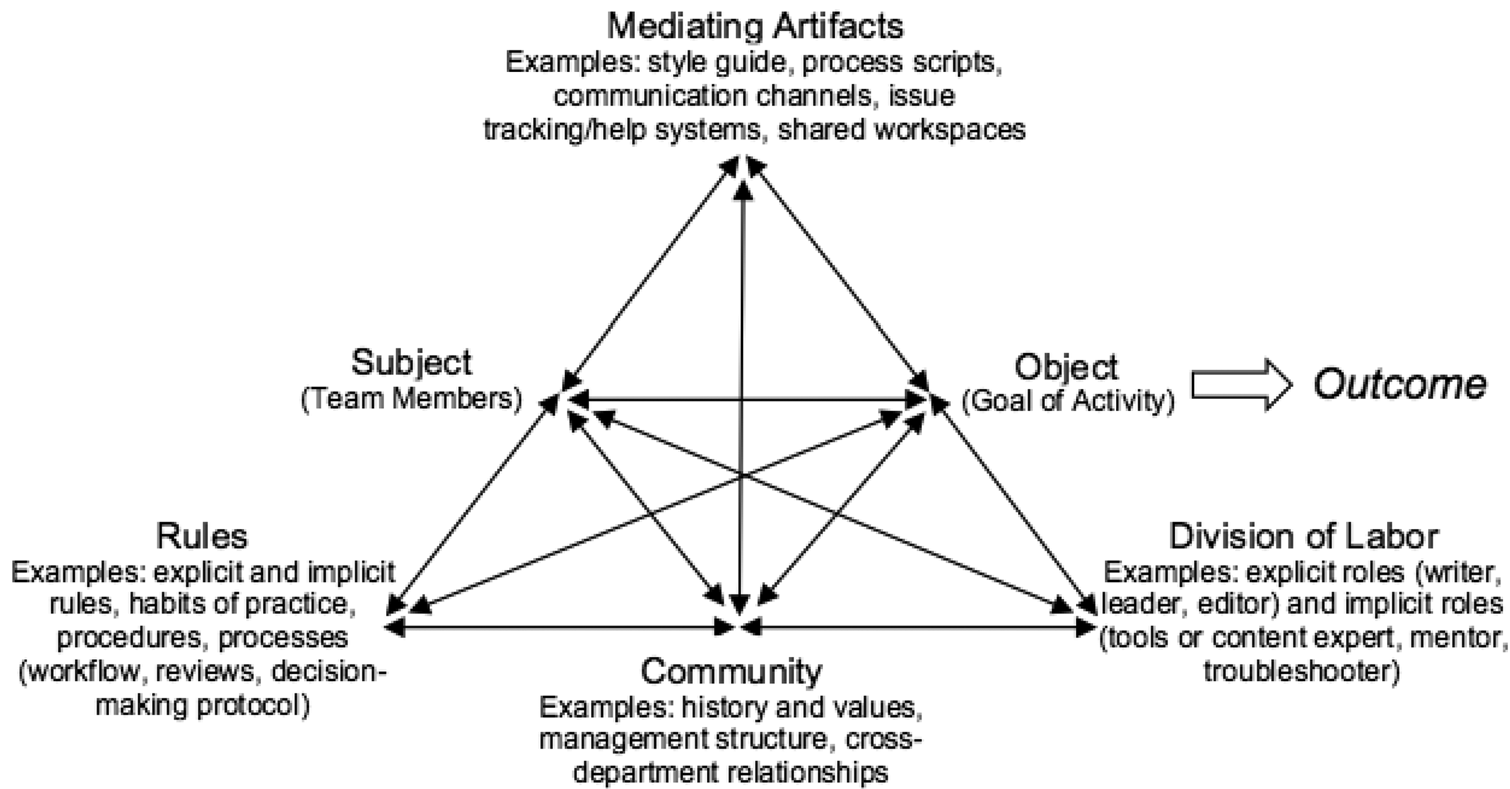 Figure 1: Understanding how artifacts, rules, and communities mediate the relationship between human subjects and their goals.
Key Strategies for Success
1. Assessing the "Emotional Health" of the Organization
Before buying a tool, leaders should conduct a cultural audit. The paper provides a comprehensive set of research questions (Table I) designed to uncover hidden resistance.
Example Insight: In the study, a technical documentation team was eager for a trial not because they loved the technology, but because they felt undervalued and hoped the tool would "prove" their worth. When the tool proved complex, that desperation turned into frustration and ultimately, rejection.
2. Implementing Diffusion Enablers
The paper introduces Diffusion Enablers—tools and activities that facilitate "meaning-making" rather than just "data dumping":
- Interactive Communication Channels: Moving away from webinars and emails toward face-to-face (or high-bandwidth video) negotiation where stakeholders can air grievances and align on terms.
- Tailored Training: Rejecting "one-size-fits-all" vendor training. Effective training must use the team's own content and reflect their actual future workflows.
- Collaborative Guides: Allowing the team to co-author the maps and guides for the new system. This converts "passive users" into "active owners."
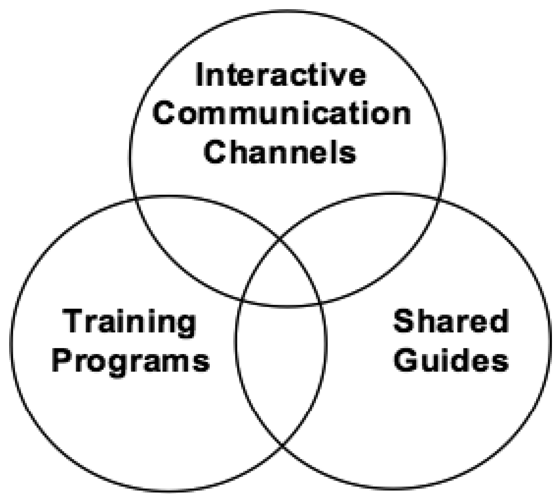 Figure 2: The three pillars of diffusion enablers: Interactive Channels, Training, and Shared Guides.
Experiments & Results: The Cost of Ignoring Culture
The paper highlights a devastating case study of a Fortune 500 company documentation team. They spent six months in a CCMS trial.
- The Failure: Because they didn't have a content strategy or a change management plan, they evaluated the system based on assumptions of what reviewers wanted, rather than actual needs.
- The Cost: The vendor lost tens of thousands of dollars, and the company lost six months of momentum and significant internal morale.
Major Takeaway: Resistance wasn't about the software's UI—it was about "information hoarding," uneven workload distribution, and a fear that the CCMS would make the writers' lives harder.
Critical Insight & Conclusion
The true value of this paper is the shift from "What does the tool do?" to "How does the team perceive what the tool does?"
Takeaways for Leaders:
- Don't skip the Knowledge Stage: Spend time assessing culture before the "Persuasion" stage even begins.
- Empower Opinion Leaders: Use respected peer writers—not just managers—to lead the cultural assessment to ensure honesty.
- Training is not Learning: Watching a webinar is not "know-how." Give users their own content and let them fail safely in a sandbox early and often.
The bottom line: Technology might be the vehicle, but culture is the engine. If the engine is broken, the newest vehicle won't take you anywhere.