
Digital Shadows: How Real-World Social Competence Dictates In-Game Toxicity and Leadership
Effects of Players’ Social Competence on Social Behaviors and Role Choice in Team-Based Multiplayers Online Games
This study investigates the impact of players' social competence and background on their social behaviors and role choices in Team-based Multiplayer Online Games (TMOGs), specifically League of Legends. Utilizing a mixed-method approach of surveys (N=177) and behavioral experiments (N=37), it identifies key correlations between real-world interpersonal skills and in-game performance/interaction.
TL;DR
Ever wondered why some teammates naturally lead while others spiral into "raging" after a single death? A new study from Tsinghua University reveals that your in-game behavior isn't just a byproduct of "gamer rage"—it is a direct reflection of your real-world social competence. By analyzing League of Legends players, researchers found that Conflict Management skills are the primary antidote to toxicity, while Game Ranking is the strongest predictor of leadership.
The "Toxic" Motivation
TMOGs (Team-based Multiplayer Online Games) like League of Legends and DOTA 2 have evolved into complex social ecosystems. However, anonymity and high-stress environments often trigger "destructive social behaviors." The researchers sought to understand if these behaviors are randomized or if they can be traced back to the player's inherent psychological traits. Specifically, they looked at whether we bring our real-world interpersonal baggage into the Summoner's Rift.
Methodology: From Survey to the Laboratory
The research followed a rigorous two-phase approach:
- Phase I (Psychological Mapping): 177 participants were surveyed using the Interpersonal Competence Questionnaire (ICQ), covering five dimensions: Initiation, Negative Assertion, Disclosure, Emotional Support, and Conflict Management.
- Phase II (Behavioral Observation): 37 participants played high-stakes "Ranked" matches in a controlled lab setting. Using Open Broadcaster Software (OBS), the team recorded chat logs and facial expressions to quantify actual social interaction frequencies.
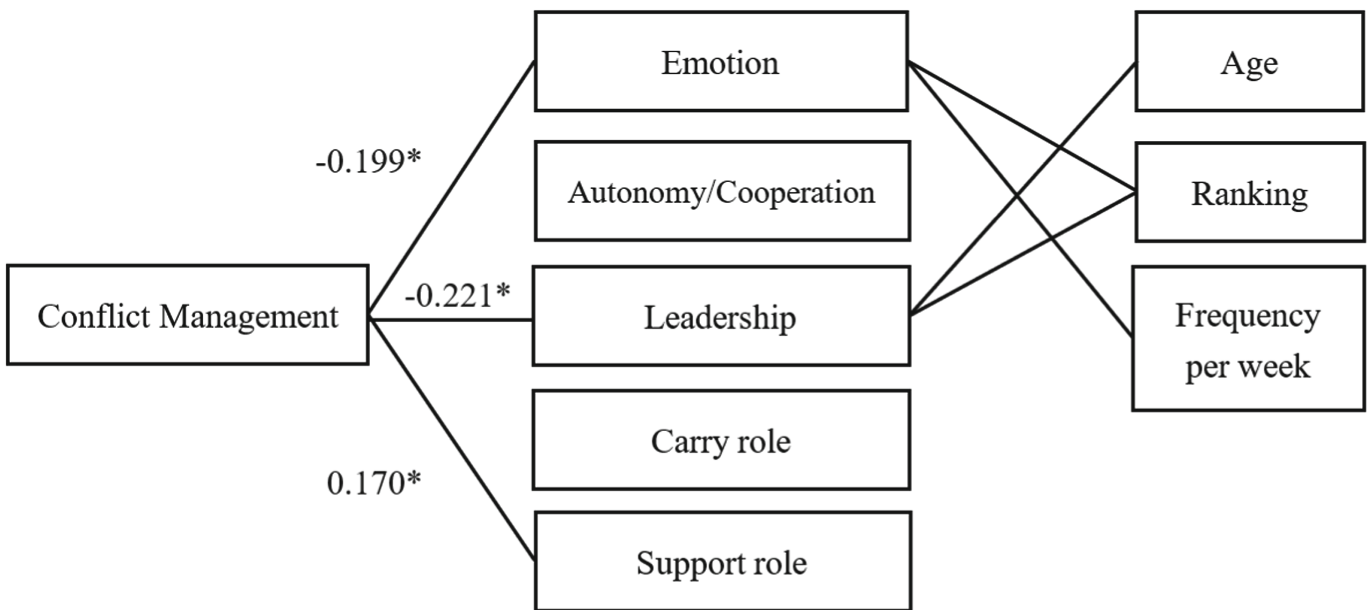 Figure 1: The research model exploring the nexus of gamer backgrounds, conflict management, and social outputs.
Key Insights: Why Your Teammate Flamers
The study provided empirical evidence for several intuitive yet formerly unquantified trends:
1. The Toxicity Trigger: Low Conflict Management
The experiment found a statistically significant link between Conflict Management and Raging. Players who struggle to handle interpersonal friction in real life are significantly more likely to engage in "negative communication" (blaming, verbal aggression) in-game. Conversely, those with high conflict management skills maintained "emotional support" even under pressure.
2. Leadership is Earned, Not Chosen
The "Leadership" metric (the tendency to make tactical calls) was not tied to social extroversion but to Game Ranking. High-ranking players (Gold III and above) exhibited more leadership and "neutral frequency" (using signals like "Danger" or "On My Way"). In contrast, low-ranking players lacked the "cognitive bandwidth" to communicate, as most of their energy was spent simply controlling their character.
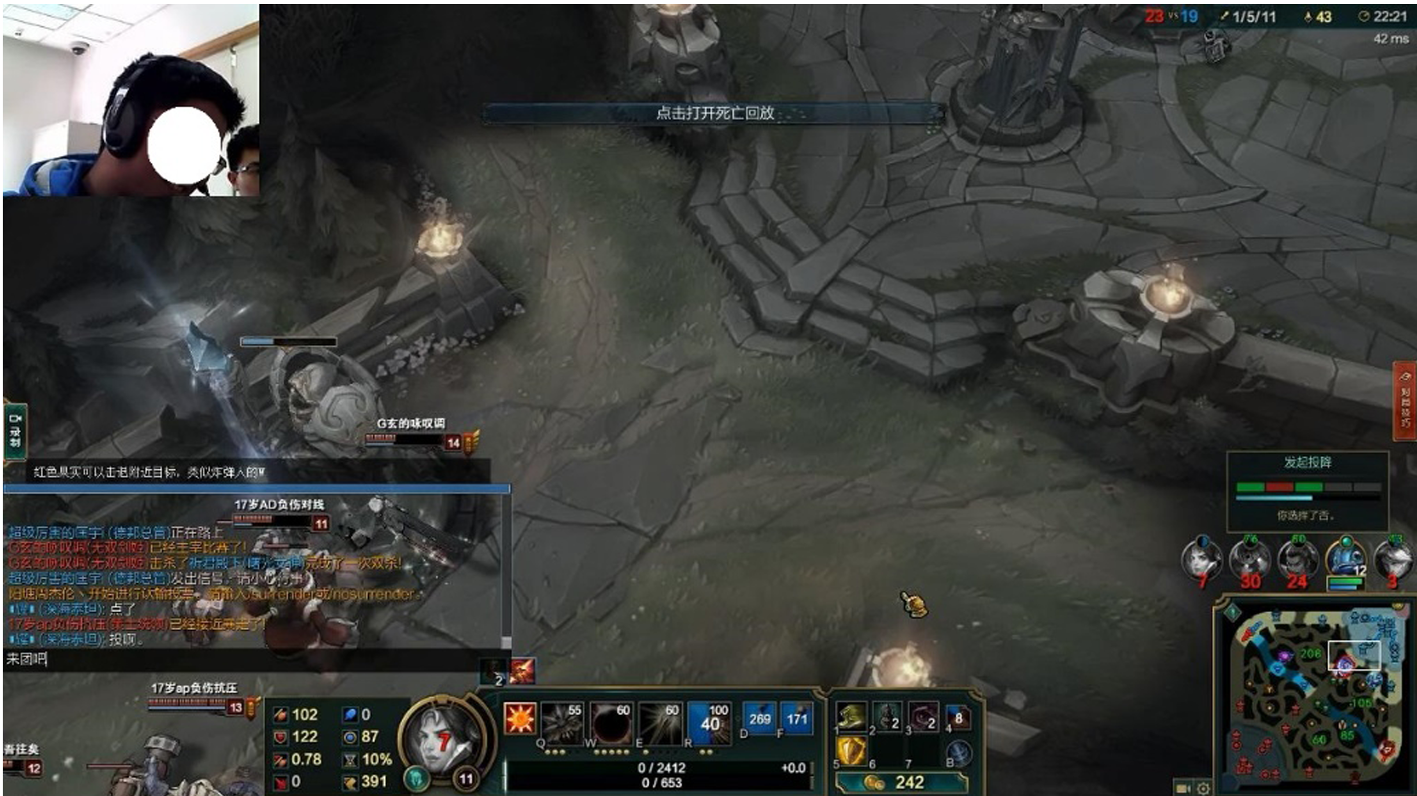 Figure 2: The laboratory setup used to record player interactions and facial expressions during gameplay.
Performance vs. Sociality
The data revealed a "Performance-Communication Loop":
- Winning Factor: KDA (Kill/Death/Assist) and cooperation (Autonomy/Cooperation) were the highest predictors of victory.
- The Power of KDA: Players with better individual performance (High KDA) were found to be more "persuasive." If a player with a poor score tries to lead, teammates are more likely to ignore them or respond with aggression.
Critical Analysis & Future Outlook
This work highlights a chilling reality for game designers: toxic behavior is often a personality trait, not just a situational reaction.
Limitations: The study acknowledges that the "laboratory effect" might have dampened toxicity—players are less likely to scream at teammates when they know they are being recorded. Furthermore, the sample was primarily university-aged, which may not capture the more volatile nature of younger adolescent gamers.
The Takeaway for Developers: Gaming platforms shouldn't just punish toxicity after it happens; they should perhaps use psychological profiling (or behavioral proxies) to pair players with compatible social competence levels. For the player, the lesson is clear: if you want to climb the ranks, working on your real-world conflict resolution might be just as important as practicing your skill shots.