
Pneumonia in SOT: Navigating the High-Stakes Complexity of the Transplant Lung
Pneumonia in solid organ transplantation: Guidelines from the American Society of Transplantation Infectious Diseases Community of Practice.
This paper presents the updated clinical guidelines from the AST Infectious Diseases Community of Practice for diagnosing and managing pneumonia in solid organ transplant (SOT) recipients. It proposes a risk-stratified, two-tier diagnostic approach and provides evidence-based recommendations for empiric antimicrobial therapy tailored to the unique vulnerabilities of transplant patients.
TL;DR
Pneumonia remains a leading cause of morbidity in solid organ transplant (SOT) recipients. These guidelines from the American Society of Transplantation (AST) provide a masterclass in balancing clinical observation with aggressive diagnostic intervention, emphasizing a two-tier diagnostic approach and empiric therapies that account for the unique "net state of immunosuppression" and local resistance patterns.
The Diagnostic Paradox in Transplantation
In an otherwise healthy patient, a cough and fever are straightforward. In a transplant recipient, those symptoms are often absent or masked by immunosuppressive drugs. The stakes are higher because the differential diagnosis is not just bacterial; it includes a "rogue's gallery" of opportunistic molds (Aspergillus), viruses (CMV), and even non-infectious mimics like mTOR inhibitor-induced pneumonitis.
The authors argue that traditional pneumonia severity scores like CURB-65 or PSI are insufficient for SOT patients. These tools often underestimate the risk of rapid clinical decline in patients who lack a robust inflammatory response.
Methodology: The Two-Tier Strategy
The core of the guideline is a logic-driven algorithm that categorizes patients based on clinical stability and risk factors.
Tier 1: The Initial Assessment
For stable patients with low-risk profiles, the focus is on:
- Molecular Diagnostics: PCR for influenza and respiratory viruses (especially during seasonal peaks).
- Radiographic Baseline: Chest X-ray for all, with a low threshold for Chest CT in high-risk cases.
- Microbiological Basics: Blood cultures and Legionella/Pneumococcal urinary antigens.
Tier 2: Aggressive Intervention
If the patient deteriorates or fails to improve within 24-48 hours, the guidelines mandate a shift to invasive procedures.
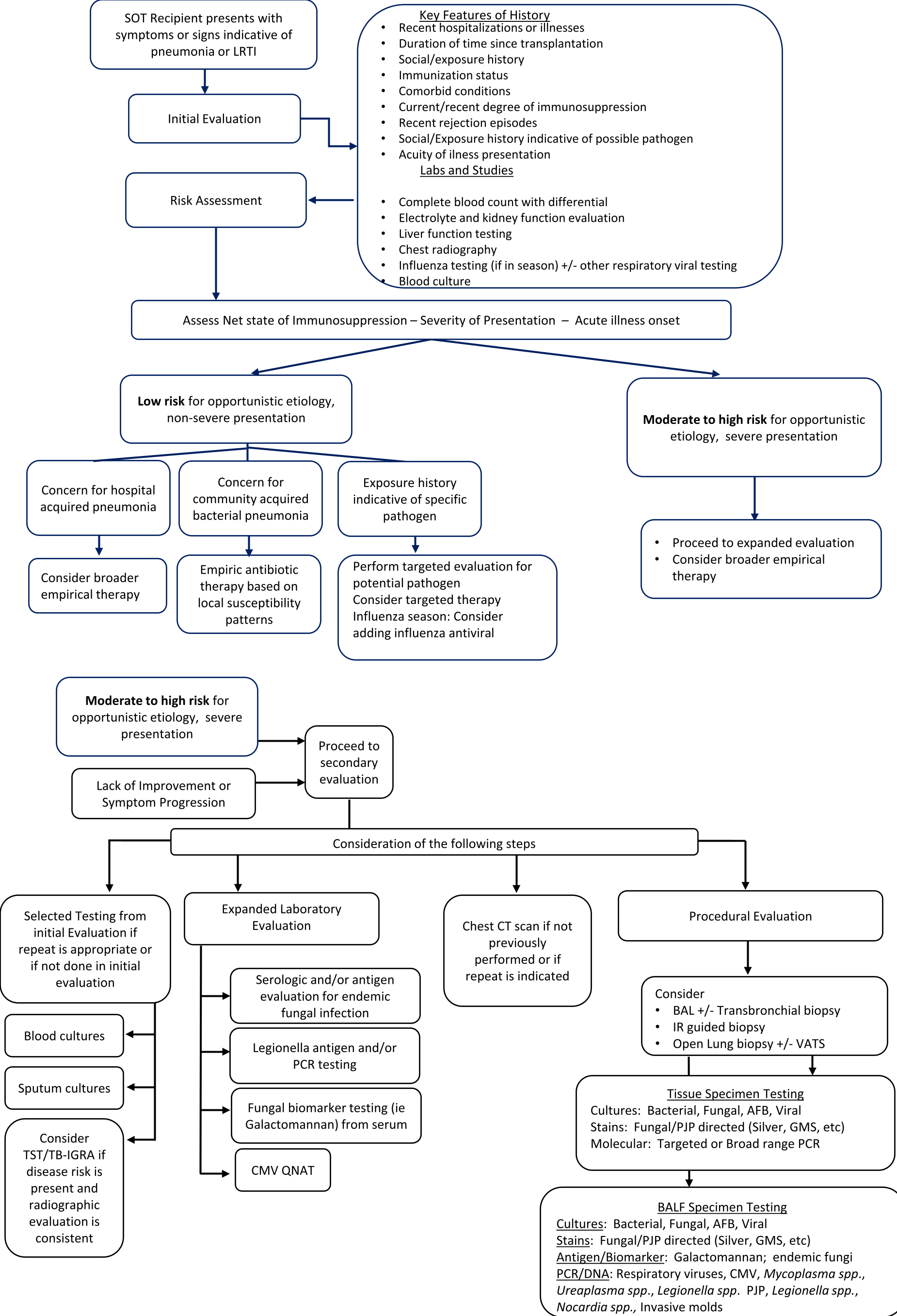 Figure 1: The proposed diagnostic algorithm favoring early invasive testing (BAL/Biopsy) for non-responding patients.
Bronchoalveolar Lavage (BAL) is the cornerstone of Tier 2, offering a diagnostic yield as high as 77% in some transplant cohorts. The paper stresses that the decision to move to BAL or lung biopsy must be highly individualized, balancing procedural risk against the danger of untreated opportunistic infection.
Pathogen Mapping: Timing is Everything
The guidelines reinforce the "Timothy Post-Transplant" framework:
- Early (< 1 month): Dominated by hospital-acquired and donor-derived infections (e.g., Pseudomonas, MRSA).
- Middle (1-6 months): Peak window for opportunistic pathogens like Pneumocystis jirovecii (PJP) and CMV.
- Late (> 6 months): Mostly community-acquired infections, though chronic immunosuppression keeps the door open for Nocardia and Tuberculous mycobacteria.
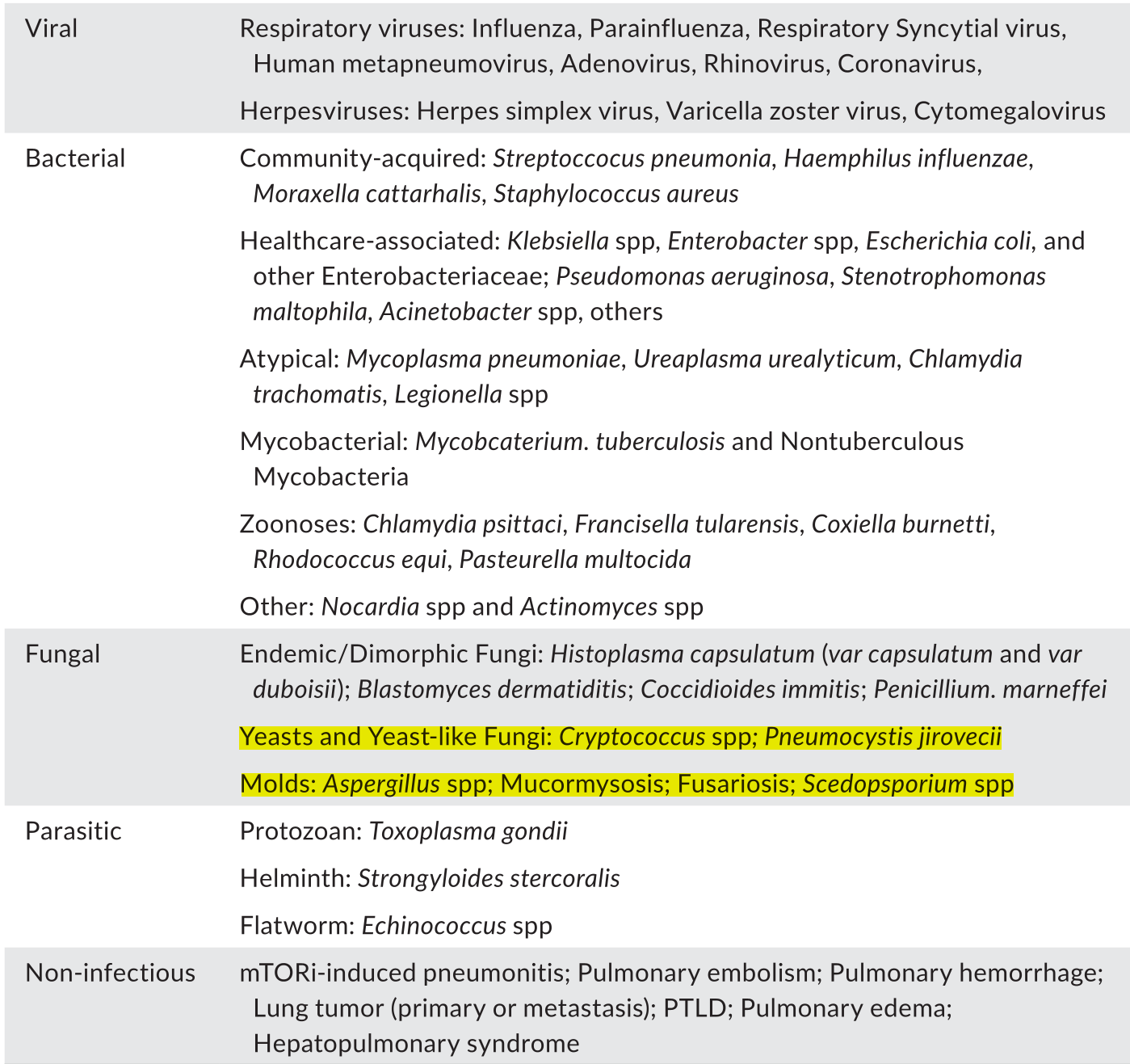 Table 1: The expansive differential diagnosis including viral, bacterial, fungal, and parasitic etiologies.
Empiric Therapy: A Moving Target
The guidelines emphasize that empiric treatment must cover community-acquired pathogens (S. pneumoniae, H. influenzae) but should be escalated to include coverage for intracellular pathogens (Legionella) and MDR organisms based on the patient's colonization history.
Specifically for Lung Transplant Recipients, the authors highlight the necessity of targeting multi-drug resistant Gram-negative rods (GNRs) that often colonize the denervated lung graft.
Critical Insight & Future Directions
The most striking admission in this guideline is the "limited literature comparatively evaluating diagnostic approaches." Much of the current standard of care is built on clinical experience (Expert Opinion) rather than randomized controlled trials.
Key Takeaways for Clinicians:
- Don't Wait: If a transplant patient isn't improving on standard antibiotics, proceed to BAL immediately.
- Context Matters: A nodular infiltrate points to mold or Nocardia; diffuse ground-glass opacities point to PJP or CMV.
- Local Mastery: Empiric choices must be dictated by local antibiograms, as resistance patterns in transplant centers often exceed national averages.
As we move toward 2026, the integration of unbiased Next-Generation Sequencing (mNGS) of BAL fluid promises to revolutionize this field, potentially moving "invasive but high-yield" diagnostics earlier in the workflow.