
Navigating the LBSN Landscape: A Deep Dive into Modern POI Recommendation Trends
697_A Survey on Point-of-Interest Recommendation in Location-based Social Networks.
Summary
Problem
Method
Results
Takeaways
Abstract
This paper presents a systematic mapping of Point-of-Interest (POI) recommendation research in Location-Based Social Networks (LBSNs), analyzing 73 major studies from 2017 to 2019. It categorizes the state-of-the-art based on problem types, methodologies, and data sources, highlighting the dominance of Accuracy-driven models and established techniques like Memory-Based Collaborative Filtering.
## TL;DR
The world of Point-of-Interest (POI) recommendation is at a crossroads. While the integration of geographic and temporal data has become standard, the field is currently "trapped" in an accuracy-centric paradigm. This comprehensive survey of 73 high-impact papers reveals that while we are getting better at predicting *where* a user might go, we are neglecting *why* they might want something new (novelty) or varied (diversity).
## Background & Positioning
As Location-Based Social Networks (LBSNs) like Foursquare and Yelp have matured, POI recommendation has evolved from simple collaborative filtering to complex multi-modal systems. This study positions itself as a critical audit of the years 2017-2019, serving as a successor to earlier surveys (e.g., Liu et al., 2017) and highlighting a shift toward "Next-POI" and "Time-Aware" recommendations.
## The Core Struggle: Accuracy vs. Reality
The authors identify a major disconnect between academic evaluation and real-world utility.
* **The Reproducibility Crisis**: There is a chaotic "Wild West" of metrics. With such a fragmented landscape of datasets and home-grown metrics, claiming "SOTA" status becomes increasingly difficult to verify.
* **The Homogenization Trap**: By optimizing solely for accuracy (Precision/Recall), systems risk recommending the same types of places repeatedly, leading to "filter bubbles" in the physical world.
## Methodology: Mapping the Ecosystem
The survey categorizes research into a high-dimensional space involving problems, methods, and data types.
### 1. The Data Hierarchy
The research confirms a clear hierarchy in what powers these models:
* **Geographical Data**: The "north star" of POI.
* **Temporal/Sequential Data**: Essential for the emerging "Next-POI" trend.
* **Textual Data**: Largely untapped, representing a significant opportunity for future Natural Language Processing (NLP) integration.
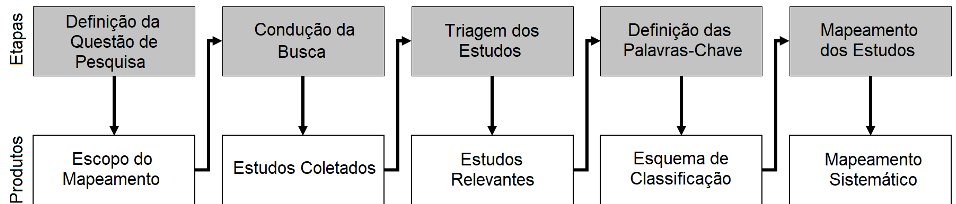
*Figure 1: The systematic mapping workflow used to synthesize the state-of-the-art.*
### 2. Methodological Trends
Despite the rise of deep learning, **Memory-Based Collaborative Filtering (CF)** still dominates over 50% of the literature. However, the "Relevance Score" introduced by the authors suggests that the most robust experiments often involve **Hybrid models** that fuse geographic constraints with latent factor models.
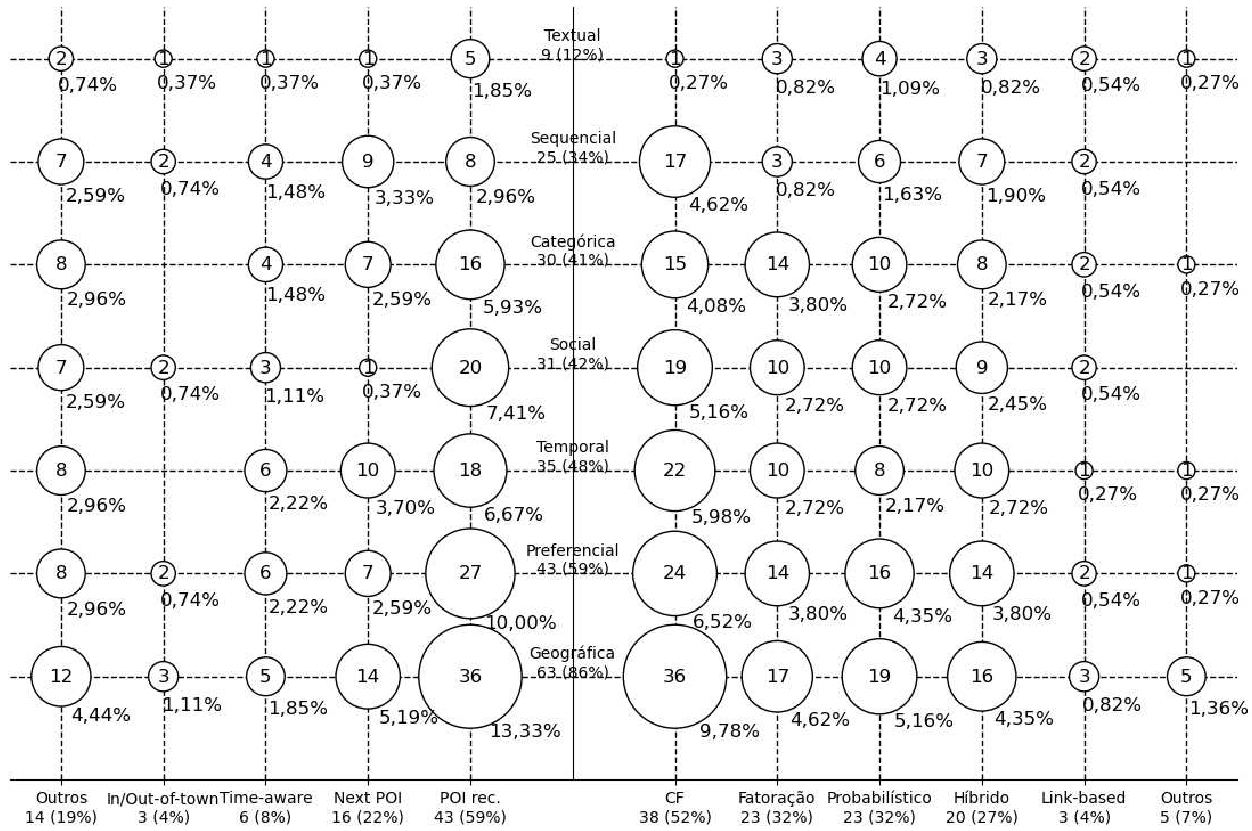
*Figure 2: Distribution of research effort. Note the heavy concentration in POI recommendation using Geographical and User Preference data.*
## Key Experimental Insights
The survey's meta-analysis of results shows that:
* **Datasets**: Foursquare and Gowalla remain the gold standards, but their age may not reflect current post-pandemic mobility patterns.
* **Metrics**: A staggering percentage of papers ignore statistical significance, which is a red flag for the Technical Editor's eye.
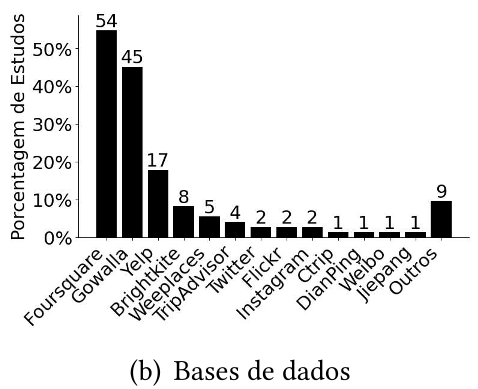
*Figure 3: Visualization of the lack of consensus—Precision leads, but "Other" metrics represent a fragmented long tail.*
## Critical Analysis & Future Outlook
The survey concludes with a call to arms for the AI community. The "low-hanging fruit" of improving Precision by adding more features has been plucked. The real frontier lies in:
1. **Textual Exploitation**: Moving beyond coordinates to understand the *sentiment* and *nuance* of reviews.
2. **Beyond-Accuracy Metrics**: Adopting diversity, novelty, and serendipity as first-class citizens in objective functions.
3. **Standardized Benchmarking**: Establishing a "POILens" or "ImageNet for POI" to allow for fair, transparent comparisons.
For practitioners, the takeaway is clear: if you are building a POI recommender today, don't just ask "will the user go there?" Ask, "how will this recommendation enrich their urban experience?"