
MAPL: Accelerating Community Detection via Population Learning and Transition Probabilities
Population Learning Based Memetic Algorithm for Community Detection in Complex Networks
The paper introduces MAPL (Memetic Algorithm with Population Learning), a novel approach for community detection in complex networks optimized via modularity. Key innovations include a smart initialization method using transition probability matrices and a local search strategy guided by population learning to accelerate convergence to SOTA performance.
TL;DR
Community detection in complex networks is a notorious NP-hard challenge. This paper presents MAPL, a Memetic Algorithm that leverages Population Learning and Transition Probability Matrices (TPM) to optimize network modularity. Unlike traditional GA approaches that start "blind," MAPL uses structural insights to seed its population and guides its local search using the collective wisdom of elite individuals, achieving superior accuracy on both real-world and synthetic benchmarks.
The Bottleneck: Why Standard GAs Fail in Large Graphs
In the context of complex networks—be it social, biological, or technological—a "community" is a cluster of nodes with dense internal connections and sparse external ones. Finding these clusters is treated as a modularity () optimization problem.
The primary pain point in existing Evolutionary Algorithms (EAs) is Initialization and Search Efficiency:
- Poor Seeds: Initializing alleles based purely on direct neighbors leads to a low-quality initial population as the network scale grows.
- Stagnant Local Search: Standard hill-climbing methods often get trapped in local optima because they lack a "directional sense" of where the global optimum might lie.
Methodology: The MAPL Innovation
MAPL introduces a two-pronged strategy to solve these issues: Intelligent Initialization and Guided Refinement.
1. Structural Initialization (TPM & SSTN)
Instead of randomly picking neighbors, MAPL calculates a three-step Transition Probability Matrix (TPM). The intuition is that if you can reach node from node in three random steps with high probability, they likely belong to the same community. This filters out "weak" connections and focuses the algorithm on structurally significant nodes from the start.
2. Population Learning-Based Local Search
This is the "Memetic" core of the algorithm. MAPL maintains a "Learning Probability" () for each gene.
- Evolutionary Feedback: The algorithm selects the top 5% of individuals (the elites).
- Probability Update: It increases the weights of alleles present in these elites.
- Guided Perturbation: During local search, instead of random mutations, the algorithm favors alleles with higher , effectively "learning" the community structure from the most successful solutions in the population.
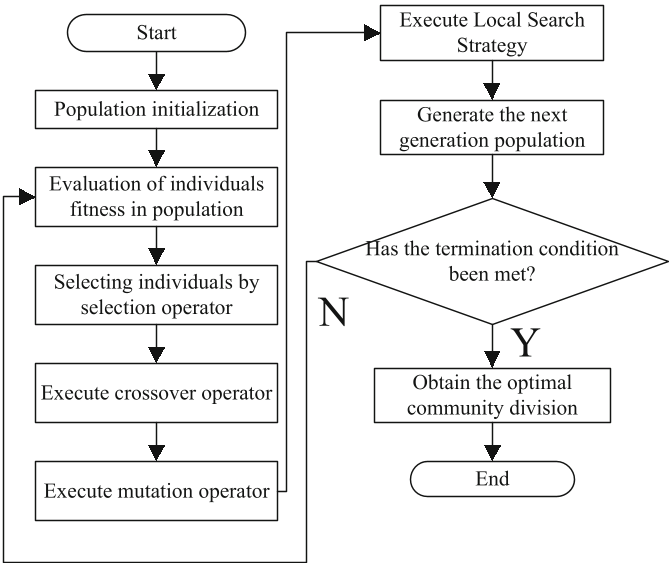 Figure 1: The overarching workflow of the MAPL algorithm, showcasing the loop between genetic operations and local search.
Experimental Validation
The authors tested MAPL against classic baselines (GA, GN, MOEA/D, and Meme) using both real-world datasets and synthetic LFR benchmark networks.
Performance on Real Networks
In the American College Football network, MAPL achieved a modularity of 0.6046, outperforming the standard Meme algorithm (0.5888) and the GN algorithm (0.5350). The convergence curve demonstrates that the Population Learning strategy allows the algorithm to find near-optimal solutions in fewer iterations compared to traditional methods.
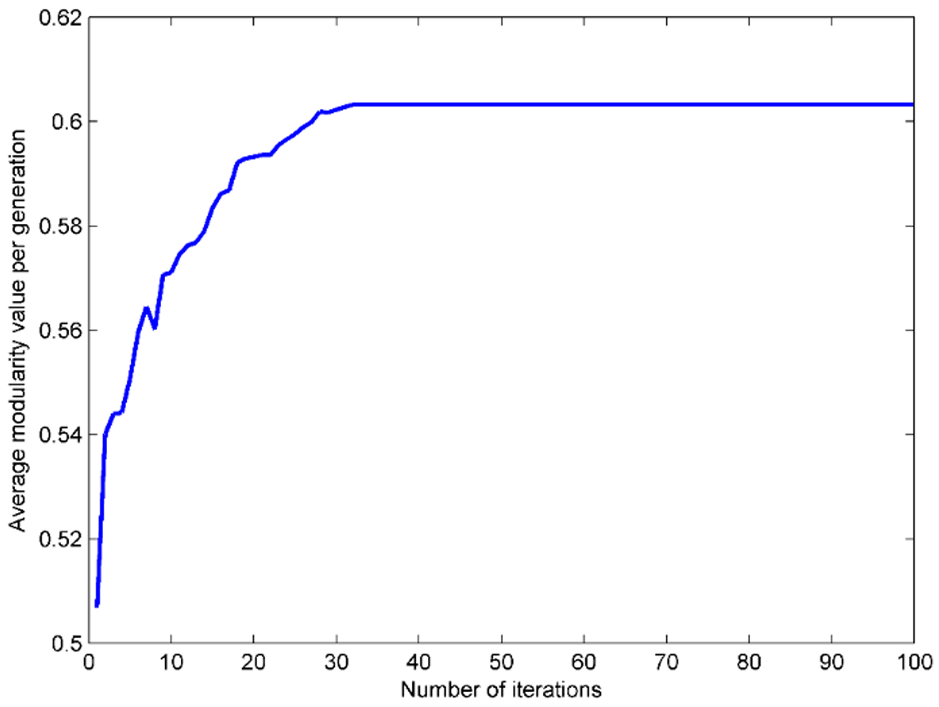 Figure 2: Convergence analysis on the Football network, showing the efficiency of the MAPL approach.
Robustness in Synthetic Networks
Using Lancichinetti-Fortunato-Radicchi (LFR) benchmarks, the study analyzed how the algorithm handles "fuzzier" communities (controlled by the mixing parameter ).
- Result: While GA and MOGA performance collapsed at , MAPL maintained a Normalized Mutual Information (NMI) of nearly 1.0 up to and stayed above 0.9 even at . This proves that MAPL is exceptionally robust against inter-community noise.
Critical Insight & Conclusion
The success of MAPL lies in its Inductive Bias. By baking the physics of random walks (TPM) into the initialization and utilizing the statistical distribution of elite genes (Population Learning), the algorithm avoids the "random walk" through the search space that plagues traditional EAs.
Takeaway: For researchers working on discrete optimization in graphs, MAPL demonstrates that "learning" shouldn't just happen between generations via crossover; it should happen within the search process by aggregating the features of the current best candidates.
Future Directions: The authors suggest extending this to signed networks (networks with both positive and negative relationships) and using niching technologies to further prevent premature convergence in even larger-scale systems.