
Predicting Postpartum Depression: The Power of Ensemble Learning in Emotion-Aware IoT Systems
Postpartum depression prediction through pregnancy data analysis for emotion-aware smart systems
This paper proposes an improved emotion-aware smart system algorithm designed to predict the risk of Postpartum Depression (PPD) by analyzing biomedical and sociodemographic data from pregnant women. Utilizing ensemble classifiers (specifically Bagged Trees), the system integrates IoT and cloud computing to monitor high-risk patients, achieving superior predictive performance with an AUC of up to 0.927 for critical risk indicators.
TL;DR
This study presents a specialized algorithm for Emotion-Aware Smart Systems that predicts Postpartum Depression (PPD) risk by processing biomedical and sociodemographic data. By evaluating 17 different machine learning models, the researchers found that Ensemble Classifiers (specifically Bagged Trees) deliver the most reliable results, achieving an AUC of 0.927 in identifying critical clinical indicators such as HELLP syndrome.
Background & Motivation
Postpartum depression is a silent crisis in public health, affecting millions of women worldwide. While the "baby blues" are often transient, PPD is a severe psychological disorder that can lead to long-term developmental issues for the child and life-threatening risks for the mother.
The authors' core Insight is that the seeds of PPD are often sown during pregnancy through physical complications like hypertensive disorders and gestational diabetes. By treating these clinical markers as "Big Emotional Data," they propose a system that moves beyond subjective surveys into the realm of cognitive computing and real-time information fusion.
Methodology: The Architecture of Awareness
The proposed system relies on a three-tier architecture:
- Data Collection: IoT sensors and clinical records capture real-time physiological and sociodemographic data.
- Cloud Analysis: Data is processed in a private cloud where various ML models—ranging from Simple Decision Trees to complex Support Vector Machines—are executed.
- Supportive Decision-Making: The system generates statistical inferences for specialist physicians, allowing for early intervention.
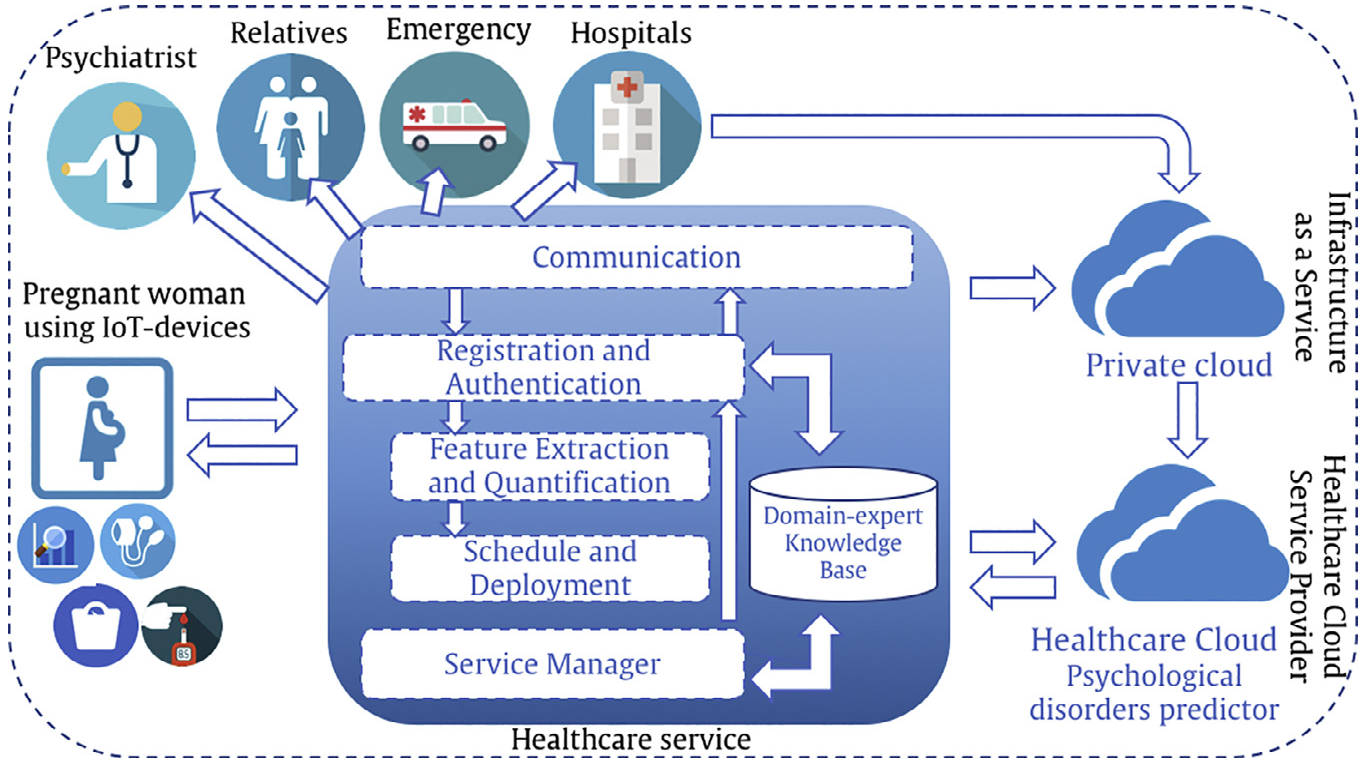 Figure 1: Proposed architecture integrating IoT and Cloud Computing for maternal monitoring.
The study places a heavy emphasis on Ensemble Learning. Unlike a single model, Ensemble methods like Bagging (Bootstrap Aggregating) combine multiple "weak" learners to form a "strong" classifier. This is mathematically essential in medical diagnostics to reduce the False Positive Rate (FPR), ensuring doctors aren't overwhelmed by false alarms.
Experimental Results & SOTA Comparison
The researchers tested 17 classifiers on a real-world dataset from the Maternity School Assis Chateaubriand.
Key Performance Metrics:
- Preeclampsia Prediction: Bagged Trees reached a 96.7% True Positive Rate.
- HELLP Syndrome: This critical indicator was identified with an AUC of 0.927, outperforming standard SVMs and k-Nearest Neighbors.
- Childbirth Outcomes: Boosted Trees achieved an Accuracy of 94.5% for predicting ICU admissions.
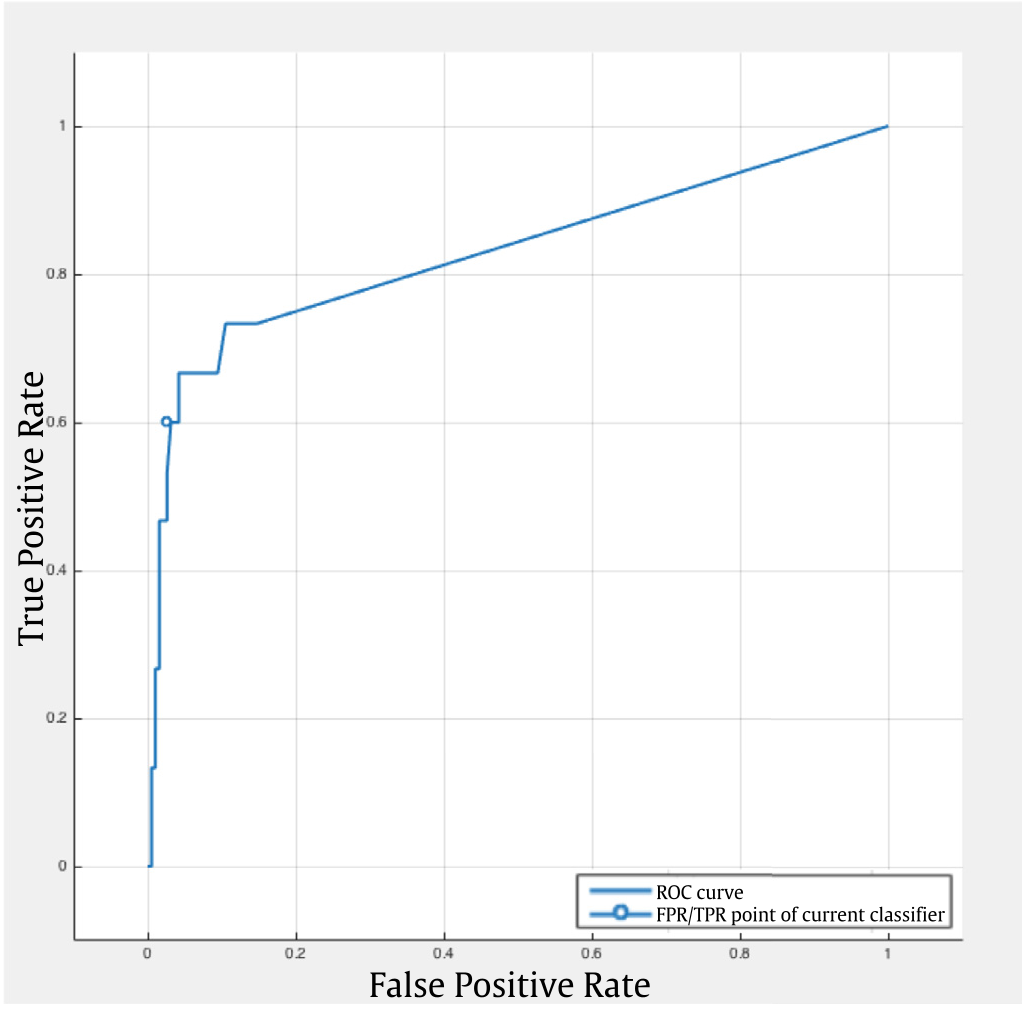 Figure 2: ROC Curve of the Bagged Tree classifier for severe preeclampsia, demonstrating high sensitivity and specificity.
The experiments confirm that while simple models (like Simple Decision Trees) are easy to interpret, they lack the generalization power needed for complex clinical datasets. Ensemble models provide the necessary complexity to capture the non-linear relationships between pregnancy complications and emotional health.
Critical Analysis & Conclusion
Takeaway: The integration of IoT and Ensemble Learning transforms PPD screening from a late-stage psychiatric evaluation into a preventative clinical workflow.
Limitations:
- The sample size (205 parturient women) is relatively small for "Big Data" claims, though sufficient for initial validation.
- The model's predictive power for "Antepartum Cesarean" was lower (AUC 0.629) due to the subjective nature of elective surgeries in certain regions.
Future Work: The authors suggest exploring more advanced ensemble architectures and expanding the dataset to include diverse psychological disorders. For the industry, this marks a shift toward Emotion-Aware Wearables that don't just track steps, but actively monitor for the biological signatures of depression.