
GED Dynamics: Predicting the Fate of Social Communities via Evolution Chains
Predicting Community Evolution in Social Networks
This paper introduces a systematic framework for predicting the future states of social communities by analyzing historical movement patterns. Utilizing the Group Evolution Discovery (GED) method, the study transforms temporal community changes into "evolution chains," which serve as high-dimensional feature sets for training multi-class classifiers.
TL;DR
Predicting whether a social group will grow, merge, or dissolve is a complex temporal task. This paper presents a robust framework that utilizes the Group Evolution Discovery (GED) method to extract "evolution chains"—multi-generational histories of community behavior. By testing on real-world data like Facebook and DBLP, the research proves that a group's future is best predicted by looking back at its last 3 to 7 states.
The Dynamic Reality of Social Groups
Most social network models provide a "snapshot" of a community, but in reality, groups are living organisms. They are born, they grow, they merge with others, and eventually, they vanish. Existing research often fails to capture this momentum. If we only look at how a group looks today, we miss the vital context of where it came from—was it a stable core for years, or a sudden merger of two volatile factions?
The authors argue that to predict the future, we must model the pathway of the community, not just its current connectivity.
Methodology: From Snapshots to Evolution Chains
The proposed workflow moves through four distinct technical phases to bridge the gap between static graphs and predictive intelligence:
- Temporal Extraction: Raw data (posts, co-authorships) is sliced into discrete time frames.
- Community Identification: The Clique Percolation Method (CPM) is used to find overlapping communities, recognizing that individuals belong to multiple circles simultaneously.
- Event Detection (The GED Core): This is the heartbeat of the paper. The Group Evolution Discovery (GED) algorithm identifies specific events (Merge, Split, Dissolve, etc.) between periods and .
- Predictive Modeling: These events are strung together into Evolution Chains. Each chain is then converted into a high-dimensional feature vector (31 structural features per time step) to train a classifier.
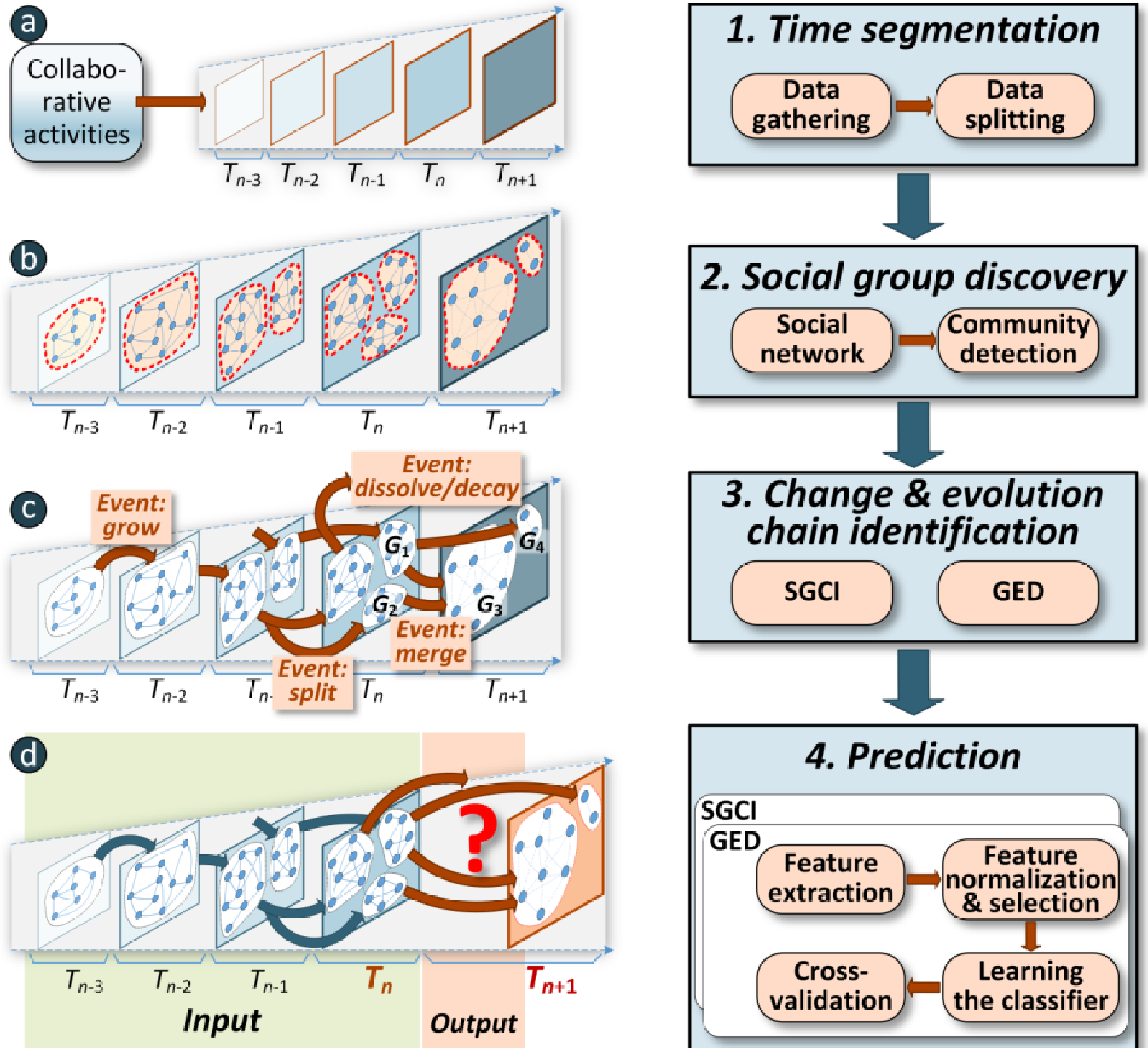 Figure 1: The four-phase pipeline from raw data to event prediction.
Key Insights: The Power of History
The researchers didn't just ask if history matters, but how much history is needed. They tested varying lengths of evolution chains across three diverse datasets:
- DBLP: Professional, academic co-authorship.
- Facebook: Personal social interactions.
- Blogosphere: Public discourse and opinion sharing.
1. The "Length" Threshold
A critical discovery was that Accuracy Chain Length, up to a point. While more data generally improved the model, the performance gains plateaued between 3 and 7 time steps. This suggests that social communities have a "memory" that dictates their short-to-medium-term fate, but extremely old history eventually becomes noise.
2. Feature Selection and GED
By calculating 31 structural features for every link in the chain, the model could identify complex patterns. For instance, a group that has been steadily merging over three periods has a much higher likelihood of eventually "Dissolving" or "Splitting" due to size-related instability compared to a stagnant group.
Critical Analysis & Future Outlook
Takeaway: This work transitions Community Detection from a descriptive task to a predictive one. It provides a standardized anatomy for "Community History" that can be used by any machine learning model.
Limitations:
- The method treats evolution as a sequence of discrete events; however, real-world changes are often continuous and fluid.
- The complexity grows exponentially as groups merge (one group can have many "parent" chains), which might pose scaling challenges for massive networks like Twitter or Global Financial transactions.
Future Work: Integrating this evolution chain logic into Temporal Graph Neural Networks (TGNNs) could be the next frontier, allowing for the end-to-end learning of evolution patterns without the need for manual feature engineering.