
From Brain Processing to Proficiency: Predicting L2 Levels via Cognitive Tasks
Predicting Second Language Proficiency Level Using Linguistic Cognitive Task and Machine Learning Techniques
This paper introduces a novel machine learning-based approach to predict second language (L2) proficiency by measuring internal linguistic cognitive abilities. Using four specialized cognitive tasks—Reading/Listening Lexical Decision, Translation Recognition, and Semantic Priming—the study employs a Random Forest model to achieve a predictive accuracy of approximately 74% in classifying learner levels.
TL;DR
Researchers have developed a method to predict your English proficiency not by asking you to write an essay, but by measuring how fast your brain recognizes words and their relationships. By combining four linguistic cognitive tasks with a Random Forest model, this approach achieves nearly 74% accuracy in predicting L2 levels, offering a faster and cheaper alternative to traditional exams like TOEFL or TOEIC.
Background: The Cost of Language Assessment
Standardized language tests are the gatekeepers of global mobility, yet they are notoriously inefficient. They require hours of concentration and significant financial investment. More importantly, they often measure "test-taking skills" rather than pure linguistic competence. This paper shifts the focus from output (what you produce) to cognitive throughput (how your brain processes the language).
The Core Insight: The Cognitive Fingerprint
The authors operate on a powerful hypothesis: linguistic cognitive ability—the speed and accuracy with which you identify words, switch between languages, and connect concepts—is inherently tied to your overall proficiency.
The Four Pillars of Cognitive Measurement
- Lexical Decision Task (LDT): Distinguishing real words from "pseudo-words" (e.g., "apple" vs "appli"). This measures basic lexical access in both reading and listening modes.
- Translation Recognition Task (TRT): Determining if an L1 word and an L2 word are a correct pair. This tests the efficiency of the "language switch" in the brain.
- Semantic Priming Task (SPT): Checking if two words are related (e.g., "big" and "small"). This evaluates the depth of the semantic network in the learner's mind.
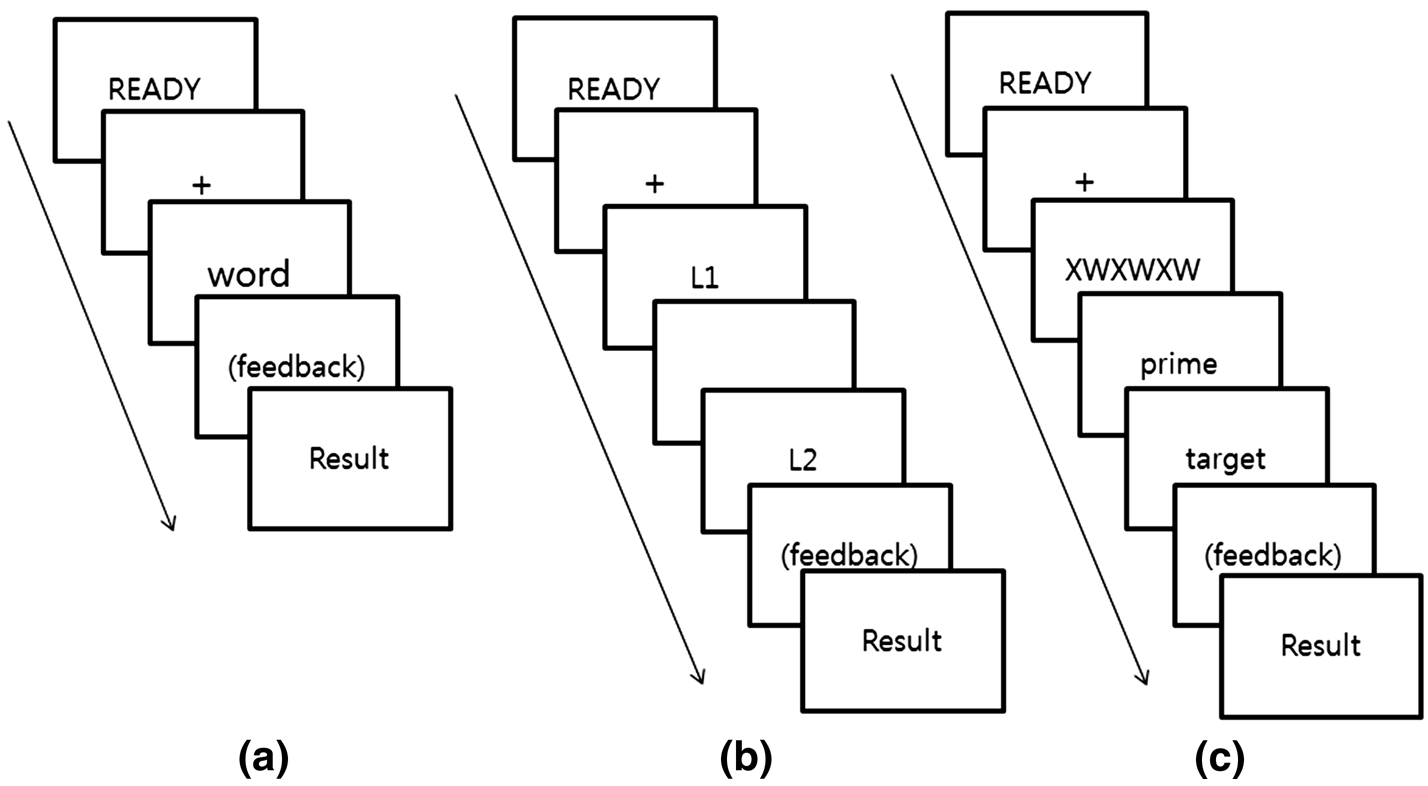 Figure 1: The workflow for Lexical Decision, Translation Recognition, and Semantic Priming tasks.
Methodology: From Reactions to Predictions
The researchers collected data from 42 participants, recording two key metrics for each task:
- Correctness: The ratio of accurate responses.
- Inverted Response Time (IRT): A normalized score where faster reactions result in higher values (capped at a 3000ms threshold to filter out lapses in attention).
These 8 features (2 metrics × 4 tasks) were fed into various machine learning models.
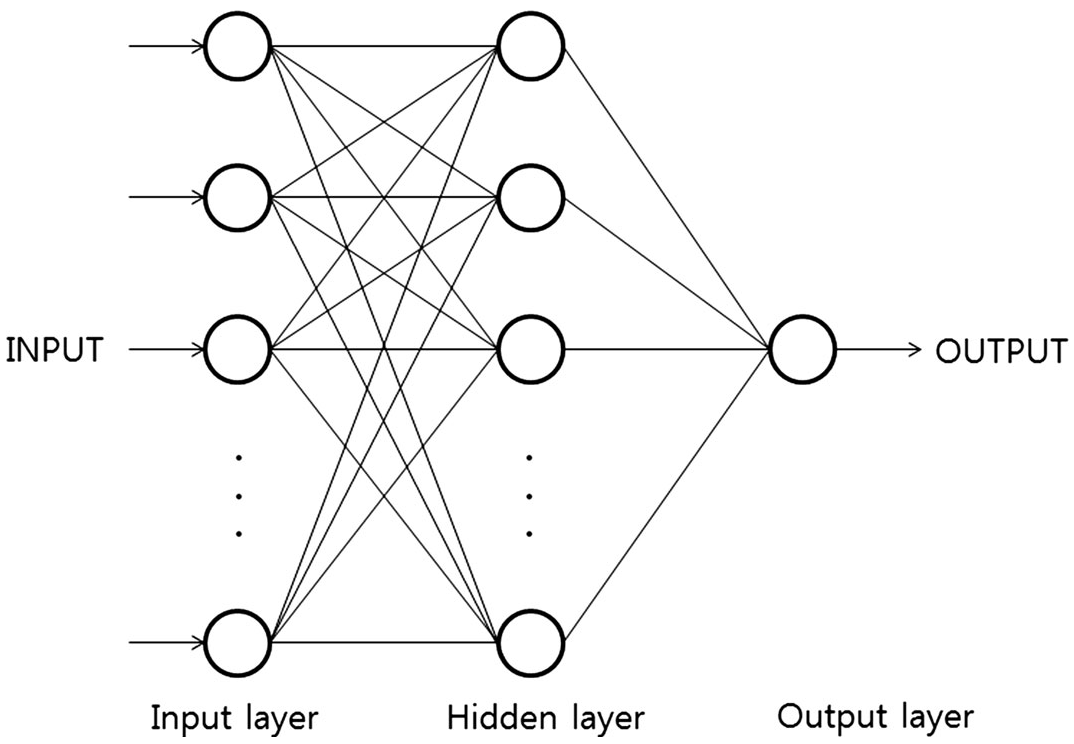 Figure 2: A 3-layer Multi-layer Perceptron (MLP) was one of the models tested, though Random Forest ultimately proved superior.
Experimental Battle: Why Random Forest Wins
The study compared four major algorithms: Multi-layer Perceptron (MLP), Naive Bayes, Logistic Regression, and Random Forest.
Key Findings:
- Winner: Random Forest with 30 trees achieved an F1-score of 0.737.
- Why?: Random Forest’s ability to handle non-parametric data and feature interactions made it ideal for the complex relationship between cognitive speed and language skill.
- Ablation Studies: Interestingly, removing the "Reading LDT" features caused the most significant drop in performance, suggesting that visual word recognition is a primary indicator of proficiency in this model.
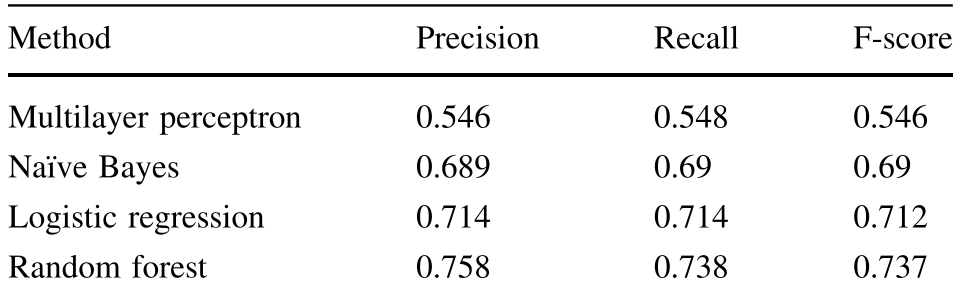 Table 1: Accuracy comparison across different Machine Learning models.
Critical Analysis & Future Outlook
While a 74% F1-score is "promising," it isn't yet ready to replace the $200 high-stakes exams. However, its value lies in low-stakes, high-frequency environments.
Strengths:
- Efficiency: Tasks take minutes rather than hours.
- Objectivity: It is much harder to "game" a reaction-time test than a multiple-choice grammar test.
Limitations:
- Participant Diversity: The study focused on "High" and "Very High" proficiency levels. Future research must include beginners (Low/Middle) to ensure the model scales.
- Feature Depth: Adding tasks for syntax or prosody could further sharpen the model's "vision."
Conclusion
This research bridges the gap between cognitive psychology and AI. By proving that machine learning can decode linguistic proficiency from simple reaction times, the authors pave the way for a future where language assessment is as simple as playing a 5-minute cognitive game on your phone.