
Beyond the Noise: Deconstructing Journalistic Relevance in Social Media via NLP
Predicting the Relevance of Social Media Posts Based on Linguistic Features and Journalistic Criteria
This paper presents an automated framework for classifying social media posts (from Twitter and Facebook) based on "journalistic relevance." It proposes a two-layer ensemble method that utilizes linguistic features to predict 6 core criteria, achieving a SOTA F1-score of 0.84 and AUC of 0.78.
TL;DR
In an era of information overload, identifying what is "newsworthy" involves more than just keyword matching. This paper introduces a sophisticated hierarchical classification model that predicts the journalistic relevance of social media posts by first analyzing six sub-dimensions: interestingness, controversy, meaningfulness, novelty, reliability, and scope. By relying strictly on linguistic features, the model achieves a high F1-score of 0.84, proving that relevance can be systematically decomposed and automated.
Background & Positioning
Social networks have evolved into real-time news hubs, yet they are plagued by "irrelevance crises." While previous SOTA works focused on popularity (likes/shares) or simple "news vs. chat" binary splits, this work moves into the realm of computational journalism. It positions itself as a specialized filter that operates independently of user profiles or metadata, making it applicable to "cold-start" scenarios where the author's history is unknown.
The Core Insight: Decomposing Subjectivity
The authors argue that "Relevance" is too broad to be predicted directly with high accuracy. Their breakthrough insight is the decomposition of relevance into six high-level journalistic pillars.
The Two-Layer Architecture
- Linguistic Extraction: Extracting 4,579 features including PoS tags, Named Entities (NER), Sentiment, and LDA Topic Distributions.
- Layer 1 (Criteria Classifiers): Six parallel Random Forest models predict whether a post is controversial, reliable, etc.
- Layer 2 (Meta-Classifier): A k-Nearest Neighbors (k-NN) model aggregates these six binary decisions to make the final "Relevant/Irrelevant" call.
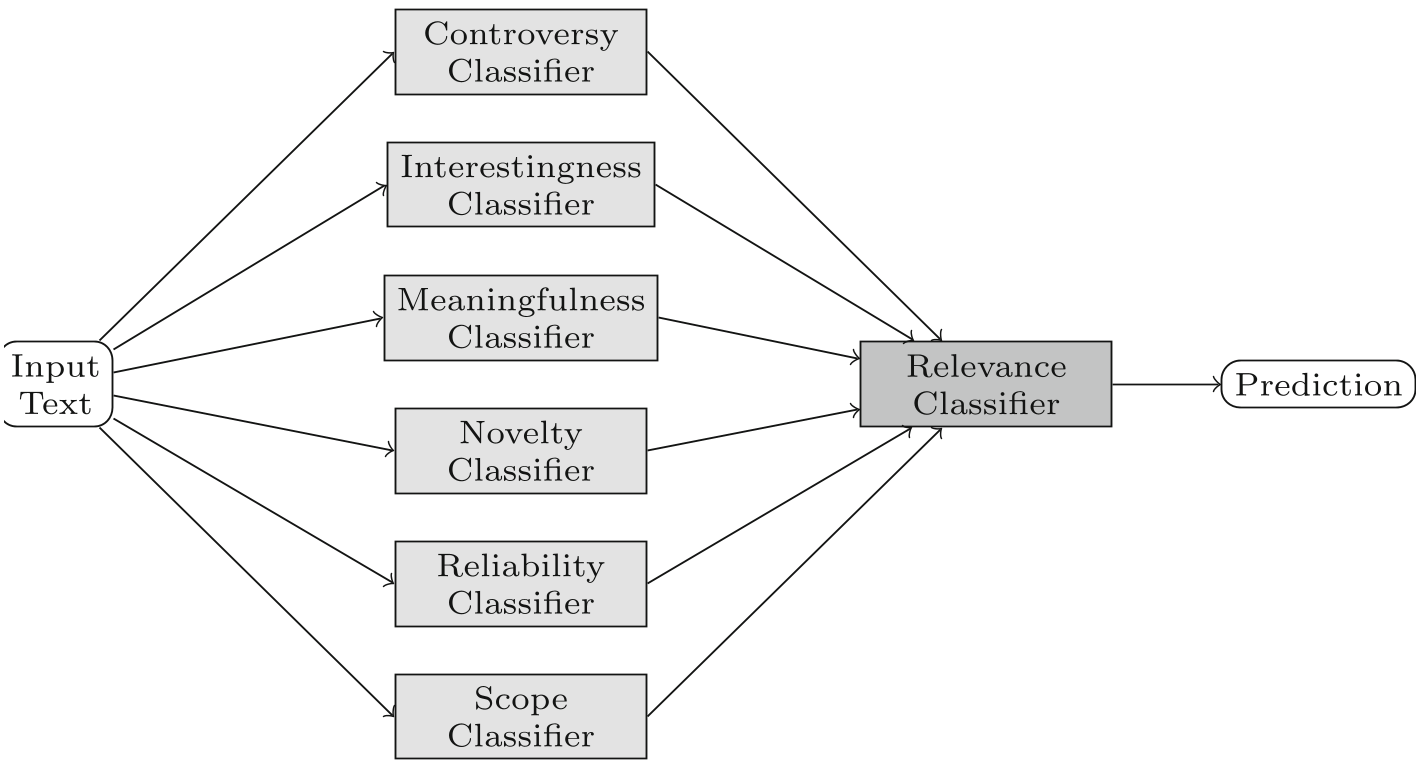 Figure 1: The two-layer approach for indirect relevance prediction.
Methodology Deep Dive
The research utilized a dataset of 941 curated documents from Twitter and Facebook, annotated by high-quality human judges on a 5-point Likert scale.
Wait, why use linguistic features only?
- Privacy: Doesn't require user profile access.
- Immediacy: Can predict relevance the millisecond a post is written, before it gains "likes" or "shares."
- Generality: Focuses on the message rather than the messenger.
Experiments & Results
The "Indirect" method (predicting criteria first) was the clear winner. While direct classification struggled with noise in the high-dimensional feature space, the ensemble approach provided a structured "denoising" effect.
| Metric | Direct Prediction (Best) | Indirect Ensemble (Human Input) | Indirect Ensemble (Automated) |
|---|---|---|---|
| Accuracy | 0.65 | 0.82 | 0.79 |
| F1-Score | 0.76 | 0.84 | 0.82 |
| AUC | 0.63 | 0.81 | 0.78 |
Note: Even when the intermediate criteria were predicted automatically (with all the potential for error propagation), the system still outperformed direct relevance classification.
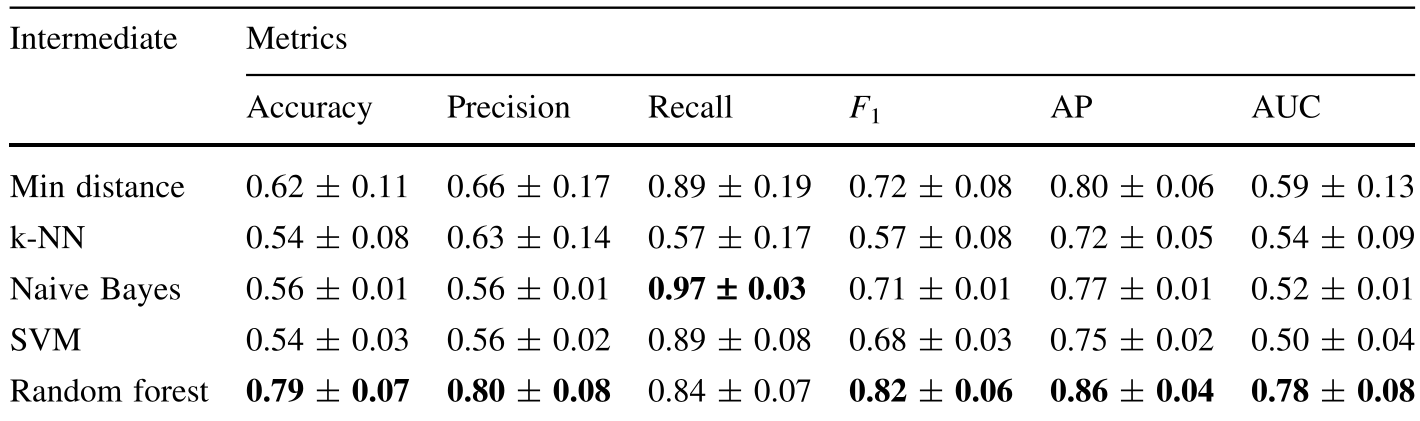 Table 17: Performance of the final ensemble using different Layer-1 classifiers.
Critical Analysis & Future Outlook
The Strength: This paper successfully bridges the gap between traditional social science (journalistic values) and modern machine learning. The feature engineering—specifically the use of Pearson correlation for dimensionality reduction—was critical in managing the 4,500+ features.
The Limitation: The dataset, while high-quality, is relatively small (under 1,000 samples). In the age of LLMs, we must ask: Could a model like GPT-4 perform these intermediate "journalistic" assessments via zero-shot prompting? The authors acknowledge that integrating structural features (social graphs) could further boost performance, though it would sacrifice the "content-only" purity of the current model.
Takeaway for Practitioners: When dealing with highly subjective classification tasks, don't just train a black-box model on the final label. Break the label down into its constituent human logic steps. Intermediate "auxiliary" tasks not only improve performance but also provide much-needed explainability for the final output.
Conclusion
This work proves that "Journalistic Sense" isn't just a human intuition—it leaves a linguistic footprint. By training machines to look for controversy, reliability, and scope, we can move toward social media platforms that prioritize substance over noise.