
Show Me Your Friends: Decoding the Silent Voter via Bayesian Networks
Show me your friends, and I will tell you whom you vote for: Predicting voting behavior in social networks
The paper introduces a novel Bayesian-network (BN) framework to predict individual voting behavior and turnout using public Facebook profiles. By integrating demographic, behavioral, and social features, the authors successfully predicted 2016 U.S. Presidential election choices, achieving a peak accuracy of 82.5%.
TL;DR
Predicting political behavior is usually easy for the "vocal minority" but nearly impossible for the "silent majority." This paper breaks that barrier by using Bayesian Networks (BNs) to predict voting behavior from public Facebook profiles. Unlike previous models that focus on what people say, this model looks at who they are and who they know, achieving 82.5% accuracy even when data is sparse.
Context: The Bias of the Visible
Most political social media research is "Twitter-centric" and "activity-biased." If you don't tweet a hashtag or like a candidate's page, you are invisible to standard classifiers. However, the majority of voters are "politically modest." This paper shifts the focus to Facebook—a platform more representative of the general population—and moves beyond simple sentiment analysis to a structural understanding of a user's life and network.
Methodology: The Power of Bayesian Inference
The authors propose a layered Bayesian architecture. Instead of a "black box" approach, they model the physical intuition of voting:
- Static Subnetwork (Demographics): Uses "ascribed" traits (age, race) to influence "acquired" traits (education, marriage), which in turn predict Party Identification (PID).
- Dynamic Subnetwork (Behavior): Distinguishes between positive and negative activity. Crucial insight: hating one candidate does not always mean loving the other; it often leads to not voting at all.
- Social Subnetwork (The Network): Leverages fine-grained homophily. It doesn't assume you are exactly like your friends; rather, it aggregates the traits and activities of "close friends" (those who interact with your wall) to fill in the gaps in your own profile.
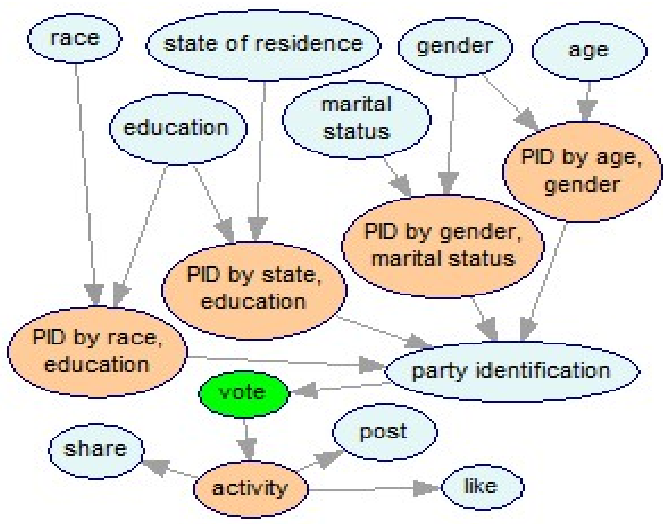 Fig 1: The BASIC model structure linking Party ID and Activity to the Vote.
Handling the "Missing Data" Problem
In the real world, Facebook profiles are incomplete. Users hide their age, their location, or their education. While traditional models like SVMs fail when features are missing, BNs excel. The authors' SELF-INFER model uses correlations (e.g., using "Occupation" to infer "Income") to keep the prediction engine running even when the primary inputs are blank.
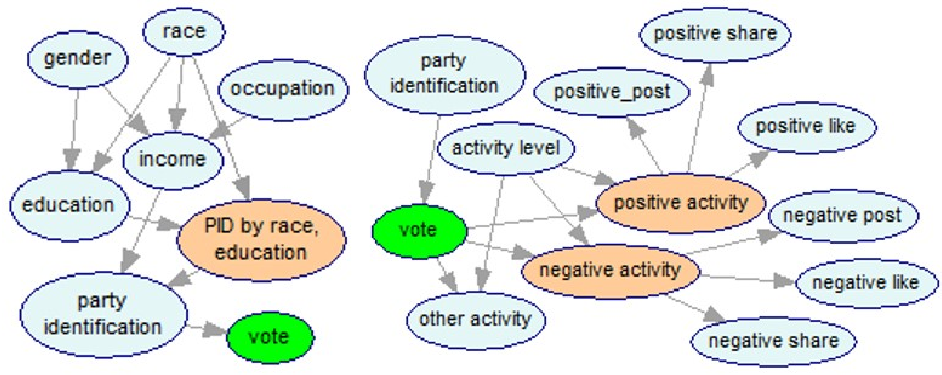 Fig 2: The REVISED and SELF-INFER expansions that handle negative sentiment and missing demographic data.
Experimental Breakthroughs
The results confirm that the "Full" model, which combines social links with demographic inference, is the champion. One of the most striking findings was the Semi-Supervised boost: by using the EM algorithm to learn from 500 unlabeled profiles (users who didn't even take their survey), the model became significantly more robust to the "ordinary" user population.
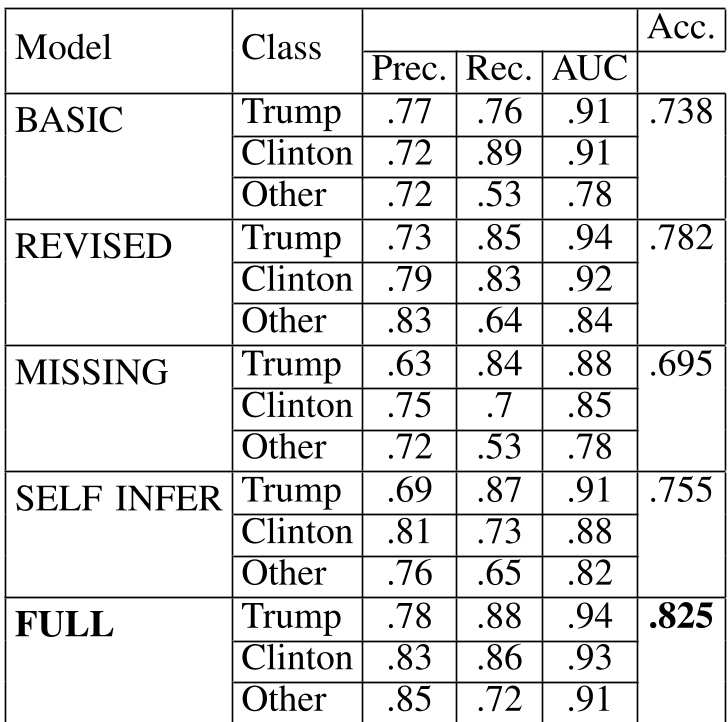 Table 1: Performance metrics across different model iterations. Note the leap in accuracy for the FULL model.
Critical Insight: Why This Matters
The most "deterministic" feature for predicting a Trump vote in 2016 wasn't a "like" for his page—it was the absence of a "pro-candidate" activity combined with specific demographic markers and "noisy" (inactive) network neighborhoods. This highlights the "Shy Trump Supporter" or "Disaffected Voter" phenomenon that many 2016 polls missed.
Limitations & Future Work
The model is currently a snapshot in time. The authors suggest that temporal features—monitoring how a user's sentiment shifts over a campaign—would be the next frontier for identifying "swing voters."
Takeaway
This research proves that "Show me your friends, and I will tell you whom you vote for" is more than an idiom—it's a mathematically verifiable reality in the age of social graphs.