Transforming Scientific Education: When the Internet of Things Meets Social Networks
Preliminary Study to the Inquiry Learning Social Network Supported by the Internet of Things
This paper proposes a preliminary model for an Inquiry Learning Social Network (ILSN) integrated with the Internet of Things (IoT). It leverages RFID, QR codes, and wireless sensor networks to transform physical research objects into "virtual entities" within a social network, facilitating collaborative scientific exploration.
TL;DR
Current science education is often trapped between "searching for answers on Google" (WebQuest) and "isolated laboratory work." This paper introduces a novel framework that uses IoT sensors to turn real-world objects into active participants in a Social Network. By automating data collection and enabling cross-regional discussion, it aims to foster genuine scientific inquiry and collaborative spirit.
Problem & Motivation: The "Single-Threaded" Learning Trap
Despite educational reforms, most "inquiry learning" remains a perfunctory exercise. The authors identify three critical bottlenecks:
- The WebQuest Dependency: Students copy-paste from the web instead of observing the world, weakening independent thought.
- Spatiotemporal Limits: Tracking a plant's growth over months or comparing climate data across cities is technically daunting for individual schools.
- The Resource Gap: Inquiry learning currently requires expensive hardware and highly trained instructors, leading to educational polarization.
The insight here is profound: If we can make "things" talk to "people" through a familiar social interface, we can lower the barrier to high-quality scientific exploration.
Methodology: The "Social Network of Things"
The core innovation lies in the organic integration of four factors: Questions, Objects, Learners, and Instructors.
1. Objects as "Virtual Humans"
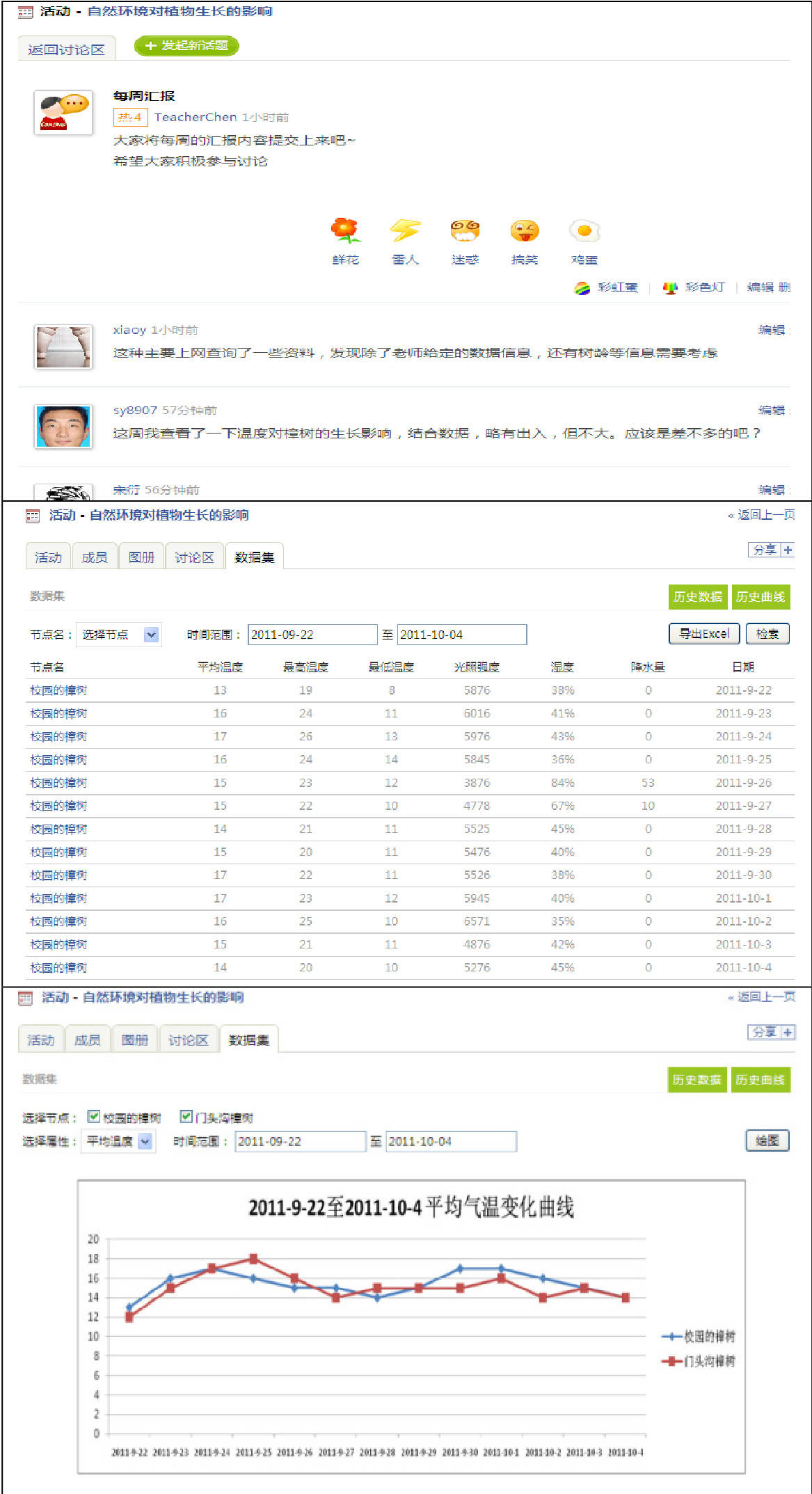
By using RFID and QR Codes, physical research objects (like a specific tree or a soil patch) are uniquely identified. Wireless Sensor Networks (WSN) then act as the "senses" for these objects, automatically uploading environmental data like PH values, CO2 concentration, and temperature to the social platform.
2. Information Architecture
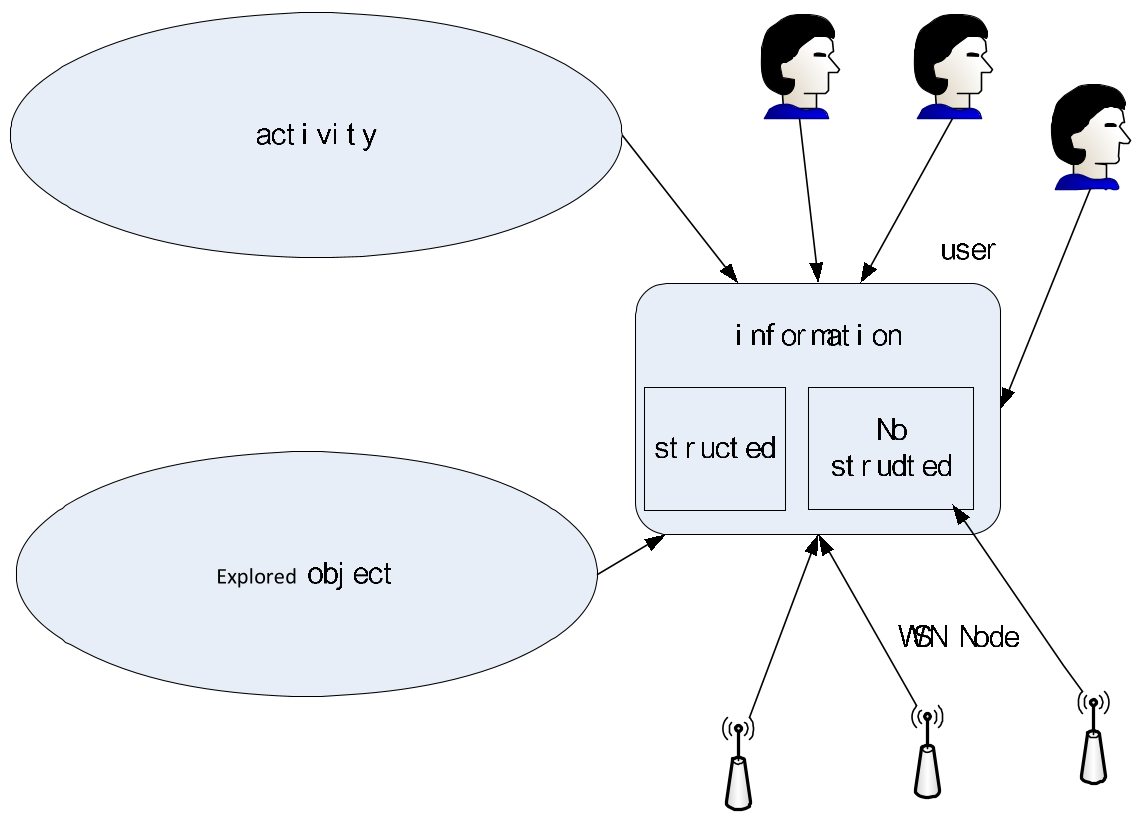
Unlike traditional social networks that are person-centered, this model is activity-centered.
- Questions = Social Activities.
- Objects = Group Members/Entities.
- Evidence = Structured (Sensor data) + Unstructured (Photos, posts, videos).
System Architecture & Implementation
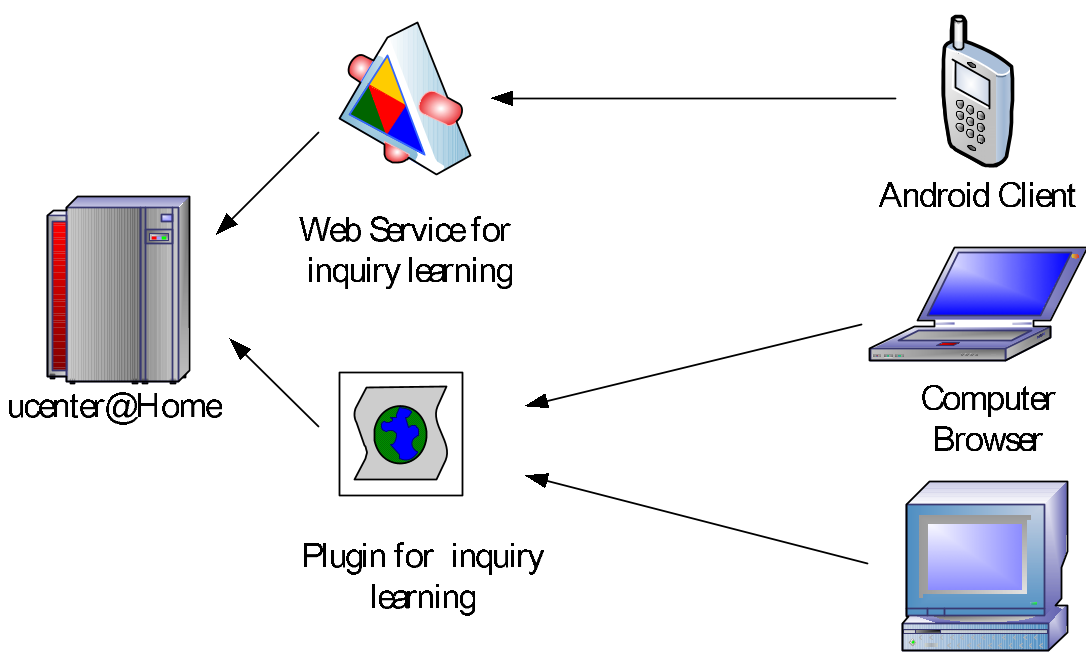
The authors developed a two-tier system to ensure accessibility:
- Server-Side: Built on the open-source
ucenter@homeplatform, modified to handle automated sensor streams and display data in graphical formats. - Client-Side: A low-cost Android application (targeted at 700 RMB devices) capable of scanning QR codes, recording multimedia, and interacting with the data stream.
The workflow follows a rigorous scientific path:
- Problem Definition: Joining an existing inquiry group or starting a new one.
- Evidence Gathering: Receiving automated updates from "virtual human" nodes (sensors).
- Analysis & Explanation: Crowdsourcing conclusions through the social feed.
- Evaluation: Instructors provide feedback and validate results within the platform.
Critical Analysis & Results
The preliminary study shows that this model effectively shifts the student's workload from repetitive manual measurement to high-level synthesis.
Key Strengths:
- Scalability: Allows students in different cities to compare sensor data in real-time.
- Cost-Effectiveness: Utilizes existing affordable mobile hardware rather than bespoke laboratory equipment.
Limitations: While the paper provides a strong structural blueprint, it lacks extensive quantitative validation of student learning outcomes (e.g., pre- and post-test scores in scientific literacy). Additionally, the reliance on a central server and persistent internet connectivity might still pose challenges in extremely remote areas.
Conclusion: A Future of Connected Inquiry
This work marks an early but vital step toward the Social Internet of Things (SIoT) in education. By turning the environment into a live data feed and the classroom into a global network, we can move beyond "searching for facts" to "discovering truths."