
RSHB: The Next Evolution of Social-Driven, Self-Healing Botnets
Preserving indomitable DDoS vitality through resurrection social hybrid botnet
The paper introduces the Resurrection Social Hybrid Botnet (RSHB), a novel hybrid botnet architecture that utilizes social networks for Command and Control (C&C). RSHB achieves State-of-the-Art (SOTA) survivability by integrating a reputation-based self-healing mechanism and a "resurrection" strategy to evade and eliminate security crawlers and sensors.
TL;DR
Cybersecurity is an arms race where attackers are now adopting defensive strategies to protect their malicious infrastructure. The Resurrection Social Hybrid Botnet (RSHB) is a proactive model that uses social networks for communication and a counterintuitive "resurrection" mechanism to purge security researchers' crawlers and sensors, making it nearly impossible to dismantle using traditional enumeration techniques.
Problem & Motivation: The Vulnerability of Connectivity
In the world of botnets, there is a fundamental trade-off: Visibility vs. Control.
- Centralized Botnets: Great for speed, but the C&C server is a Single Point of Failure.
- P2P Botnets: Highly robust, but slow and susceptible to "sybil attacks" where researchers inject fake nodes (crawlers/sensors) to map the peer list and identify the botmaster.
The authors argue that the "passive" nature of current botnets allows security engineers to slowly peel back the layers of the network. They propose a botnet that "fights back" by monitoring its own health and pruning suspicious peers.
Methodology: The Core Mechanism of RSHB
RSHB is built on three pillars that transform it from a static network into a dynamic, adaptive organism.
1. Social Communication Layer (The Cloak)
Instead of dedicated C&C servers, RSHB uses Command Publishing Points (CPP) on social networks (Twitter, Facebook). Since bots communicate over HTTPS, the traffic blends seamlessly with millions of legitimate users, making it invisible to standard firewalls.
2. Reputation Strategy (The Filter)
Every bot maintains a PeerList where neighbors are assigned a reputation score ().
- Successful interaction: increases.
- Failure: decreases.
- Pruning: Bots only share their highest-reputation peers, naturally isolating newly injected "fake" bots or sensors that haven't earned trust.
3. Latency Bots and Resurrection (The Cure)
This is the paper’s most innovative contribution. Some bots are designated as Latency Bots (Slumber Bots). They remain dormant, do not communicate with peers, and only listen to social media commands. When a botmaster senses the network is being mapped, they trigger a Resurrection Command.
- Latency bots awaken to replace purged nodes.
- Existing bots purge any peer with a low confidence score (likely security sensors).
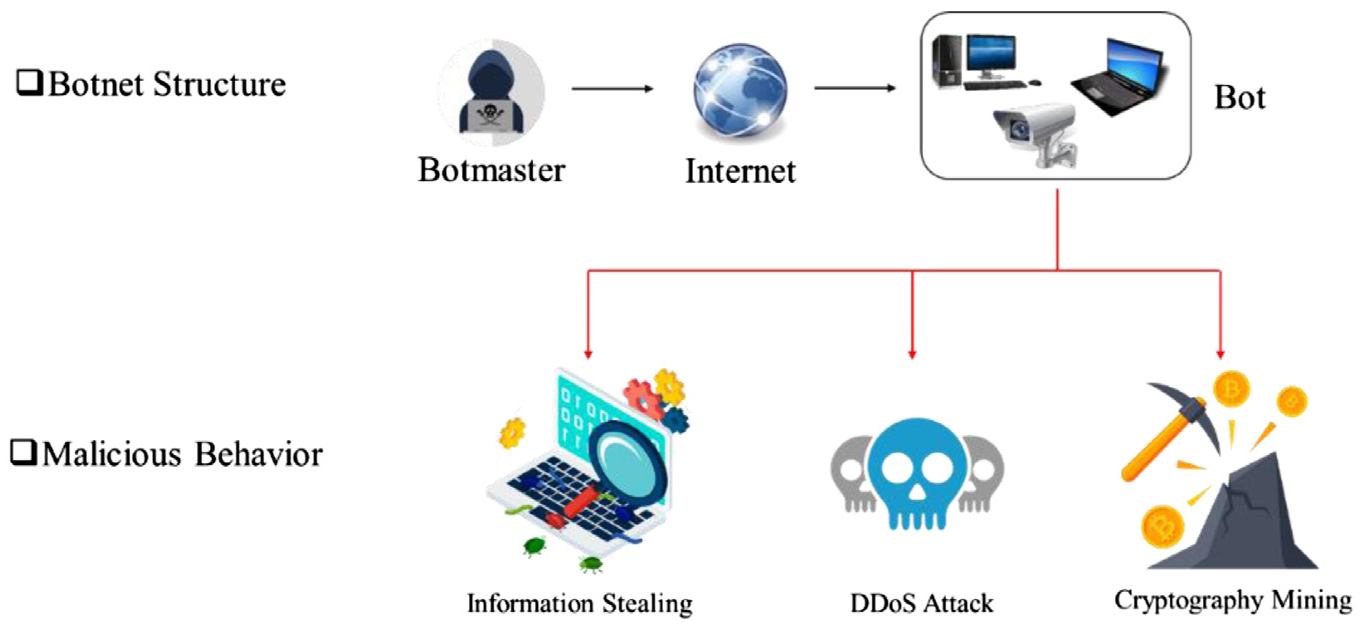 Fig. 1: Evolution of botnet architectures leading to the Hybrid and RSHB models.
Experiments & Results: Survivability under Fire
The authors simulated a network of 20,000 bots and attempted to dismantle it using 100 crawlers and 100 sensors.
Evasion Performance
Compared to classical HP2P botnets, RSHB showed a dramatic reduction in the number of bots discovered by security experts:
| Metric | P2P | HP2P | RSHB |
|---|---|---|---|
| **Bots Found by Sensors ( | Vs | )** | 20,455 |
| **Crawling Accuracy ( | VrC | / | VC |
The "Resurrection" trigger (launched at the 3rd hour in simulations) effectively "reboots" the botnet topology, leaving investigators with stale, invalid data.
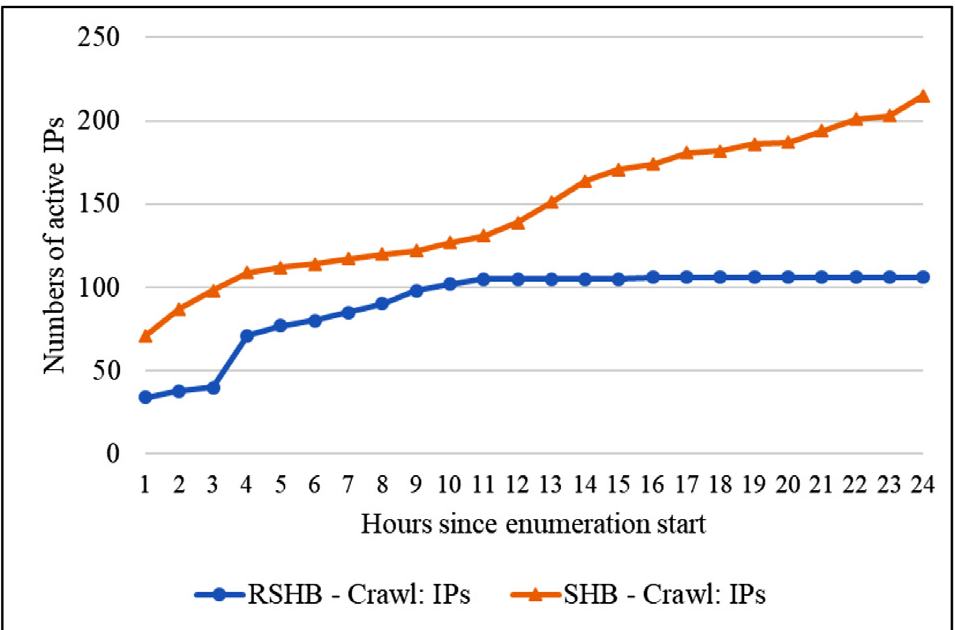 Fig. 2: The impact of the resurrection mechanism on sensor visibility over 24 hours.
Critical Analysis & Conclusion
Takeaway: RSHB proves that botnets are becoming "meta-aware." By applying reputation systems—usually a tool for defense—to malicious networks, attackers can effectively "fire" suspicious nodes and maintain a high-quality, resilient core.
Limitations: While RSHB is highly resilient to enumeration, its reliance on social media platforms presents a different bottleneck. If social media companies use AI to detect "command strings" in posts (e.g., encoded strings in image metadata or tweets), the entire communication layer could be severed.
Future Outlook: The battle will move to Machine Learning (ML) vs. ML. Detectors will need to identify the subtle "heartbeat" of bots checking social media sites, while botmasters will refine the "latency" behaviors to look even more like human interaction. RSHB is a wake-up call that the botnets of the 5G era will be harder to kill than ever before.