
Securing the Map: Hypergraph-Based (k, m)-Anonymity for GeoSocial Networks
On Preserving Private Geosocial Networks against Practical Attacks
This paper introduces a (k, m)-anonymity model and a hypergraph-based anonymization solution to prevent identity disclosure in GeoSocial Networks (GSNs). By representing check-in data as hyperedges, the authors ensure that any adversary with partial knowledge of at most "m" locations cannot distinguish a target user from at least "k-1" others, achieving SOTA privacy-utility balance on real-world datasets like Brightkite and Gowalla.
TL;DR
As GeoSocial Networks (GSNs) like Foursquare and Instagram become ubiquitous, the risk of "Identity Disclosure" through location check-ins has skyrocketed. This paper identifies a critical flaw in existing privacy models—they are either too rigid or assume unrealistic adversary knowledge. The authors propose (k, m)-anonymity, a hypergraph-based framework that ensures a user remains hidden among peers even if an attacker knows up to of their frequent locations.
Background Positioning
In the landscape of privacy-preserving data publishing (PPDP), this work moves beyond simple tabular k-anonymity. It targets the High-Dimensionality Curse of GSN data by utilizing hypergraphs to represent the complex relationships between users and their spatial footprints.
Problem & Motivation: The Danger of "Checking In"
Typical check-in data (Latitude, Longitude, Timestamp) is incredibly distinctive. If an attacker knows Alice visited a specific niche coffee shop in August 2008, they can likely find her unique record in a "de-identified" public dataset.
The Gap in Prior Work:
- Over-simplified Adversaries: Previous models assumed the attacker knows all of a victim’s locations.
- Data Utility Loss: Aggressive anonymization often renders the spatial data useless for legitimate research, such as urban planning or recommendation system training.
Methodology: The Core Hypergraph Approach
The authors redefine the GSN as a Hypergraph . Unlike standard graphs where edges connect two nodes, a hyperedge connects a subset of vertices (users) who share a specific set of top locations.
1. The (k, m)-Anonymity Model
A GSN is -anonymous if every hyperedge associated with at most locations contains at least users. This ensures that even if an attacker knows locations, the "anonymity set" is always .
2. The Anonymization Algorithm
To reach this state, the authors developed a merging algorithm. If a hyperedge's rank (the number of users in it) is less than , the algorithm:
- Selects the hyperedge.
- Finds another hyperedge with the minimum merging cost.
- Generalizes the location sets to consolidate users.
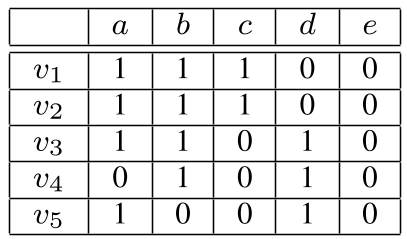 Figure 1: Comparison between (a) Original Hypergraph and (b) Anonymized Hypergraph where .
Experiments & Results
The authors validated their approach using the Brightkite (BK) and Gowalla (GW) datasets.
Performance Metrics
Two primary utility metrics were used:
- (User Bias): Measures the change in hyperedge ranks.
- (Location Bias): Measures the Euclidean distance between the original and generalized locations.
Key Findings
- Utility vs. Privacy: Information loss grows "steadily" but not exponentially with , suggesting that high levels of privacy () are achievable without ruining data utility.
- Computational Efficiency: The runtime is dominated by (the adversary's knowledge bound). Interestingly, often takes longer than higher values due to the specific combinatorial explosion of location pairings in the initialization phase.
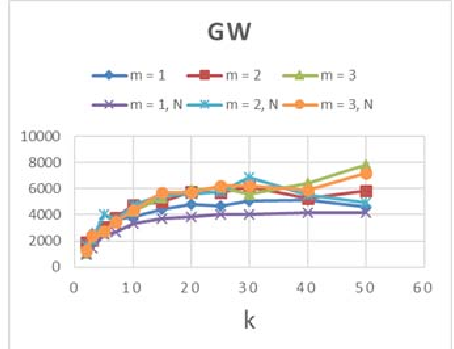 Figure 2: Information loss () across different values of and .
Critical Analysis & Conclusion
Takeaway
The shift from tabular data to hypergraphs is a significant "Inductive Bias" shift that accurately reflects how users interact with locations. The model is far more practical for real-world scenarios where attackers usually possess only "scraps" of information.
Limitations
- Scalability: While efficient for thousands of nodes, the complexity might struggle with modern GSNs containing millions of users.
- Static Nature: The paper focuses on a snapshot of data. In reality, check-in data is a continuous stream, and temporal correlations could lead to new types of attacks.
Future Outlook
The authors suggest moving toward parallel and distributed computing (e.g., Spark/Flink) to handle larger datasets and incorporating more complex location properties beyond simple Euclidean coordinates.