
Dynamic Crowdsourcing Pricing: Bridging Location and Credit for 100% Task Completion
13771_Pricing Models for Crowdsourcing Tasks Based on Geographic Information.
This paper presents a multi-factor pricing and allocation optimization framework for crowdsourcing tasks, specifically addressing the "Self-Service Labor Reward" mobile platform model. By combining distance-based linear regression and logistics regression for task completion probability, the method achieves a 100% task completion rate in experimental scenarios compared to baseline models.
TL;DR
Pricing crowdsourced tasks is a delicate balancing act between platform cost and worker motivation. This paper proposes a dual-layered pricing strategy that combines spatial distance analysis with Logistics Regression based on member credit ratings. The result? A leap from a 62.5% completion rate to a perfect 100% in controlled tests, significantly optimizing the ROI for mobile labor platforms.
Context & Motivation: Why Static Pricing Fails
In the "Self-Service Labor Reward" model, tasks are released on mobile apps where users (members) choose to accept them based on location and pay. Current platforms often struggle with "dead tasks"—assignments in remote areas or with pay too low to justify the travel. Existing models often fail because they treat all workers as equal and ignore the non-linear relationship between distance, credit history, and the likelihood of task fulfillment.
Methodology: The Hybrid Pricing Engine
The researchers break down the pricing problem into two distinct mathematical phases:
1. The Spatial Baseline (Linear Regression)
Initially, the model calculates a price based on the minimum distance () between the task and available members. Using latitude and longitude data, the paper derives a linear baseline: This ensures that distance—a primary cost for the worker—is compensated.
2. The Behavioral Optimization (Logistics Regression)
To account for the probability of completion, the authors employ a Logistics model. They define as the log-odds of a task being completed, influenced by pricing (), member density (), and credit rating scores ():
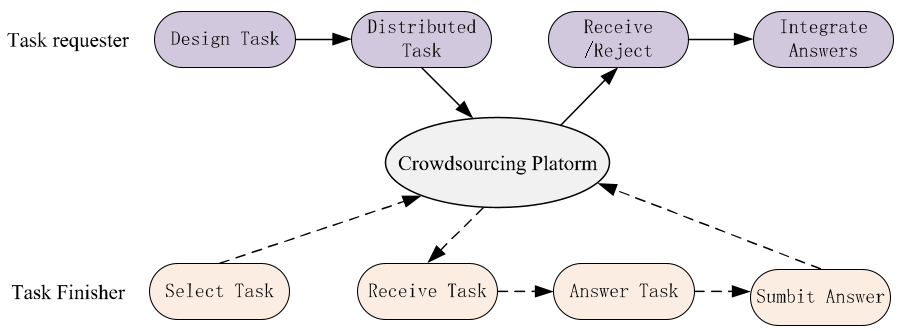 Figure 1: Conceptual mapping of Task and Member profiles used for feature extraction.
Experimental Validation: Results that Matter
The authors compared their Logistics-based pricing against a standard Distance-based model. The data reveals a clear winner:
| Metric | Distance-based Model | Logistics-based Model (Proposed) |
|---|---|---|
| Task Completion Rate | 62.5% | 100% |
| Return on Investment | 0.0090 | 0.0135 |
| Avg Pricing (Yuan) | 69.1 | 74.2 |
While the proposed model increased the average pay per task by approximately 5 Yuan, the total platform utility increased because the "cost of failure" (uncompleted tasks) was eliminated.
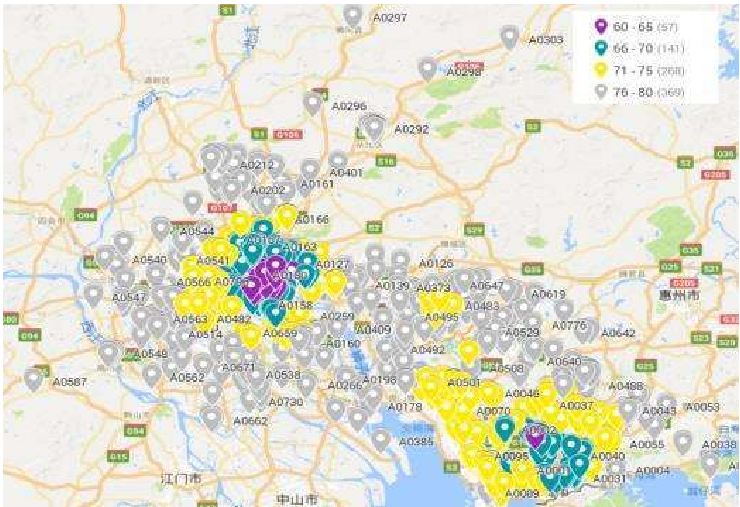 Figure 2: Visualizing the distribution and completion rates across different pricing segments.
Deep Insight: The Value of Credit
A significant contribution of this work is the quantification of Member Credit Ratings. By segmenting members into 13 grades (from 0 to 20,000+ scores), the model can differentiate between high-reliability "power users" and new accounts. The inclusion of (a penalty/bonus variable based on credit rating) in the final pricing formula ensures that the platform incentivizes reliable behavior.
Critical Analysis & Future Outlook
Strengths: The transition from simple correlation to a probabilistic Logistics model is a robust way to handle the inherent uncertainty of human behavior in crowdsourcing.
Limitations: The model assumes a somewhat linear relationship between credit score and reliability, which might not hold in hyper-competitive markets where "botting" or account sharing occurs. Additionally, the ROI calculation is sensitive to the specific task difficulty defined in the dataset.
Conclusion: This research proves that "paying more" can actually be "more efficient." By scientifically targeting the right price for the right member at the right distance, platforms can achieve near-perfect operational efficiency.