
Decoding the Unspoken: A Priming-Based Framework for Extracting Latent Customer Needs
Blueprint for a Priming Study to Identify Customer Needs in Social Media Reviews
The paper introduces a blueprint for a "Priming Study" to identify latent customer needs in social media reviews. It utilizes a reaction-time-based psychological method to map specific words to nine core latent need categories (e.g., security, comfort), aiming to build a lexicon for automated innovation engineering.
TL;DR
While AI can easily tell us if a customer "likes" a product, it struggles to identify the unconscious needs driving that sentiment. This paper proposes a novel experimental blueprint using Priming Studies and reaction-time analysis to build a lexicon that bridges the gap between raw review text and deep-seated human motivations like "Security" or "Self-realization."
The "Linguistic Iceberg" in Product Innovation
In current innovation engineering, social media reviews are a goldmine of unbiased data. However, most SOTA (State-of-the-Art) algorithms focus on the "tip of the iceberg"—explicit feedback and sentiment scores.
The authors argue that the real value lies in the latent needs. A customer might not say "I need security," but their description of a "sturdy lock" or "reliable software" indirectly points to it. Current models fail because:
- They are limited to product attributes.
- They cannot handle objective sentences that lack emotional keywords but still imply a deep need.
- They treat words as static entities, ignoring the psychological association between usage context and human desire.
Methodology: The Science of Association
The core of this research is a psychological experiment designed to measure the "Association Index" of words.
1. The Nine-Category Framework
Based on Reichard’s theory, the study focuses on nine pillars of human needs:
- Security, Belonging, Respect, Validity, Self-realization, Possession, Efficiency, Comfort, and Variety.
2. The Priming Study Design
To build the lexicon, the authors conducted a controlled study:
- Stimulus: A category (e.g., "Security") is displayed for 3 seconds to "prime" the subject's brain.
- Target: A subterm (e.g., "Trust" or "Insurance") appears.
- Measurement: The reaction time of the subject pressing the space bar to signal an association.
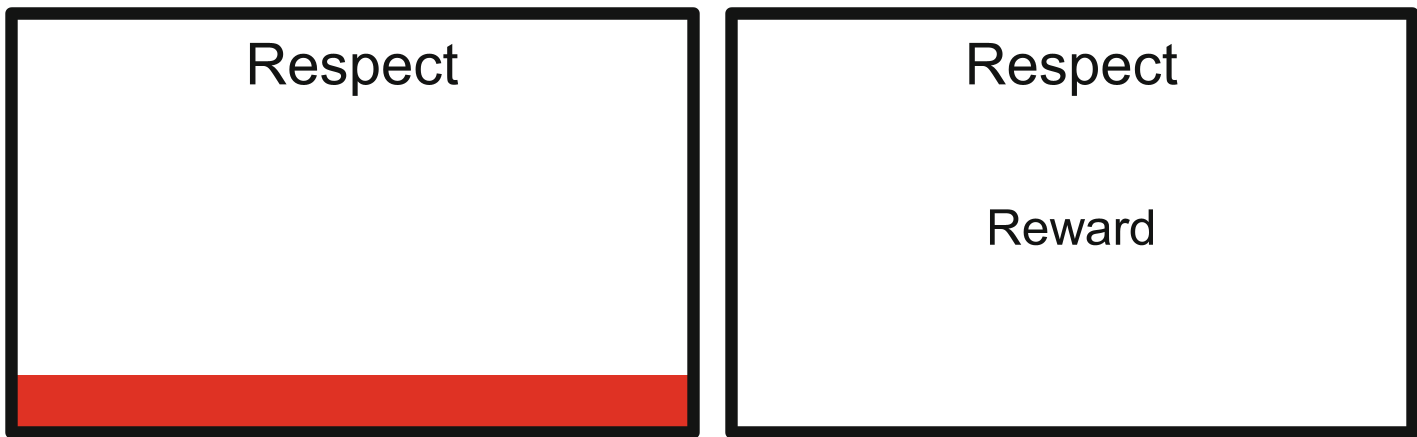 Figure 1: The experimental setup for measuring word-category association.
The researchers specifically suppressed responses under 500ms to avoid accidental clicks and analyzed the 1.5–3.0s window to capture conscious but immediate associations.
Key Findings: More Than Just Synonyms
The results from 40 test subjects revealed critical insights into how we process language in the context of needs:
- Synonyms are Fast: Words that directly match a category (like "Partner" for "Belonging") showed the fastest response times ().
- The Paradox of Opposites: Interestingly, "opposite" words (e.g., "Fear" for "Security") had high reaction times but maintained a strong psychological link. In reviews, customers often use these to highlight a missing need.
- Contextual Ambiguity: Words like "Lock" (which can mean a device or a castle in German) showed high variance in reaction times, proving that a static lexicon isn't enough—the system must be product-specific.
 Table 1: Raw reaction data demonstrating the variability across categories like Respect, Belonging, and Security.
Critical Insight & Future Outlook
The "Blueprint" provided here is a significant step toward Customer-Driven Production. By mapping the vocabulary of latent needs, companies can move beyond "fixing bugs" to "inventing the future."
Limitations: The study highlights that reaction times are highly sensitive to cultural and product contexts. A "lock" means something different to a cyclist than it does to a software engineer.
The Takeaway: To truly automate innovation, we cannot rely on generic NLP models alone. We must integrate psycho-linguistic data—like the reaction-time clusters identified here—to understand the why behind the what in customer reviews.
Blog post synthesized by Senior Academic Tech Editor based on the work of Briele et al. (RWTH Aachen University).