
Credible Routing: Balancing Trust and Privacy in Social Participatory Sensing
Privacy-Aware Trust-Based Recruitment in Social Participatory Sensing
This paper introduces a privacy-preserving trust-based recruitment framework for Social Participatory Sensing (SPS). It utilizes a multi-hop social network graph to identify and recruit participants through routes that maximize both the reliability (trust) and the protection of sensitive information (privacy).
TL;DR
As Social Participatory Sensing (SPS) leverages human-carried sensors for data collection, the "middlemen"—friends or friends-of-friends acting as relay nodes—pose a dual threat: they might be unreliable or curious eavesdroppers. This paper proposes a recruitment framework that selects routes based on a Credibility Score, fusing trust metrics with entropy-based privacy quantification to ensure data integrity without the overhead of heavy encryption.
Problem & Motivation: The "Curious Friend" Problem
Traditional Participatory Sensing relies on a central server, but Social Participatory Sensing (SPS) uses social graphs to find participants. While this solves the "sufficiency" problem (finding enough volunteers), it introduces a routing dilemma. Messages (tasks and contributions) must pass through intermediate social links.
Current SOTA methods focus on finding the most trusted path, but trust does not equal privacy. A friend might be reliable in delivering a message but might still peek at sensitive attributes (like location or phone numbers). Encryption seems like the obvious fix, but the authors point out a harsh reality:
- Low Adoption: Many social networks only use HTTPS for logins, leaving the rest unencrypted.
- Resource Constraints: PKI and heavy cryptography are often too computationally expensive for multi-hop mobile scenarios.
Methodology: Quantifying the Unquantifiable
The core contribution lies in defining Route Credibility through two distinct lenses:
1. Trust Propagation
Trust is modeled as a product of mutual trust ratings along the edges of a route : This ensures that a single weak link significantly degrades the overall route trust.
2. Entropy-Based Privacy Score
The authors use Shannon Entropy to measure the "uncertainty" an intermediate node has regarding a participant's private attributes.
- Initial Uncertainty : The entropy of quasi-identifying attributes (e.g., zip code, age).
- Remaining Uncertainty : The entropy left after a node sees some sensitive data .
- Leakage (): The difference between the two (Mutual Information).
The privacy score of a node is . The route's privacy is then determined by the bottleneck (the node with the lowest privacy score).
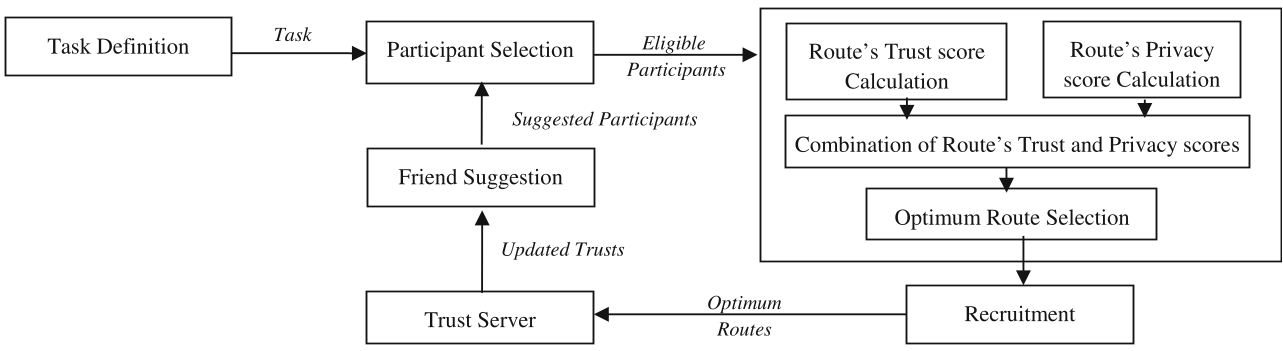 Figure 1: The architecture showing the Trust Server managing selection and routing.
3. Fusion Strategies
To combine these, the paper explores:
- Geometric Mean: Useful for balancing two parameters where one very low value should penalize the total score.
- Fuzzy Logic: Mapping Trust and Privacy into linguistic variables (Low, Med, High) and using a rule-based engine to determine Credibility.
Experimental Results
Using the Advogato "Web of Trust" dataset (14,000+ users), the authors simulated sensing campaigns.
Key Findings:
- Privacy Lift: The proposed method achieved a 12% higher privacy score for highly sensitive messages compared to trust-only methods.
- Responsiveness: In scenarios where a node's behavior changed (becoming "malicious"), the Fuzzy Logic approach was superior to the Geometric Mean, dropping the route credibility to zero almost instantly.
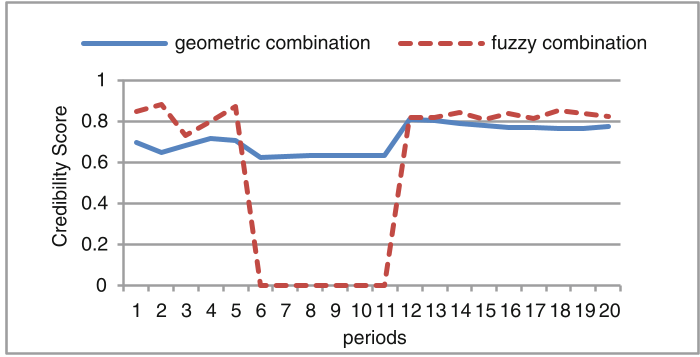 Figure 2: Performance across different privacy classes (Class 0 being the most sensitive).
Critical Analysis & Conclusion
Takeaway
The paper effectively shifts the focus from "who can we trust to deliver" to "who can we trust to be discreet." By incorporating Information Theory (Entropy) into social routing, it provides a mathematical framework for privacy that doesn't rely on the "all-or-nothing" nature of encryption.
Limitations
- Static Attribute Sets: The model assumes a fixed set of 6 attributes. Real-world data leakage is often more chaotic and dependent on external context.
- Scalability of the Trust Server: While the routing is multi-hop, the computation is centralized in a "Trust Server." This could become a bottleneck in massive social networks.
Future Work
The next logical step would be transitioning this logic into a fully Decentralized Reputation System, where nodes calculate these scores locally using Secure Multi-Party Computation (SMPC) to further harden the system against curiosity.