
Beyond the Opt-Out: Why "Privacy by Design" is the Future of Social Networking
Privacy by Design: Does It Matter for Social Networks?
This paper explores the integration of "Privacy by Design (PbD)" principles within Social Networks, evaluating how early-stage distributed platforms like Diaspora and Clique implement these concepts. It establishes a 7-principle framework to assess if privacy is truly embedded in the architecture rather than treated as a secondary add-on.
TL;DR
Privacy is often treated as a checkbox in software development—a reactive fix to a data breach. This paper argues for Privacy by Design (PbD), a proactive philosophy where privacy is the default mode of operation. By analyzing emerging distributed networks like Diaspora and Clique, the authors reveal that even "privacy-focused" platforms struggle to achieve a truly user-centric, full-lifecycle privacy model.
The "Anxiety" of the Digital Age
We live in an era of "privacy-invasive" technologies. From geo-location services to biometrics, our Personally Identifiable Information (PII) is constantly at risk. The paper identifies a core contradiction: while users desperately want to protect their privacy, they seldom know how to use complex online mechanisms.
The author’s insight is clear: Privacy must be proactive, not reactive. If the system doesn't protect the user by default, the system has already failed.
The 7 Pillars of Privacy by Design (PbD)
The paper utilizes the framework originally conceived by Dr. Ann Cavoukian, which moves away from the "Zero-Sum" mindset (where you must trade privacy for functionality).
| Principle | Core Intuition |
|---|---|
| 1. Proactive/Preventative | Anticipate risks before they happen. |
| 2. Privacy as the Default | No user action required to stay private. |
| 3. Embedded into Design | Privacy is a core functionality, not a plugin. |
| 4. Positive-Sum | Win-Win: Both security and privacy are possible. |
| 5. End-to-End Security | Data is protected from "cradle to grave." |
| 6. Visibility/Transparency | "Trust but verify" via open-source and audits. |
| 7. User-Centricity | The system revolves around individual rights. |
Case Study: Diaspora vs. Clique
The researchers conducted a deep-dive assessment into two decentralized social networks to see if they live up to their "privacy-aware" branding.
1. Diaspora: Security over Privacy?
Diaspora allows users to host their own "pods" (servers). While this provides decentralization, the study found it functions more as "Security by Design" than Privacy by Design. It relies heavily on encryption (GnuPG), which the average user may not understand or master.
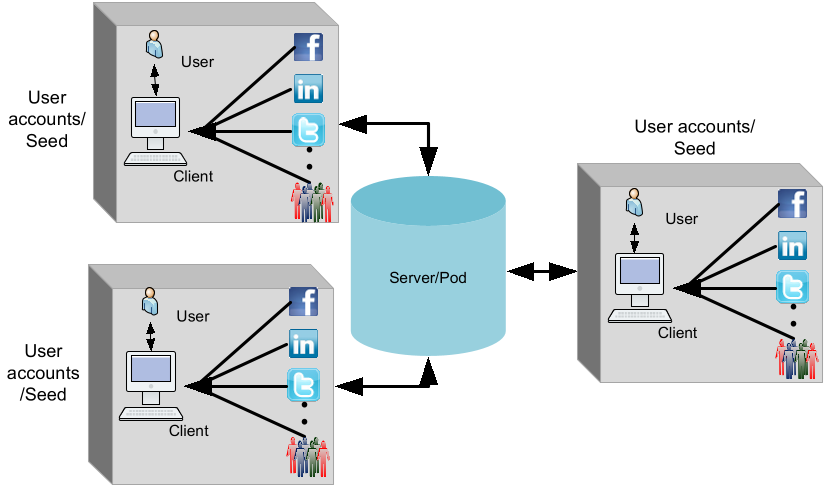 Figure 2: The Diaspora Architecture - A Decentralized Pod System.
2. Clique: Sociality Reconciled
Clique allows users to create different "faces" (work, family, private) to manage audience segregation. It scored higher on "Privacy as the Default" because it is built to manage social contexts more naturally.
The Critical Gap: Where Current Systems Fail
Despite their intentions, both platforms showed significant weaknesses in two areas:
- End-to-End Lifecycle Protection: Neither platform had robust policies for the permanent destruction or "de-redistribution" of data once a user wants to leave.
- Third-Party Accountability: There is a "Low Comply" rating regarding how third parties access data. The "Respect for User Privacy" principle remains the hardest to satisfy because of the complexity of "trust" in a distributed environment.
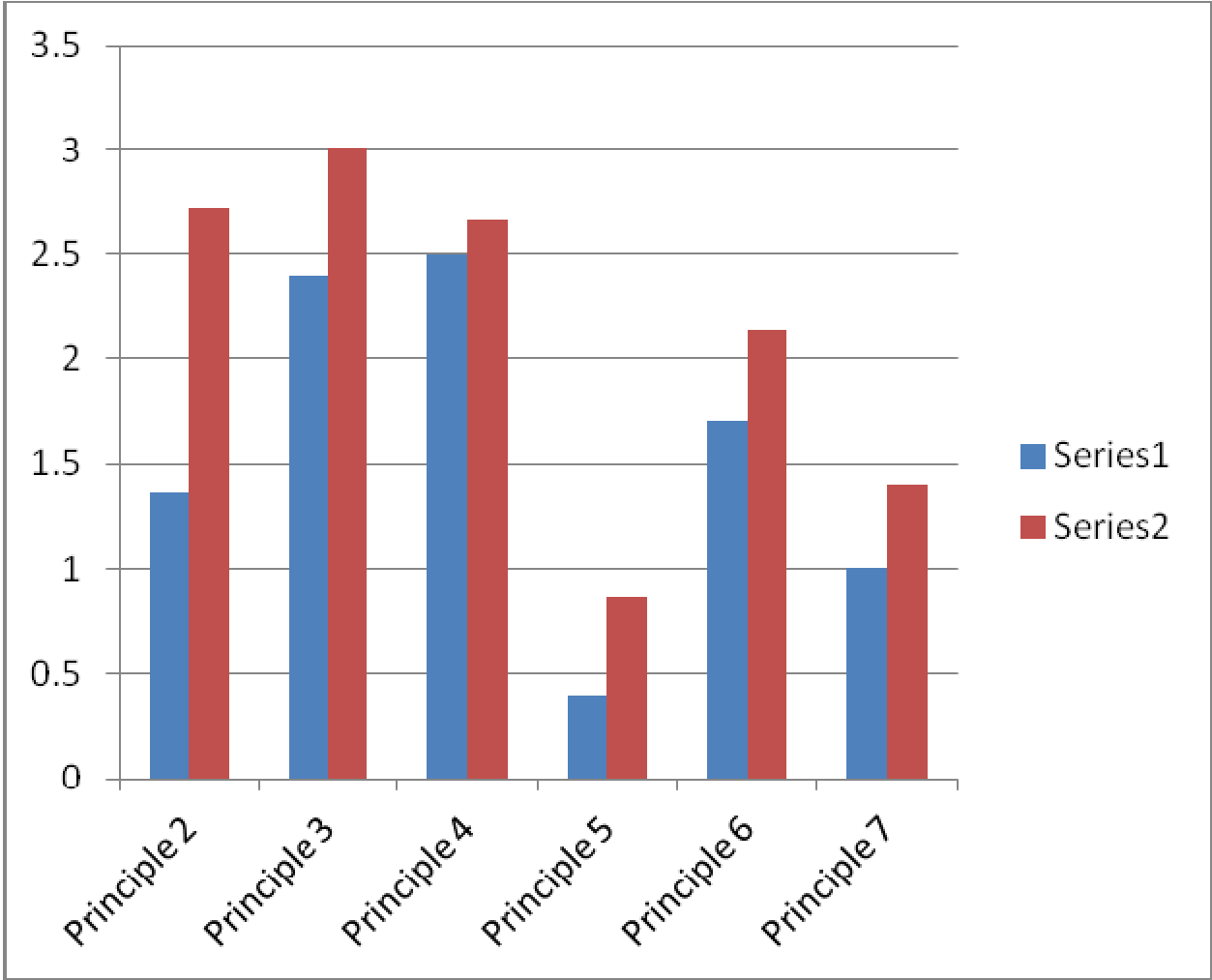 Fig 4: The results show that while Diaspora (blue) and Clique (red) are better than mainstream platforms, they still have a long way to go to reach "High Comply" status across the board.
Conclusion: A Matter of Choice
The paper concludes that PbD is not just a technical challenge—it is a political and managerial one. Engineering the perfect "Privacy Guard" is useless if business managers or regulators do not incentivize its use.
For developers and researchers, the takeaway is loud and clear: Stop building "Add-on" privacy. To win user trust in the coming decade, privacy must be the invisible, unbreakable bedrock of the architecture itself.