
Are Privacy Concerns a "Turn-off"? The Quantitative Link Between Privacy and Social Engagement
Are privacy concerns a turn-off?: engagement and privacy in social networks
This study investigates the link between privacy concerns and user behavior in social networks, specifically Facebook, using a representative survey of 1,075 U.S. users. The research demonstrates that high privacy concern is a primary barrier to user activity, identifying a strong negative association between privacy worries and overall network engagement.
TL;DR
Is your social network growing slower because users are scared? This seminal research by Staddon et al. (Google) reveals that privacy concern is a fundamental gatekeeper to engagement. Analyzing over 1,000 Facebook users, the study finds that those with higher privacy anxiety post less, comment less, and "Like" less. Crucially, the study suggests that the only way to "unplug" this bottleneck is through transparency and education, rather than just adding more complex settings.
The Engagement Bottleneck: Beyond Demographics
For years, researchers have debated the "Privacy Paradox"—the idea that people say they care about privacy but act as if they don't. This paper flips the script by asking: Does privacy concern actually hinder the growth of the network?
The researchers found that while demographics like age and ethnicity play some role, the most significant "malleable" factors influencing how much a user interacts with a platform are Privacy Concern and Network Size. If a user feels they lack control, they simply stop participating.
Methodology: Mapping Fears to Actions
The study utilized a representative sample of 1,075 Facebook users. To get a granular view, the authors didn't just ask "Are you concerned?"; they measured:
- Comprehension: Do you actually understand what is being shared?
- Control: Do you feel you can stop the sharing?
- Relative Sharing: Do you feel you share more or less than your peers?
Identifying the Core Fears
Through manual coding of over 800 open-ended responses, the researchers categorized the "why" behind the worry:
- Financial (51%): Dominated by Identity Theft and financial loss.
- Digital World (42%): Focused on account hacking and data access.
- General Anxiety (17%): Vague, non-specific fears that often lead to a "resignation" or withdrawal from the service.
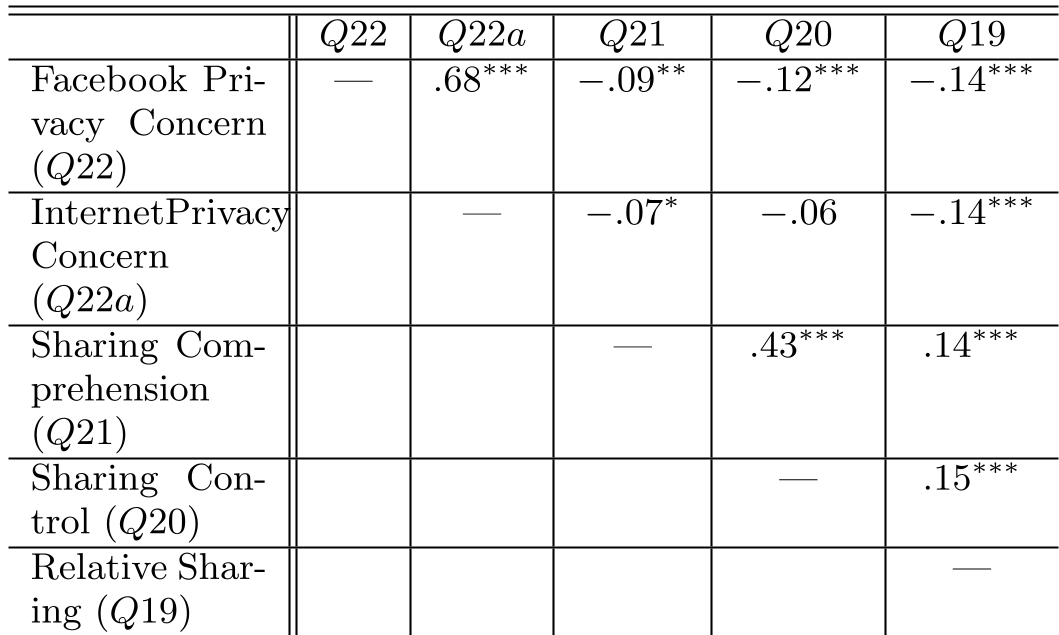 The table above shows that high comprehension and control directly correlate with lower overall privacy concern.
Key Finding: The Less Confident, The Less Active
The most striking data point is that privacy concern acts as a "turn-off" across nearly all activity metrics. Users who are "Extremely Concerned" are significantly less likely to engage in the platform's core loops—reacting, commenting, and posting.
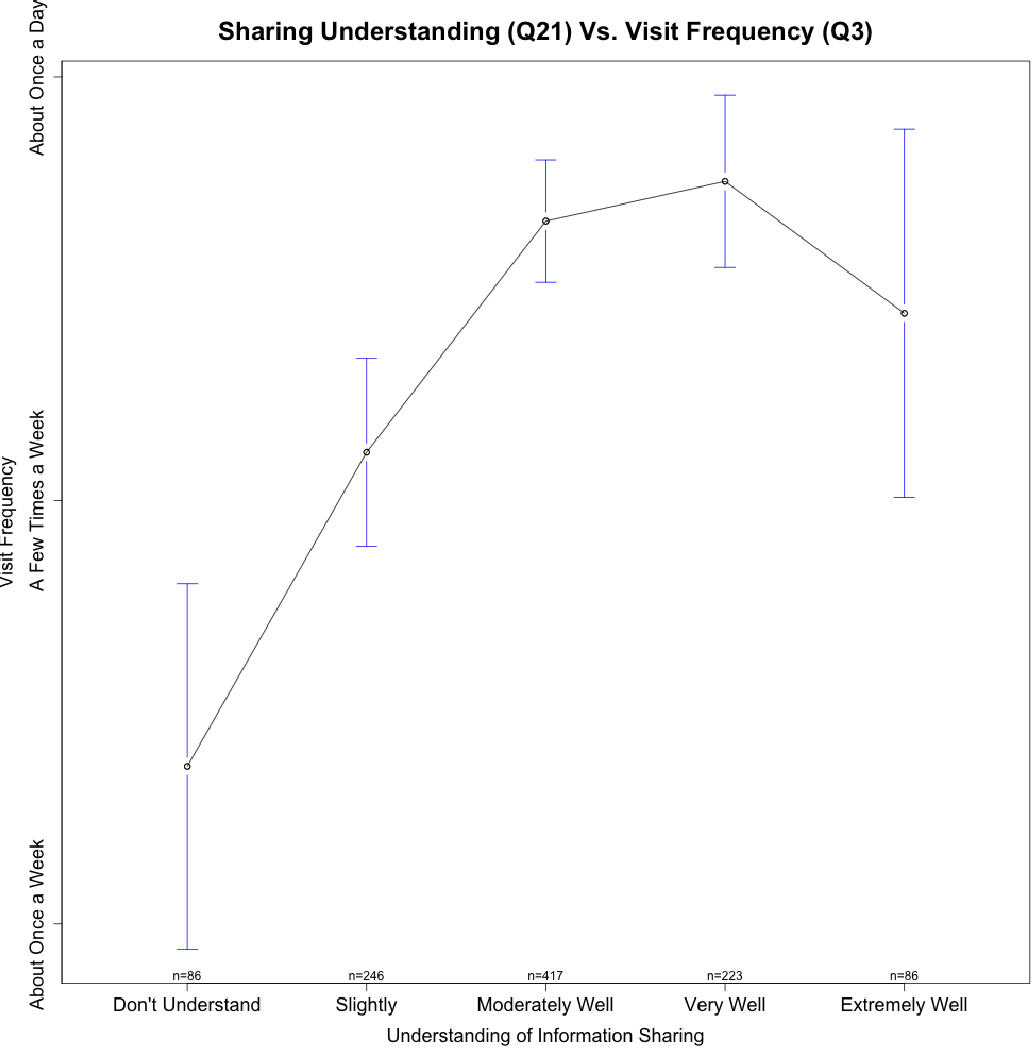 Figure 3 illustrates a clear trend: as privacy concern increases, engagement metrics like "Liking" or "Commenting" drop significantly (p < .001).
Interestingly, this relationship holds even when you account for the time spent on the site. A privacy-concerned user might "lurk" just as long as a non-concerned user, but they will self-censor their contributions.
The Path Forward: Education and Utility
The paper offers several vital insights for platform designers and researchers:
- The "Work-around" Fallacy: Users who use fake names or pseudonyms (non-sanctioned controls) do not feel more in control. They actually feel less empowered than those using official privacy settings.
- The Literacy Gap: Over 40% of users who feel they have "little control" don't use any profile visibility settings. This suggests that the problem isn't a lack of tools, but a lack of awareness/education on how to use them.
- Direct Perception: Users often withhold information simply because they don't see the utility. If the user doesn't see how sharing their birthday makes their experience better, the perceived privacy risk will always outweigh the reward.
Conclusion: Privacy is a Feature, Not a Bug
Staddon et al. conclude that privacy concerns are not just a legal hurdle but a barrier to the "vibrancy" of social platforms. To increase engagement, platforms shouldn't just focus on "gamification" or "content loops"—they must address the underlying trust gap.
Takeaway for the Industry: To unlock the next level of user engagement, focus on making privacy controls intuitive and "official." When users feel they are in the driver's seat, they are far more likely to share the journey.
Limitations
- Causality: The study shows a strong association, but it cannot definitively prove that privacy concern causes low engagement (though the correlation is robust).
- Self-Report Bias: The data relies on users' perceptions of their own behavior, which may differ from server-side logs.