
The "Ghost" of Deleted Photos: Unmasking the Deletion Delay in Social Networks
18934_Privacy Concerns for Photo Sharing in Online Social Networks.
The paper investigates the "deletion delay" phenomenon in major social network platforms (SNPs), where deleted photos remain accessible via direct URLs or shared links. By testing platforms like Facebook, Instagram, and Twitter, the authors reveal critical privacy vulnerabilities in both single-platform and cross-platform sharing scenarios.
TL;DR
When you click "delete" on a social media photo, it doesn't actually disappear. This paper exposes the "deletion delay"—a period ranging from days to months where your "deleted" photos remain accessible via direct links. The authors reveal that while Twitter manages instant removal, platforms like MySpace and Tumblr keep your data alive for over 30 days due to CDN caching and poor cross-platform synchronization.
Background: The Illusion of Control
In the era of ubiquitous photo sharing, we rely on "Delete" buttons as our primary tool for privacy management. Whether it's an embarrassing tag or a change in personal preference, we expect immediate results. However, this study positions itself as a wake-up call, proving that the technical architectures of major Social Network Platforms (SNPs) are fundamentally misaligned with user expectations of privacy.
Why Deletion Fails: The CDN Bottleneck
The research identifies Content Delivery Networks (CDNs) as the primary culprit. To ensure high speed, SNPs edge-cache photos globally. When a user deletes a photo from the main server, the instruction often fails to propagate to the CDN nodes immediately.
The Single-Platform Risk
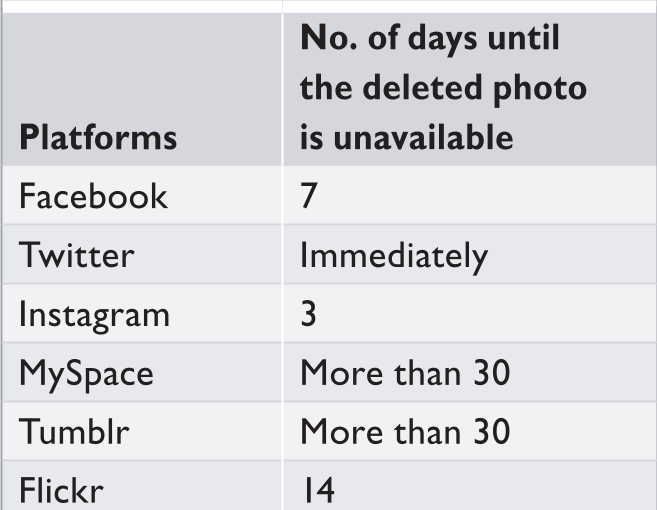
The authors tested several giants to see how long a direct URL remains active after deletion:
- Twitter: 0 Days (Immediate)
- Facebook: 7 Days
- Flickr: 14 Days
- MySpace/Tumblr: 30+ Days
Cross-Platform Contagion: Where Deletion Goes to Die
The problem escalates in a "linked" ecosystem. When you share an Instagram photo to your Facebook timeline, Facebook often creates a direct copy of the image on its own servers.
The "Vestige" Effect
Even if the original photo is purged from the source platform (the "Initial Platform"), the "Destination Platform" (like Facebook or Tumblr) often retains:
- Resized Thumbnails: Small versions of the photo that stay visible forever.
- Access Links: Links that remain functional if the source's CDN hasn't cleared.
- Direct Copies: Identical files that have no logical link to the original's deletion trigger.
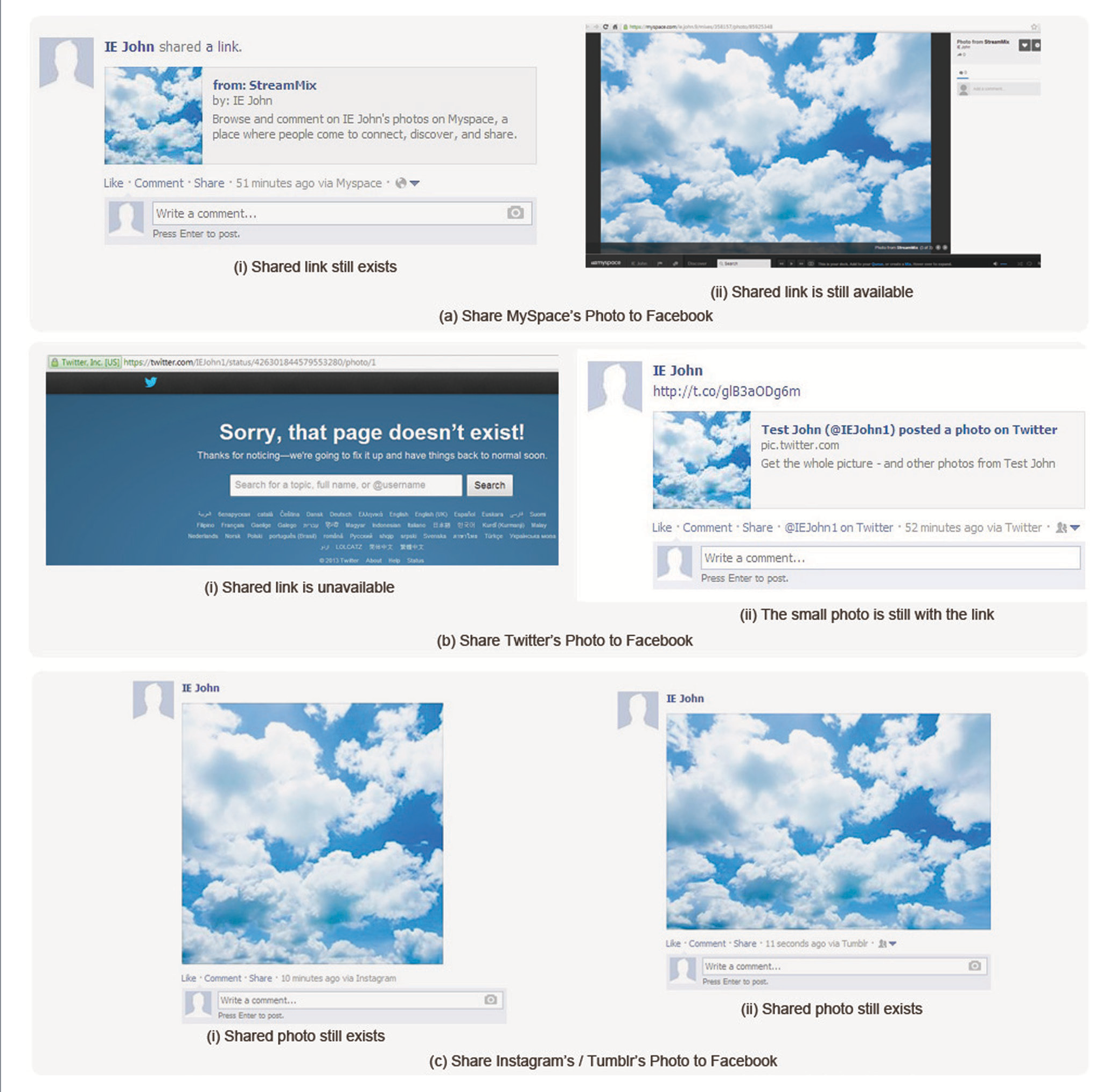 Figure 1: Comparison of how photos "survive" across platforms after primary deletion.
Methodology: Empirical Evidence
The authors didn't just speculate; they performed a comprehensive audit. By manually inspecting HTML source codes to find hidden URLs and tracking availability over a month-long period, they mapped the privacy "leakage" across 30+ cross-platform combinations.
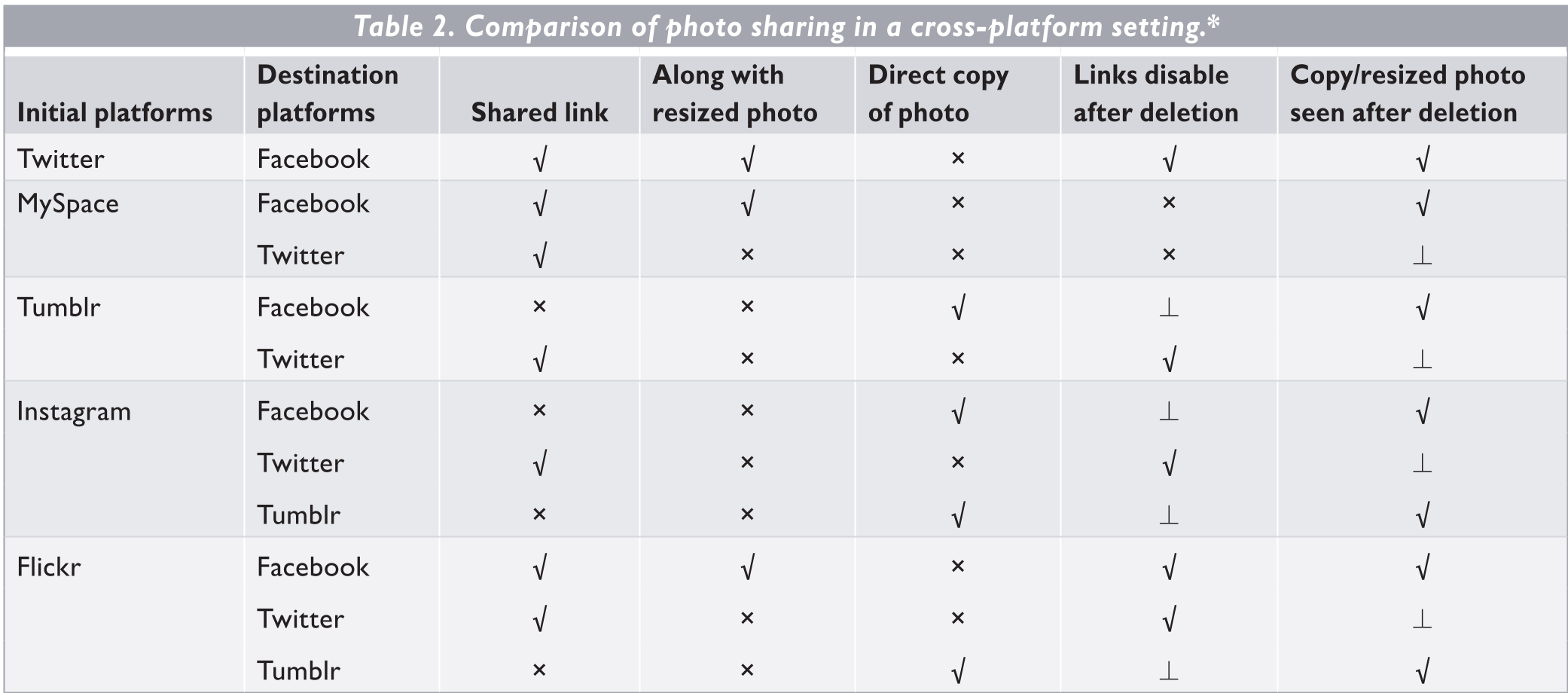
The findings (summarized in Table 2) show that Twitter is the most privacy-preserving, as it avoids direct copies and disables shared links instantly. Conversely, Facebook and Tumblr are "stickier," preserving data regardless of the user's intent to delete.
Critical Insight: Beyond The Technical Flaw
This isn't just a technical "bug"; it's a design philosophy issue. CDNs are optimized for availability and performance, not privacy and forgetting. The authors suggest that moving forward, we need:
- Cryptographic Enforcement: Using Attribute-Based Encryption (ABE) so that even if a URL stays active, the content remains unreadable once the user revokes the key.
- Better Standards: Unified APIs for cross-platform deletion triggers.
Conclusion & Perspective
The paper concludes that users are currently operating under a false sense of security. While Twitter proves that immediate deletion is technically possible, other platforms prioritize reduced server load over user privacy. For researchers, this work opens the door for "Privacy-by-Design" in distributed systems, where the "Right to be Forgotten" is baked into the network protocol itself rather than being a delayed afterthought.