
Decoupling Trust from the Social Graph: Privacy over Untrusted Networks
Privacy-enabling social networking over untrusted networks
This paper presents a privacy-enabling architecture for social networking that utilizes a centralized but untrusted server and "smart" clients. The core method involves moving access control and data management to the client side using cryptographic primitives like stream cipher padding for link hiding and hierarchical key management, achieving high privacy without sacrificing the performance of the client-server model.
TL;DR
This seminal work proposes a paradigm shift for social networks: treating the central server as a "dumb" and "untrusted" storage bucket. By utilizing a sophisticated client-side architecture and cryptographic "link hiding," the system ensures that neither the service provider nor unauthorized users can see your content or your friendship links. It offers the performance of a centralized system with the privacy of a zero-knowledge architecture.
Problem & Motivation: The SNO Paradox
In the current social media landscape, the Social Network Operator (SNO) is an omniscient deity. Users hand over personal info, friendship links, and private photos, hoping the SNO is neither "incompetent nor wicked."
The authors identify a critical failure in prior privacy attempts: most only encrypt content (What you say) but fail to hide the social graph (Who you know). Even if your messages are locked, the mere existence of a link between two users is high-value data for phishing and social engineering. Most P2P alternatives, while private, suffer from the "reliability vs. performance" trade-off. The authors ask: Can we keep the speed of Client-Server but remove the need for trust?
Methodology: The "Smart Client" Architecture
The architecture is built on four distinct layers, but the "Secret Sauce" lies in how data is structured and encrypted.
1. The Block-Tree Structure
User content is not stored as a single file but as a collection of discrete blocks. These blocks form a tree. The root node acts as the entry point, and links to children are only visible if you have the key.
2. Link Hiding (Physical Intuition)
This is the most innovative part of the paper. Instead of just encrypting a link, they use a stream cipher to generate padding that is indistinguishable from random noise.
- User A decrypts a block and sees a link to User B.
- User C decrypts the exact same block with a different key and sees a link to User D.
- The Server sees only a blob of random bytes.
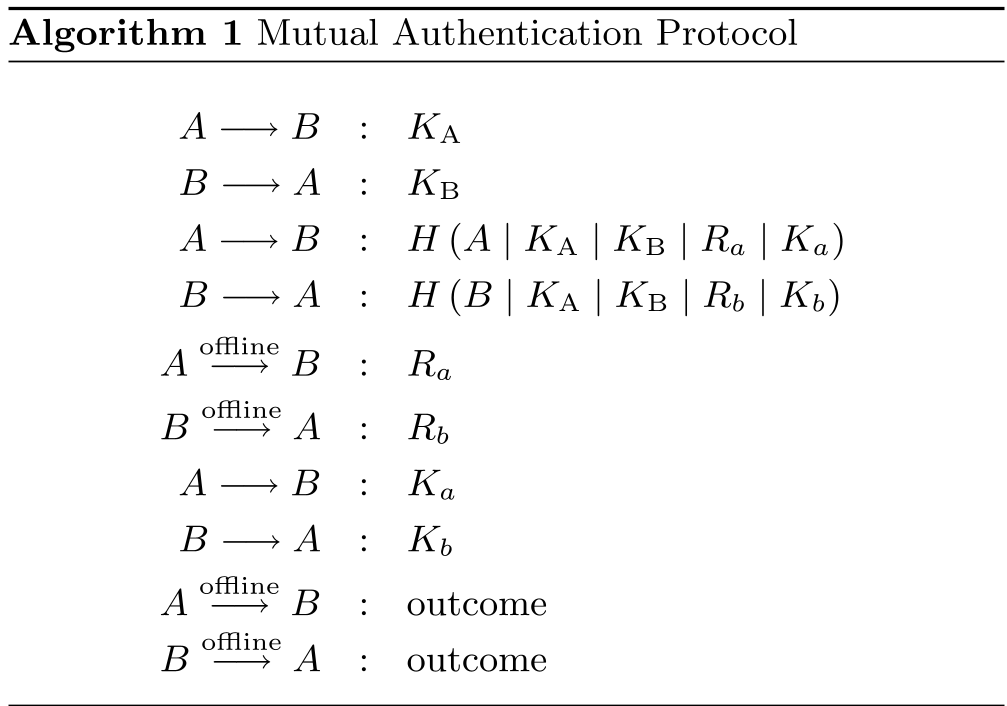 Figure 1: The Mutual Authentication Protocol used to bind real-world identities to public keys safely.
3. Sandboxed Extensibility
To prevent malicious 3rd-party apps from leaking data (a-la Cambridge Analytica), the paper proposes a "secure sandbox" where apps must request data via a strictly mediated API.
Experiments & Results: Is Privacy "Too Slow"?
The skeptical view is that encrypting everything locally would crush mobile or web performance. The authors debunked this with a Java-based implementation.
- Symmetric Glory: AES-128 encryption hit 35 MB/s, meaning the bottleneck is almost always your internet connection (I/O-bound), not the encryption (CPU-bound).
- Parallelism: By decrypting the "Root Block" (using slower Public-Key RSA) while simultaneously downloading child blocks, the latency is minimized.
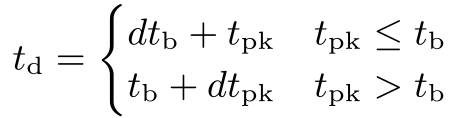 Figure 2: The timing analysis proving that once the initial public-key handshake is done, the system scales with network speed.
Critical Analysis & Conclusion
The Takeaway
The paper proves that "Untrusted Infrastructure" is a viable model. You don't need a decentralized blockchain or a complex P2P mesh to be private; you just need cryptographically sovereign clients.
Limitations
- Traffic Analysis: While the server can't read the data, it can still see when and how often you communicate. This metadata remains a vulnerability.
- Joint Content Ownership: The "Tagging" problem (where two people have a stake in one photo) remains a socially complex issue that no amount of code can perfectly solve without a central arbiter.
Future Outlook
This work laid the conceptual groundwork for modern "E2EE Everything" platforms. In an era where data sovereignty is a top-tier concern, the "Smart Client / Dumb Server" model is more relevant than ever.