
EMCP: Solving the Privacy-Utility Paradox in Location-Based Social Recommendations
Privacy-enhanced middleware for location-based sub-community discovery in implicit social groups
This paper introduces the Enhanced Middleware for Collaborative Privacy (EMCP), a privacy-preserving framework designed for community-based recommendation services in intelligent spaces (e.g., universities). It leverages homomorphic encryption, cryptographic hashing, and secure multiparty computation to discover implicit social sub-communities without exposing raw user profiles or precise locations.
TL;DR
Researchers have developed a privacy-enhanced middleware (EMCP) that allows mobile users to join social sub-communities based on shared interests and locations without ever revealing their raw data to a central server. By combining Homomorphic Encryption, Secure Multiparty Computation, and Spatial Cloaking, the system achieves high recommendation accuracy (up to 80%) while keeping individual identities and coordinates shielded.
Context & Motivation: The Weak Link in Social Apps
In our hyper-connected world, "group-based recommendation services" are vital for finding study groups, sports teams, or car-sharing partners. However, these services are "privacy-hungry." Existing solutions often force a binary choice: reveal everything for accurate matches, or stay private and receive irrelevant noise.
The authors identify a critical gap: current privacy laws are obsolete, and simple "allow/deny" rules fail against inference attacks. Their insight is to move the privacy logic into a middleware layer on the user's phone, sanitizing data before it ever reaches the service provider.
Methodology: The Three Pillars of EMCP
The EMCP architecture operates through three specialized cryptographic protocols that transform how communities are discovered:
1. Private Community Formation (PCF)
Instead of sending raw profiles, EMCP generates a "Generalized Profile" using hypernyms (broader terms). These are hashed and clustered using a ring topology among "super-peers" (highly reputable user devices) to form broad interest groups.
2. Private Sub-community Discovery (PSD)
To find specific "micro-groups" within a community, the protocol uses Paillier Additively Homomorphic Encryption. This allows the system to calculate similarity scores between users while the data is still encrypted.
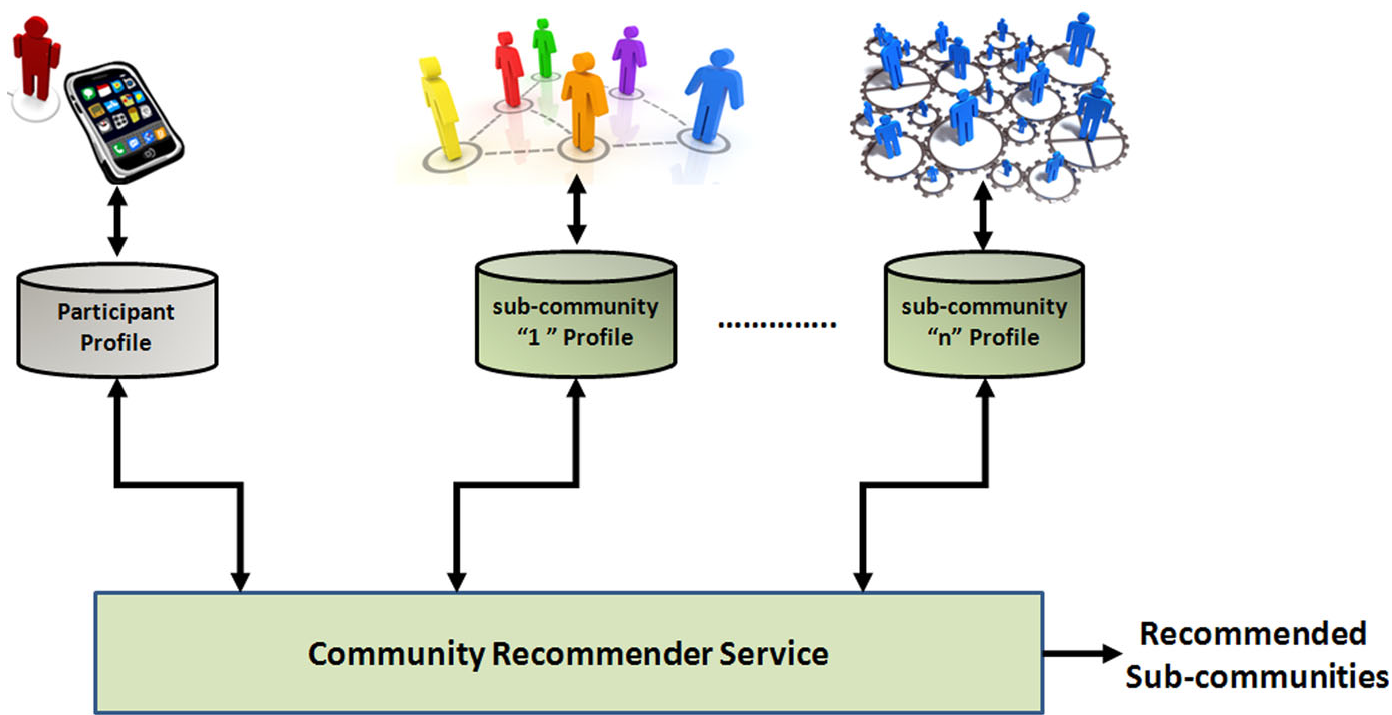 Figure 1: The CRS Architecture showing the flow between participants and the central service via EMCP.
3. Secure Distance Detection (SDD)
The "location awareness" problem is solved by Cloaking. A user defines a circular "cloak" around their location. The system calculates the distance between the user's cloak and a sub-community's meeting spot using a secure protocol, ensuring the server only knows a participant is "close" or "separated," but never their exact GPS coordinate.
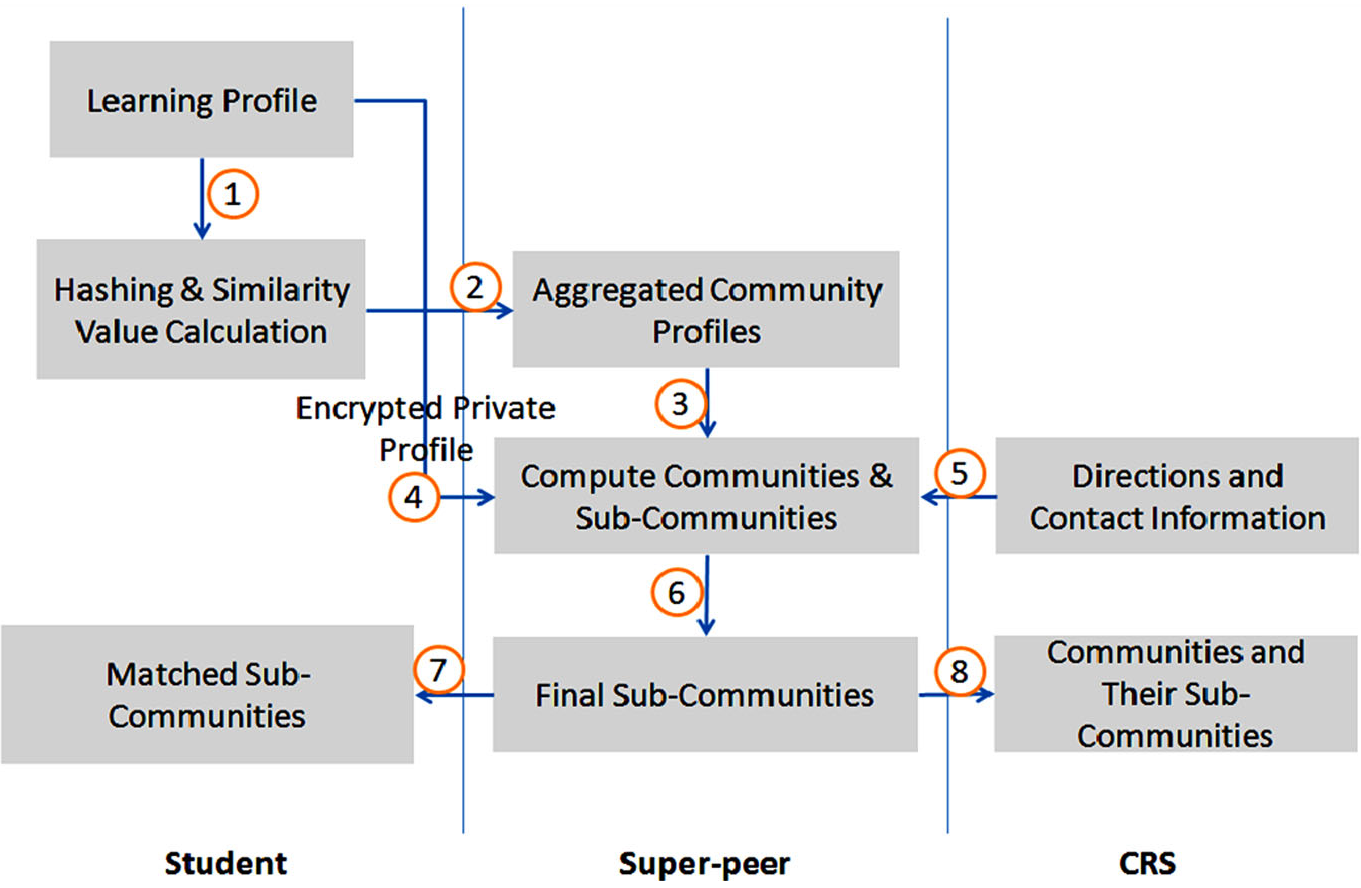 Figure 2: Interaction sequence between student devices and the community-based recommender service.
Experiments: Performance vs. Privacy
The authors tested EMCP against a dataset of 6,000 students. A key focus was the Trade-off Model. Using Nash Equilibrium (NEP), they proved that users can reach a "sweet spot" where they maximize their privacy without pushing the recommendation error (ε) beyond a useful threshold.
Key Findings:
- Accuracy: The system correctly identified ~80% of members in a sub-community even when sensitive data was heavily obfuscated.
- Overhead: While encryption adds communication time, the distributed ring topology prevents any single "super-peer" from becoming a bottleneck.
- Location Impact: Adding location data slightly increases search complexity but significantly enhances the relevance of the referrals.
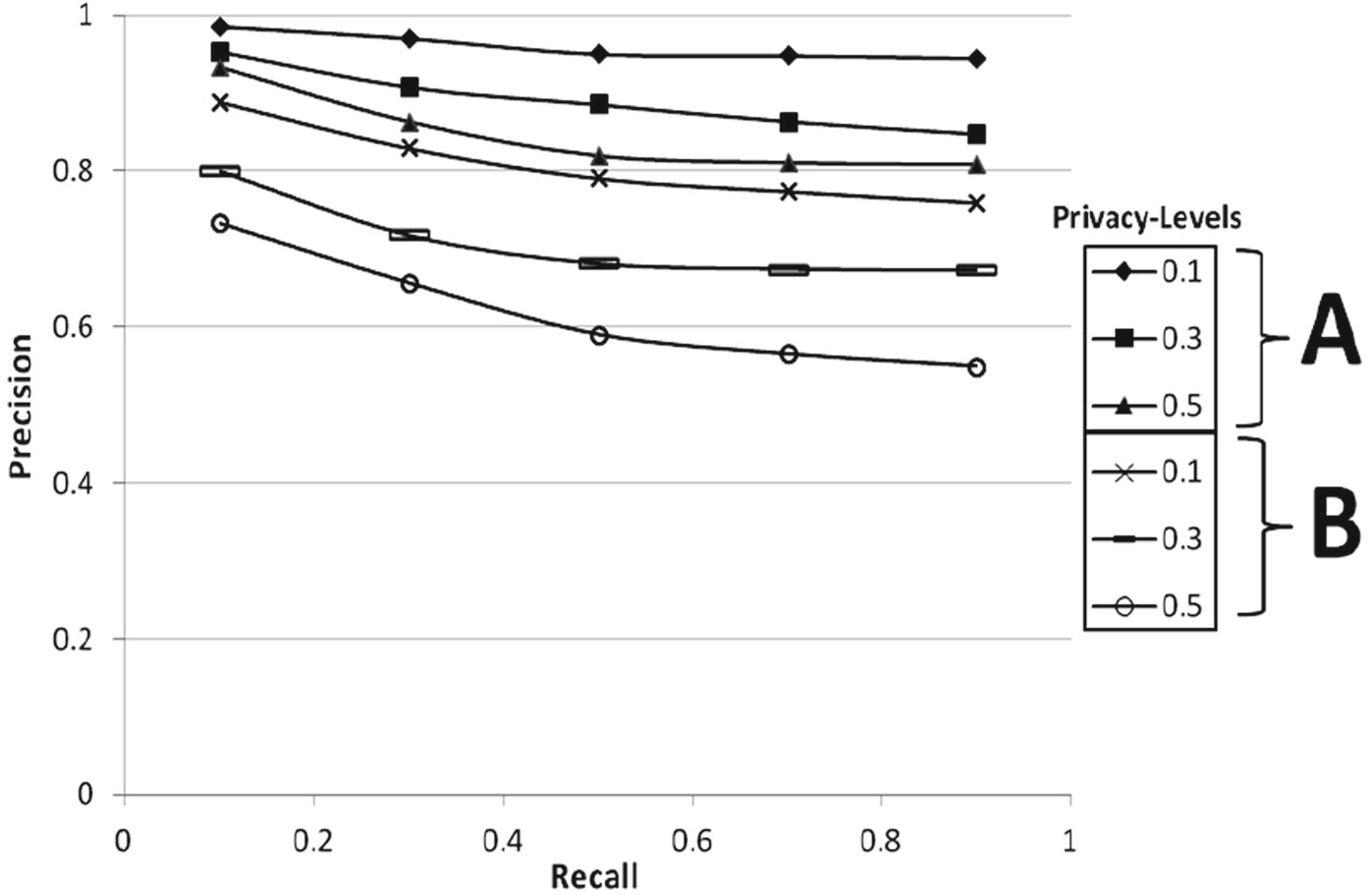 Figure 3: Accuracy of referrals when combining location and preference data across different privacy levels.
Critical Insight & Future Outlook
The brilliance of EMCP lies in its Hybrid Approach. It doesn't try to solve everything with pure crypto (which is slow) or pure obfuscation (which is inaccurate). Instead, it uses a multi-layered strategy:
- Generalization for broad tasks.
- Encryption for fine-grained matching.
- Cloaking for spatial privacy.
Limitations: The honest-but-curious model assumes participants won't actively attempt to sabotage the protocol. Future work should address "malicious" actors who might provide junk data to distort the community formation.
As smart campuses and IoT-enabled cities grow, middleware like EMCP will be the essential "privacy shield" that makes social discovery both safe and effective.