
Beyond the Profile: A Decade of Privacy Inference Attacks in Social Networks
Privacy Inference Attack Against Users in Online Social Networks: A Literature Review
This paper provides the first systematic review of privacy inference attacks in Online Social Networks (OSNs), categorizing methodologies into attribute, geographic location, and social relationship inference. It evaluates 72 representative studies from 2005 to 2020, highlighting how machine learning turns public social traces into sensitive private intelligence.
TL;DR
This landmark review by Wuhan University researchers systematizes 15 years of "Privacy Inference" research. It reveals how your publicly available social traces—even those you think are anonymous—can be used by machine learning to predict your hidden attributes, location, and social circles with alarming accuracy (often >90%).
Background & Positioning
In the era of Online Social Networks (OSNs), privacy is a vanishing commodity. Even if you hide your age or location, your friends' data and your subtle interaction patterns act as a digital fingerprint. This paper serves as the first comprehensive "map" of this attack landscape, categorizing how fragmented data is reassembled into a complete—and private—human profile.
The Anatomy of an Attack: Why Hiding Isn't Enough
The authors identify a critical "Insight": Privacy in social networks is interdependent. The core problem isn't just what you post, but the "Social Traces" you leave behind. Traditional defense mechanisms like anonymization are failing because:
- Homophily: People with similar traits tend to cluster (the "you are who you know" principle).
- Data Fusion: Attackers no longer rely on a single source; they fuse text, social graphs, and spatiotemporal movements to close the loop.
Methodology: The Taxonomy of Inference
The paper categorizes attacks into three major pillars, each utilizing specific data dimensions:
1. Attribute Inference
Attackers predict sensitive traits (Gender, Political Leanings, Personality).
- Content-based: Analyzing Lexical features and writing styles using SVMs or Logistic Regression.
- Behavior-based: Exploiting "Likes" and "Follows" to build interest patterns.
2. Geographic Location Inference
A specialized subset of attribute inference focusing on the "Where."
- Friend-based: If 80% of your friends are in Wuhan, the probability of you being there is statistically overwhelming.
3. Social Relationship Inference
Reconstructing hidden "Friends" lists.
- Spatiotemporal-based: Using co-occurrence models—if two users check into the same coffee shop at the same time frequently, a bond is inferred.
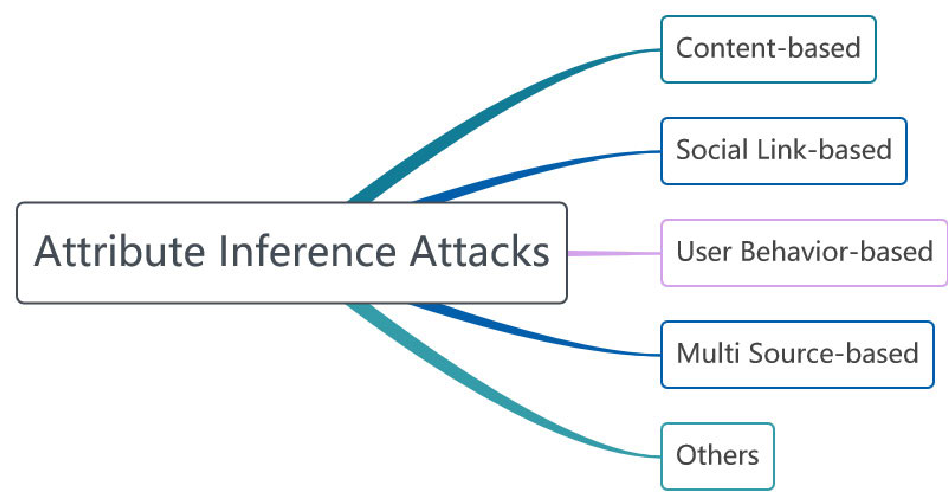 Figure 1: The hierarchical classification of how attackers segment user data.
Key Insights from 15 Years of Data
The review highlights a massive surge in research interest since 2015, mirroring the rise of Deep Learning.
- The Power of Graphs: The paper discusses the transition from simple Bayesian models to complex Graph Convolutional Networks (GCNs). These models treat the social network as a non-Euclidean space where "signals" (attributes) propagate across edges (relationships).
- Accuracy Levels: For many common datasets like Facebook and Twitter, attribute inference accuracy consistently exceeds 90% when multi-source data is used.
Table 1: Comparison of different inference approaches and their core characteristics.
Experimental Analysis: The Most Vulnerable Platforms
The researchers analyzed 90 datasets across the literature. Facebook remains the primary target due to its massive scale and diverse data types (Posts, Likes, Relationships).
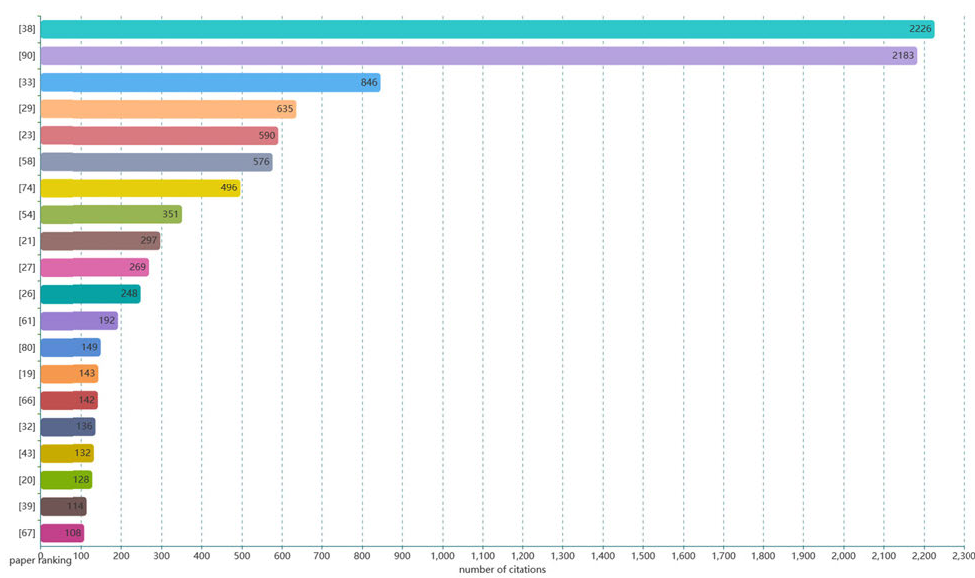 Figure 2: Distribution of datasets used in inference research, highlighting the focus on major OSN providers.
Critical Analysis & Future Outlook
The "Arms Race" is accelerating. The authors predict that future attacks will leverage Adversarial Machine Learning to bypass platform-level defenses.
Takeaway for Researchers:
- Defense Shift: Move from "Service-centric" (trusting the provider) to "Client-centric" (local obfuscation of data before it hits the cloud).
- Cross-Platform Risks: Attackers are beginning to link identities across different platforms (e.g., connecting a professional LinkedIn with a private Instagram).
Limitations: While the paper is a masterclass in taxonomy, it primarily covers "inference" rather than "active exploitation." The gap between knowing an attribute and executing a successful social engineering attack remains a fertile ground for future research.
Conclusion
Inference attacks prove that in a connected world, "privacy" is no longer a solo performance—it’s an ensemble act. This review provides the necessary foundation for the next generation of privacy-preserving social technologies.