
PIT-OSN: A Systematic Framework for Uncovering Privacy Flaws in Social Media
A Set of Privacy Inspection Techniques for Online Social Networks
This paper introduces PIT-OSN (Privacy Inspection Technique for Online Social Network), a novel set of reading-based inspection techniques designed to evaluate privacy in social media interfaces. By categorizing privacy into Levels, Controls, and Policies, PIT-OSN enables non-expert inspectors to systematically identify privacy defects, achieving effective diagnostic results on platforms like Instagram.
TL;DR
Privacy in Online Social Networks (OSN) is often compromised by poor interface design rather than user error. This paper presents PIT-OSN, a systematic inspection framework that categorizes privacy into Levels, Controls, and Policies. In testing, it allowed non-experts to identify critical flaws in Instagram, such as unauthorized info-sharing and notification failures, proving that structured human inspection is a high-value, low-cost tool for privacy-by-design.
The "Broken Window" of Social Privacy
We often blame "human error" when private photos leak or data is harvested. However, the authors argue that the root cause is often Privacy-Discrepant Interfaces. When a system’s internal privacy logic doesn't match the user's mental model, friction occurs.
The problem is that most developers evaluate privacy either through rigid automated scripts or unstructured ad hoc "gut feelings." There has been a lack of a systematic "middle ground" that guides a human evaluator through the complex social nuances of privacy.
Methodology: The PIT-OSN Architecture
The core innovation lies in the three-pillar inspection approach. Instead of a giant checklist, PIT-OSN uses "Reading Techniques"—a series of guidelines that force inspectors to reflect on the system's behavior through specific lenses.
1. PIT-OSN 1: Privacy Levels
Focuses on the visibility and reach of data.
- Dimensions: Audience, Temporal Persistence (how long does data stay?), and Information Dissemination.
- Core Question: "Can the user reach their desired level of seclusion?"
2. PIT-OSN 2: Privacy Controls
Focuses on the tools provided to the user.
- Dimensions: Data Transparency, Block Mechanisms, and Post-Mortem Digital Legacy.
- Core Question: "Does the user have adequate regulation over their boundaries?"
3. PIT-OSN 3: Privacy Policies
Focuses on the contract between the platform and the user.
- Dimensions: Data usage clarity, advertising services, and legal compliance.
- Core Question: "Is the legal guarantee clear and coherent?"
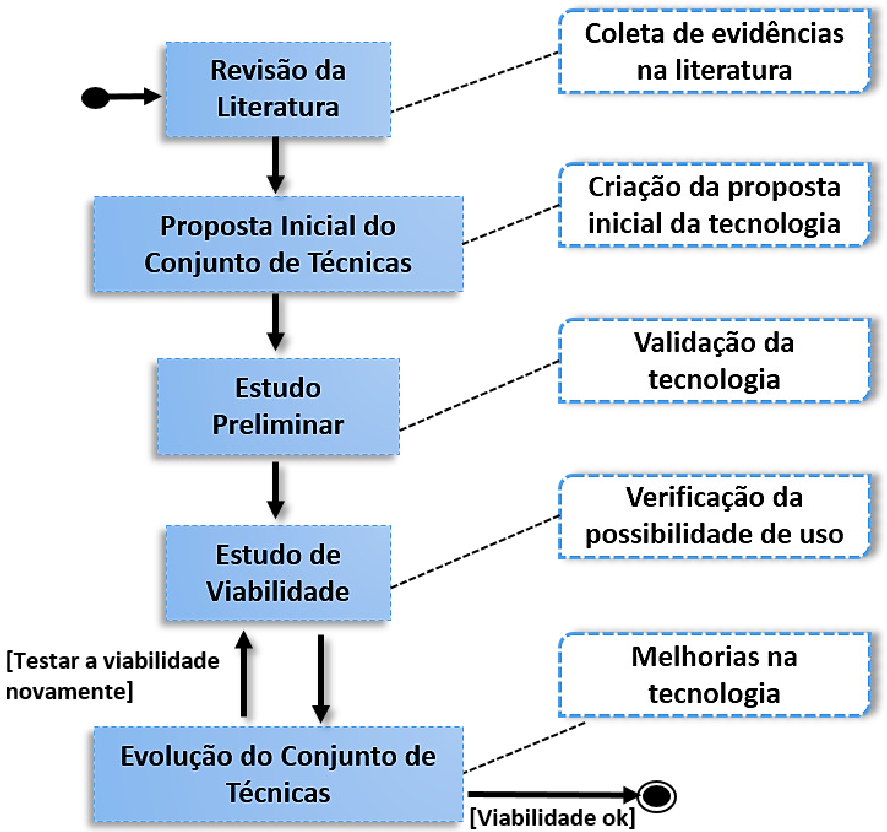 Figure 1: Overview of the PIT-OSN methodology integration.
Defect Taxonomy: Classifying the "Invisible"
To make the inspection rigorous, the authors adapted a taxonomy to classify privacy bugs:
- Omission: Missing feedback or omitted interfaces.
- Inadequacy: Ambiguous info or incorrect sections.
- Dissemination: Passive exposure (the system lets others expose you) or Undue Diffusion.
Results: Field Testing on Instagram
The researchers put PIT-OSN to the test using Instagram's mobile app. Even with non-expert inspectors, the results were revealing.
| Technique | Defects Found | Efficiency (Defects/Hr) |
|---|---|---|
| PIT-OSN 1 (Levels) | 7 | 4.07 |
| PIT-OSN 2 (Controls) | 13 | 5.12 |
| PIT-OSN 3 (Policies) | 10 | 5.68 |
Case Study - The "Direct Share" Flaw: The inspection revealed that Instagram allowed users to share someone else's post via "Direct Message" to external groups without notifying the owner. This was classified as Passive Exposure (Dissemination) and Omitted Notification (Omission).
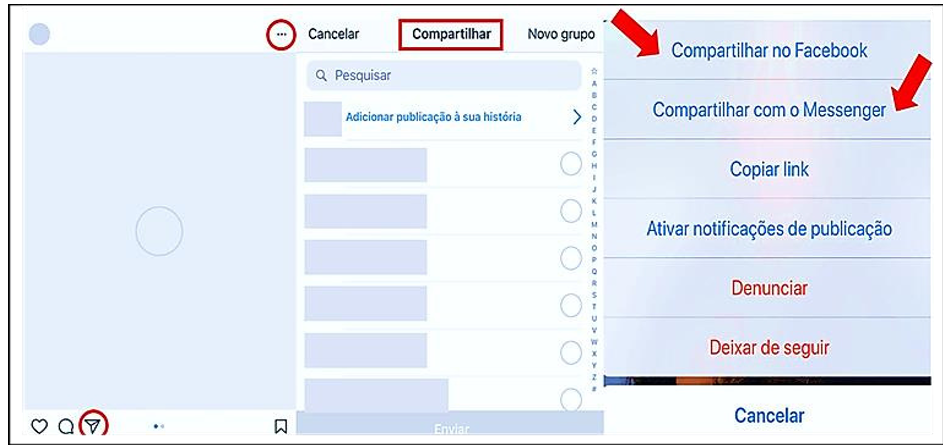 Figure 2: Real-world example of identified defects in the Instagram interface.
Critical Insight: Ease vs. Effort
While the Technology Acceptance Model (TAM) results showed that the technique was highly valued, there was a notable spike in "mental effort" for PIT-OSN 2 (Controls). This suggests that as social media features grow (stories, reels, shops), the control surface becomes so large that human inspectors need better "scaffolding" or sub-modularization to avoid cognitive overload.
Conclusion & Future Work
PIT-OSN is a vital step toward Privacy-by-Design. It bridges the gap between high-level legal requirements and low-level UI elements.
Future Outlook: The authors aim to expand this to a broader demographic and potentially integrate efficiency/efficacy coefficients to compare PIT-OSN against automated privacy scanning tools. For designers, this framework serves as both a "shield" (evaluation) and a "sword" (a guide for initial design).