
Security in Motion: Navigating Privacy in Vehicular Social Networks
Privacy-Preserving Content Dissemination for Vehicular Social Networks: Challenges and Solutions
This paper provides a comprehensive survey of privacy-preserving content dissemination in Vehicular Social Networks (VSNs). It categorizes unique VSN characteristics, identifies potential attack vectors across Onboard Units (OBUs), Road-Side Units (RSUs), and servers, and evaluates seven major technical solutions ranging from pseudonym schemes to physical layer security.
TL;DR
As vehicles become smarter and more social, the risk of private data leakage—tracking your route, your interests, or even your social circle—skyrockets. This study provides a masterclass in modern VSN security, detailing how to broadcast safety alerts without handing attackers a digital map of your life. It moves beyond simple encryption to explore trust management, physical layer tricks, and social-aware pseudonyms.
Background Positioning
In the academic coordinate system, this work serves as an essential roadmap. While traditional VANET (Vehicular Ad-hoc Network) research focused on packet delivery, this paper integrates the "human factor," situating VSNs as a specialized subset of Mobile Social Networks (MSNs) where high speed and short contact durations make traditional security protocols fail.
Problem & Motivation: The Usability vs. Privacy Paradox
Why is this so hard? In a VSN, a vehicle must be "loud" to be safe—broadcasting location, speed, and heading every few milliseconds (beacons). However, being loud makes you easy to track. Current methods often fail because:
- RSUs can be compromised: The very infrastructure meant to protect you can be turned into a surveillance tool.
- Identity vs. Persona: We need to know a message is from a "valid car" without knowing it represents "John Doe’s car."
- Dynamic Topology: You only have seconds to establish trust before the neighbor vehicle zips away.
Methodology: The Seven Pillars of VSN Defense
The paper breaks down defense into seven distinct layers. Here, we highlight the most critical architectural shifts:
1. Pseudonym Changing at Social Spots
Instead of changing IDs randomly, vehicles synchronize changes at "social spots" (like intersections or parking lots). This creates a "mix-zone" effect where an observer cannot distinguish which exiting vehicle corresponds to which entering vehicle.
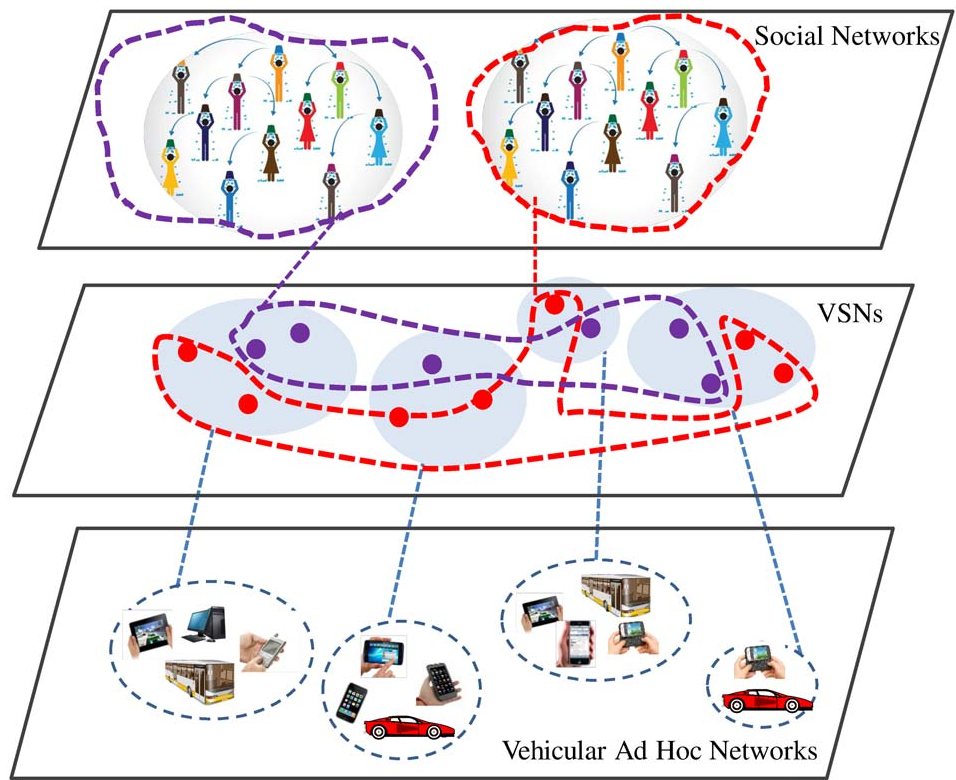 Fig 1: Modern VSN applications rely on both physical proximity and social relationships, increasing the attack surface.
2. Group and Ring Signatures
To avoid the overhead of checking individual certificates, Batch Verification allows an RSU to verify hundreds of signatures simultaneously. Ring Signatures allow a car to sign on behalf of a group, providing total anonymity within that group.
3. Physical Layer Security (PLS)
This is the "physicist’s" approach to security. By exploiting the unique noise and interference of the wireless channel, Alice (sender) and Bob (receiver) can generate a secret key that Carl (eavesdropper) cannot calculate because he is at a slightly different physical position.
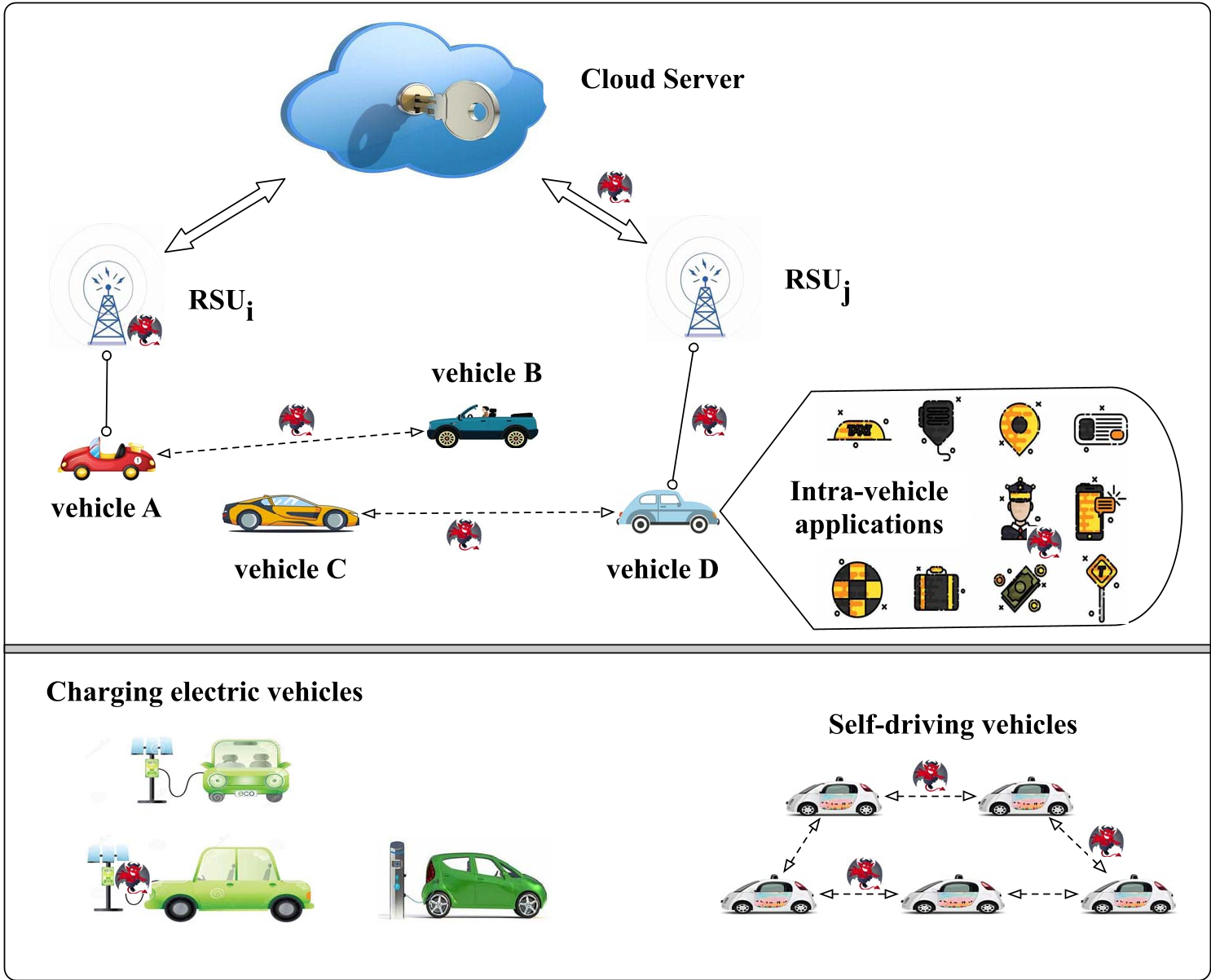 Fig 2: The complex interplay between vehicles (OBUs), infrastructure (RSUs), and the Cloud highlights multiple potential points of failure.
Experiments and Results: The Performance Benchmark
The authors provide an extensive comparison of SOTA protocols (e.g., TEAM, PBA, PTVC).
- Efficiency: Paring-free authentication schemes significantly reduce latency compared to traditional Bilinear Paring, crucial for 5G-V2X.
- Robustness: Trust-based models like ART (Attack-Resistant Trust) prove effective at filtering out malicious nodes that attempt to inject fake traffic data.
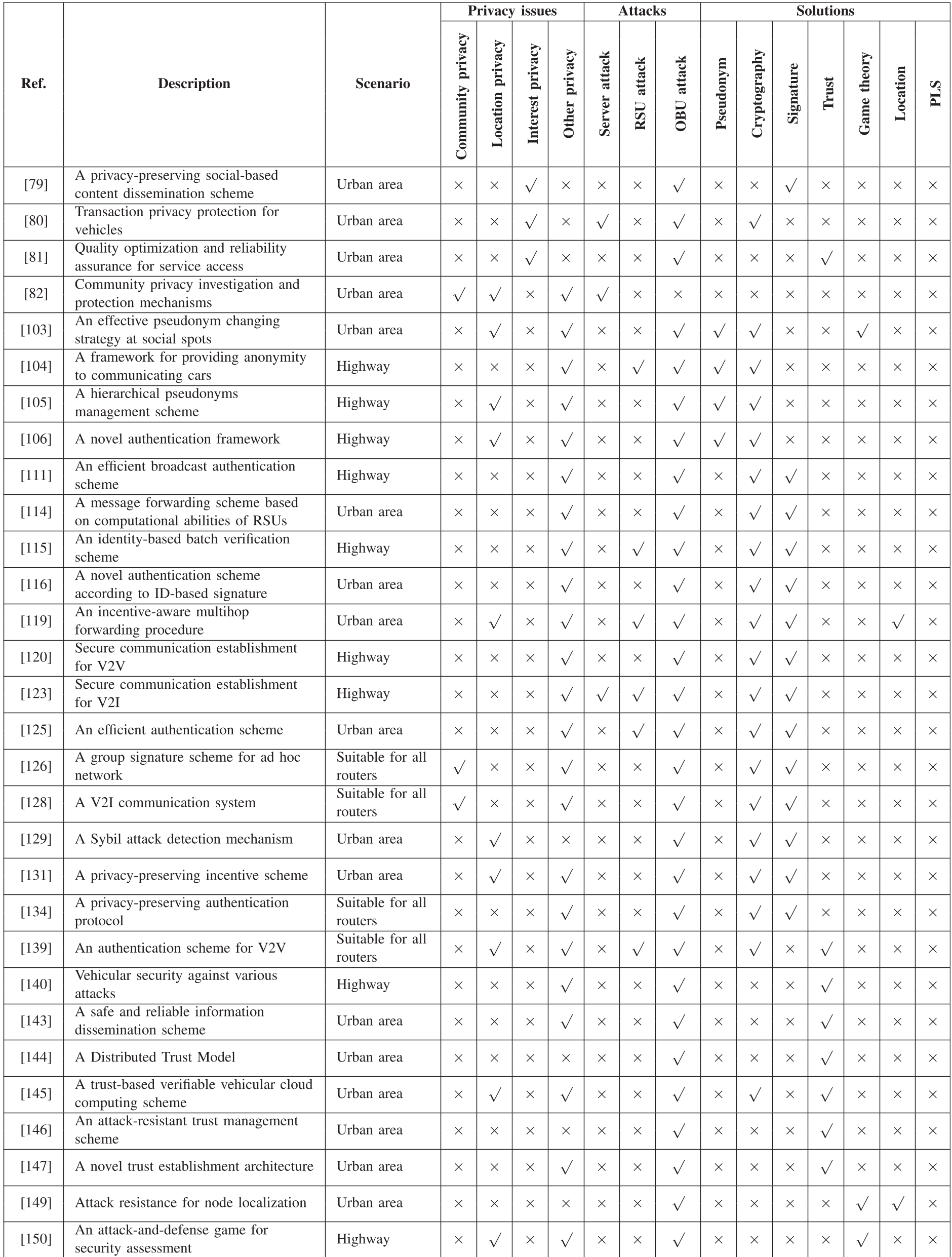 Table 1: Strategic comparison of privacy issues and solutions across different scenarios (Highway vs. Urban).
Critical Insight & Future Outlook
Takeaway: Security cannot be an afterthought in the age of Autonomous Vehicles.
- Big Data Risk: As we collect city-wide traffic data, we inadvertently create the ultimate surveillance database.
- Future Work: The authors point toward Location-Aware Routing and Secure Handover as the next frontiers. We must ensure that as a car switches from one RSU to another, its "security context" moves faster than the vehicle itself without leaking the trajectory.
Limitations: many current game-theoretic models assume "rational" attackers with full information, which might not hold true in the chaotic environment of a real-world urban traffic jam.