
Dynamic Social Ties: The Key to Intelligent Privacy in Social Networks
Towards Privacy-Preserving Content Sharing for Online Social Networks
This paper proposes a context-aware framework for privacy-preserving content sharing in Online Social Networks (OSNs) by automatically categorizing friends based on "social ties." It introduces an inference engine using Gaussian Mixture Models (GMM) and a temporal weighting mechanism to detect "friendship strength" into three tiers: Close Friends, Just Friends, and Distant Friends.
TL;DR
Social networks currently treat all "friends" with a one-size-fits-all approach, leading to unintended privacy leaks. This research introduces a framework that automatically categorizes friends into Close Friends, Just Friends, and Distant Friends by analyzing the intensity and "recentness" of interactions. By using Gaussian Mixture Models (GMM) and a temporal weighting system, the model ensures your privacy settings evolve as your real-world relationships change.
Context & Motivation: The "All Friends are Created Equal" Fallacy
In the current landscape of Facebook, X (formerly Twitter), and Instagram, once you grant someone "friend" status, they typically gain broad access to your shared content. However, social science (notably Granovetter’s "Strength of Weak Ties") tells us that human relationships are hierarchical.
Existing privacy research focuses on blocking third-party apps or strangers. This paper addresses the internal privacy gap: how to prevent sensitive content from being seen by "Distant Friends" (e.g., a former colleague or a casual acquaintance) without manually managing complex "custom lists" every time you post.
Methodology: Quantifying the "Vibe" of a Relationship
The core insight is that communication intensity is the best predictor of a social tie. The authors break this down into a multi-stage Inference Engine.
1. The Inference Engine
Using a Bayesian approach, the system calculates the probability of a friend belonging to a specific group () based on observed attributes ().
By assuming a Gaussian distribution for these attributes (like frequency of messages or likes), the model can cluster friends into the three predefined categories using the Expectation-Maximization (EM) method.
2. The Recentness Factor: Why "Last Month" Matters More Than "Last Year"
Relationships are dynamic. A "Close Friend" from college might become a "Distant Friend" five years later. To capture this, the authors propose a Recent Friendship Detection block.
 Figure 1: The overarching architecture showing how interaction attributes are weighted and fed into the clustering engine.
The paper introduces an algorithm to detect significant changes in patterns using Hellinger distances. If the "shape" of interaction changes over multiple periods, the system shifts its focus. They apply a Sigmoid weight function (see below) to ensure that the user's current social context dictates their privacy settings.
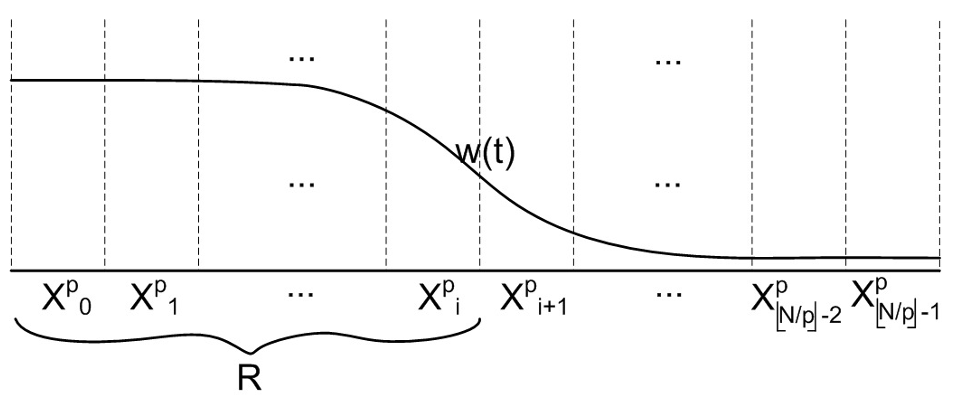 Figure 2: Applying a sigmoid function to decay the influence of older interaction data.
Technical Deep Dive: Pattern Recognition
The authors improve upon previous frameworks by handling "gradual changes." Instead of only detecting abrupt spikes in communication, their updated algorithm (Algo 2) monitors Hellinger distances across adjacent segments to identify trends that evolve slowly over several months.
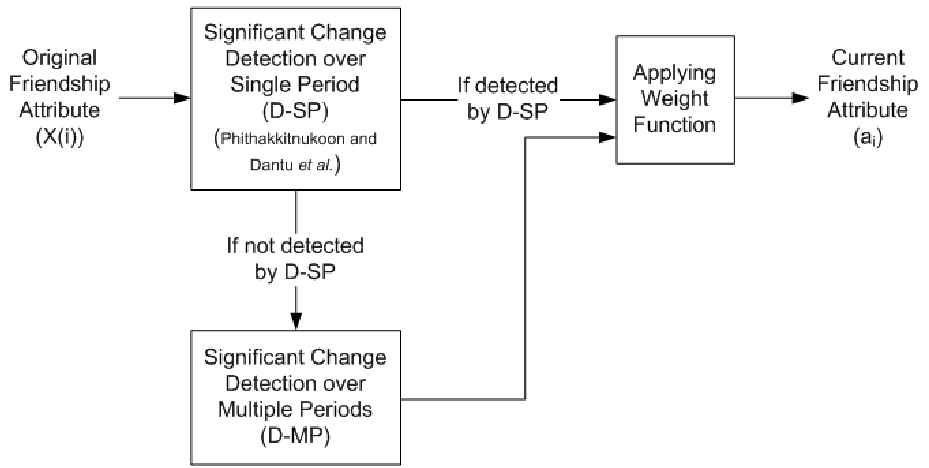 Figure 3: Detailed view of the Recent Friendship Detection Model.
Critical Insight: Beyond Content Blocking
The true value of this work lies in its Inductive Bias: it assumes that our digital interactions are a faithful mirror of our social intimacy. While this is generally true, the paper's reliance on "intensity" might overlook "silent" close friends (those we care about but rarely message). However, as a baseline for automated privacy, it is a significant step away from the manual chore of tagging friends.
Conclusion & Future Outlook
This work provides a robust mathematical foundation for Contextual Privacy. By automating the categorization of friends, OSNs can move toward a "Privacy by Design" model where sharing sensitive data is inherently restricted to those with whom we share the strongest social ties. The next step for this research involves large-scale validation against real-world user feedback to fine-tune the GMM parameters.
Takeaway: Future social apps won't ask "Who do you want to share this with?" Instead, they will already know who your "Close Friends" are based on your recent digital footprint.