
PBCN: Balancing Privacy and Utility in Social Networks via Differential Privacy and Clustering
Privacy-Preserving Approach PBCN in Social Network With Differential Privacy
The paper proposes PBCN (Privacy Preserving Approach Based on Clustering and Noise), a non-interactive differential privacy framework for social network graphs. It integrates K-means clustering, Laplace noise mechanisms, and Havel-Hakimi graph reconstruction to defend against degree and structural attacks while maintaining high data utility and computational efficiency.
TL;DR
In the era of massive social connectivity, releasing graph data without leaking sensitive relationships is a major challenge. PBCN (Privacy Preserving Approach Based on Clustering and Noise) offers a specialized differential privacy framework that uses node-degree clustering and the Havel-Hakimi theorem to reconstruct graphs. Compared to existing methods, PBCN is significantly faster and preserves the graph's "physical" profile (like triangles and paths) much more effectively.
Background: The Graph Privacy Dilemma
Publishing social network graphs is a double-edged sword. Researchers need the data for sociological and technical analysis, but attackers can use background knowledge—such as a target's degree or their neighbor's connections—to de-anonymize individuals.
Existing solutions typically fall into two categories:
- Anonymization (k-anonymity): Often collapses under structural attacks.
- Random Perturbation: Either ruins data utility (adding too much noise) or has massive computational complexity (processing large adjacency matrices).
PBCN targets this gap by asking: Can we add noise intelligently by grouping similar nodes first?
Methodology: The Five-Stage PBCN Pipeline
The core insight of PBCN is that Sensitivity—the key parameter in Differential Privacy—can be managed more efficiently if we work on degree sequences rather than the raw adjacency matrix.
1. Group Construction (K-Means)
Instead of treating all nodes equally, PBCN uses K-means to cluster nodes with similar degrees. This limits the "influence" a single node change has on the overall group, lowering the sensitivity for noise addition.
2. Pre-processing & Noise Allocation
The algorithm adds Laplace noise in two phases:
- Edge Shuffling: Randomly swaps edges based on group labels.
- Degree Perturbation: Adds noise to the degree sequence of each group directly.
3. Graph Reconstruction (The Havel Theorem)
This is the "secret sauce." Once the degree sequence is perturbed, the paper uses the Havel Theorem to build a brand-new graph that matches this noisy sequence. This ensures the output is a valid, simple undirected graph.
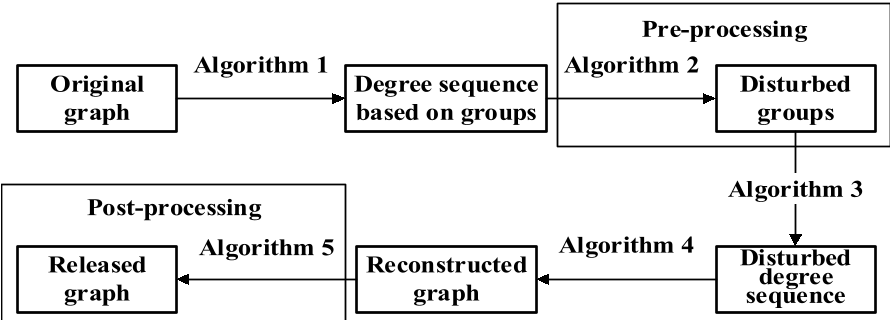 Figure 1: The PBCN operational flow, from clustering to final node-level post-processing.
Experiments: Performance & Utility
The researchers compared PBCN against several baselines: Spctr Switch/Add/Del, DER, and HPDP.
Execution Efficiency
A standout result is the running time. Because PBCN operates primarily on degree arrays rather than calculating expensive eigenvalues or performing deep greedy searches, its execution time remains nearly flat even as the number of edges grows.
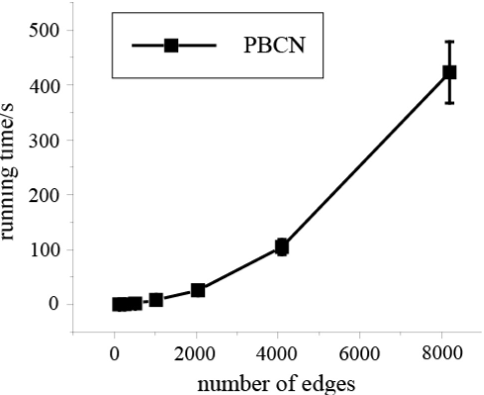 Figure 2: Performance analysis showing PBCN's efficiency advantage over DER and Spectral methods.
Data Utility (The Accuracy of the "Noisy" Graph)
Under a uniform Privacy Protection Level (P)—a metric proposed by the authors based on adjacency degree—PBCN retains structural integrity better than DER. While DER tends to "densify" the graph (adding too many edges), PBCN keeps the degree distribution and the number of triangles much closer to the original signal.
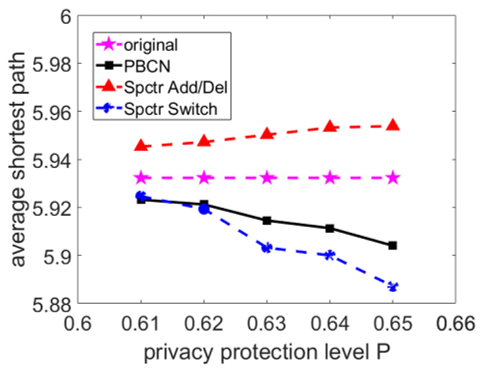 Figure 3: Degree distribution comparison. PBCN (red) follows the original power-law curve much more closely than DER (blue).
Critical Analysis & Takeaways
The brilliance of PBCN lies in its hybrid approach. By using clustering to reduce local sensitivity and the Havel-Hakimi theorem to ensure graph validity, it bypasses the "Utility-Privacy-Complexity" triangle that hampers most SOTA models.
Limitations:
- Parameter Tuning: The method requires careful selection of (groups), (disturbances), and (budget). The authors provide a utility analysis, but automated parameter optimization is still a "Future Work" item.
- Undirected Constraint: Currently optimized for undirected graphs; social networks with directed relationships (like Twitter follows) may require modifications to the reconstruction logic.
Conclusion
PBCN represents a significant step toward practical, large-scale privacy preservation for social graphs. It proves that we don't have to sacrifice our data's structural "soul" to keep our users' identities safe.