
Architecting Privacy: The Role of Trusted Brokers in Social Mobile Ecosystems
Privacy Preserving Social Mobile Applications
The paper proposes a centralized middleware architecture featuring a Trusted Broker to enable privacy-preserving social mobile applications. By mediating interactions between users, social networks, and untrusted service providers, the system facilitates complex tasks like targeted advertising and shared payments while maintaining strict control over user identity and location context.
TL;DR
This research addresses the tension between the "Social Mobile" experience and personal privacy. By introducing a Trusted Broker architecture, the authors allow users to engage in socially-driven activities—such as recommending ads for rewards or requesting emergency funds from friends—without ever exposing their social graph or real-time location to untrusted third-party service providers.
Background & Motivation: The Privacy Paradox
We live in an era where "context is king." For a mobile service to be useful, it needs to know where you are and who you know. However, the current landscape is a privacy nightmare. If Alice wants to recommend a store to her friend Bob, the store often ends up knowing who Bob is, where Bob is, and the nature of his relationship with Alice.
The authors identify two core pain points:
- Management Burden: Users are overwhelmed by maintaining separate associations and privacy settings across dozens of apps.
- Information Leakage: Sharing context with untrusted providers (merchants, advertisers) leads to spam or profiling.
Methodology: The Broker as a Privacy Shield
The "magic" of this system lies in the Trusted Broker. Instead of a direct User-to-Provider link, the broker sits in the middle as a sophisticated relay.
1. Unified Mobile Identity
The broker maintains a "Federated Identity." It knows you are Alice on Facebook, User #123 at the Bank, and Customer A at a pharmacy. Because the broker is a trusted entity (like a Telecom operator), it handles the "translation" of these identities.
2. Multi-Domain Policy Enforcement
One of the most innovative parts of the paper is how it handles conflicting rules. Alice might have one set of privacy rules on her phone, while Facebook has another. The Policy Broker (PB) reconciles these using two modes:
- Conjunction Mode: Decisions from multiple domains are "AND-ed" together (the most restrictive rule wins).
- Dynamic Configuration: A single Policy Decision Point (PDP) is given temporary access to state info from all domains to make a holistic choice.
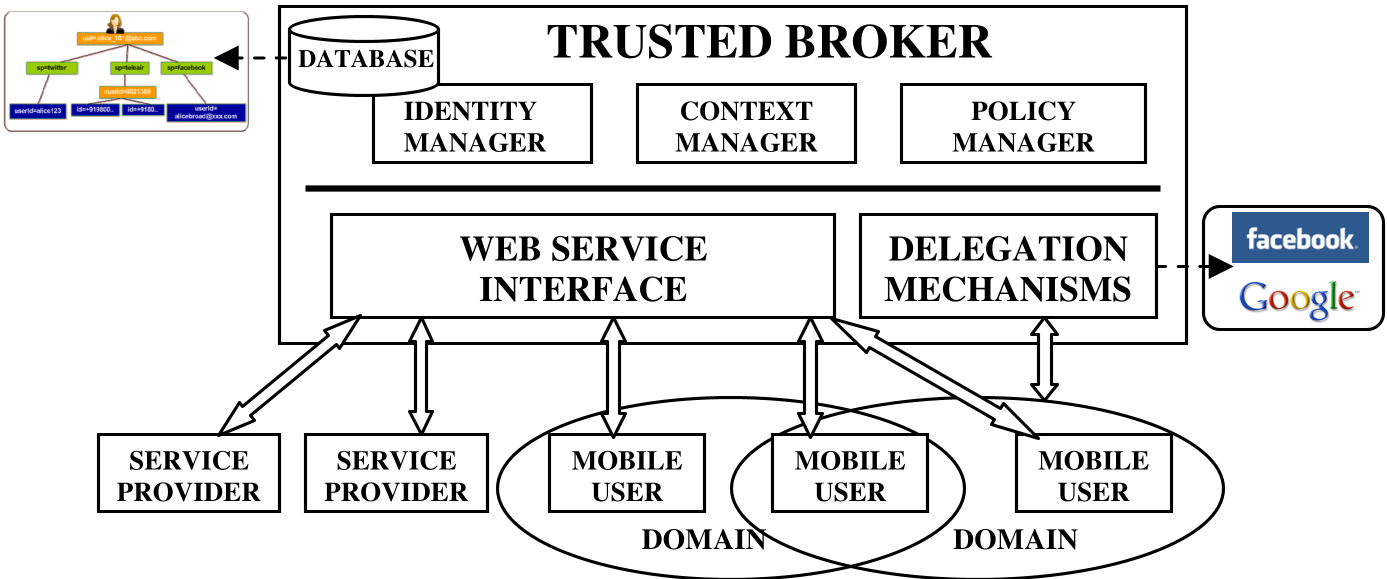 Figure 1: The functional diagram of the broker-based infrastructure.
Real-World Prototypes
The authors didn't just theorize; they built two practical applications on Android:
Social Advertising
Alice registers with a store. The store sends an ad to the Broker. The Broker checks Alice’s friends list via OAuth, checks their locations, and only sends the ad to Bob (who is nearby) while respecting Jack's "Do Not Disturb" policy. The store never knows Bob or Jack exist until they actually walk into the shop.
Shared Payments
Imagine Alice is at a checkout and her card is declined. The Broker can automatically query a pre-approved list of Alice's friends to ask for a small micro-loan.
- Privacy Win: Alice doesn't see her friends' bank balances.
- Privacy Win: The friends don't see Alice’s full purchase history.
- Privacy Win: The Merchant only sees that the "total amount" was paid.
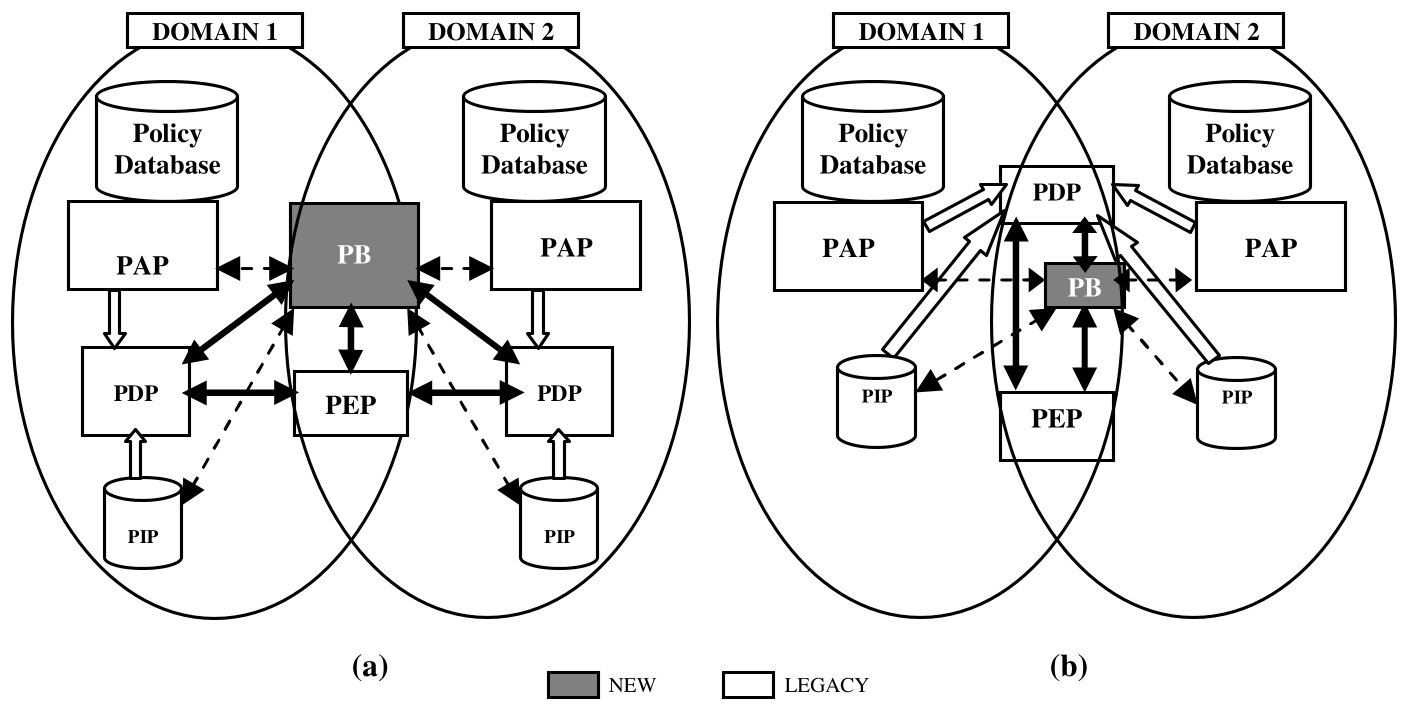 Figure 2: Multi-domain policy management workflow.
Critical Analysis & Conclusion
The "Trust" Elephant in the Room
The system's Achilles' heel is the Broker itself. While it protects you from the Merchant, you are giving everything to the Broker. The authors argue that a large Telecom or a company like Google is already "too big to fail" legally and has the infrastructure to be held accountable, which is a safer bet than thousands of small, unregulated app developers.
Takeaway
The paper effectively demonstrates that intermediation is not just about efficiency—it's about privacy. By centralizing trust in a "Policy Broker," we can finally enjoy social/location-aware features without the "creepy" side effects of modern surveillance capitalism.
Future Outlook
The next step for this research involves distributed brokers. Instead of one giant entity, could a network of interoperable brokers (using a Trust Framework like OpenID) provide the same benefits without a single point of failure? That is the frontier of the next generation of social mobile middleware.