
Privacy-Preserving Social Recommendations: Harmonizing Friendships and Business Interests
Privacy-preserving social recommendations in geosocial networks
The paper introduces a privacy-preserving framework for social recommendations in Geosocial Networks (GSNs). It leverages homomorphic encryption and Private Set Intersection Cardinality (PSI-CA) to allow Service Providers (SPs) to generate accurate Point-of-Interest (POI) recommendations without learning users' social relations or exposing proprietary rating algorithms.
TL;DR
This research tackles the conflict between the utility of social recommendations (like Foursquare's "where your friends go") and the privacy of our social ties. By combining Homomorphic Encryption with Private Set Intersection, the authors enable a system where the Service Provider (SP) recommends venues without ever knowing who your friends are, while simultaneously protecting the SP’s proprietary rating data.
The Core Conflict: Recommendation Power vs. Relation Privacy
Social recommendations are powerful because they mirror real-world trust: you’re more likely to visit a restaurant your friend liked than one suggested by a stranger. However, sharing your "friend list" with an SP is risky. Data leaks can expose sensitive associations, and in certain political climates, social graphs can be weaponized.
Existing solutions often trade off accuracy for privacy or ignore the Business Interests of the SP. An SP won't adopt a privacy system if it means giving away its "secret sauce"—the proprietary algorithms used to compute user ratings at venues.
Methodology: The Privacy-Preserving Framework
The paper proposes a local-first approach to social management. Instead of the SP holding the social graph, users manage their friends locally on their devices.
1. Computing Social Influence Privately
To determine how much "weight" a friend's opinion should have, the system calculates social influence based on common friends and common venues visited. To do this without leaking the friend list to the SP or even to other friends, the authors use Private Set Intersection Cardinality (PSI-CA).
2. Homomorphic Social Ratings
This is where the SP's business interests are protected. The SP sends encrypted ratings to the user. Because the encryption is additive homomorphically, the user can calculate their aggregated "social rating" for a venue without ever seeing the raw scores or revealing their friendship ties.
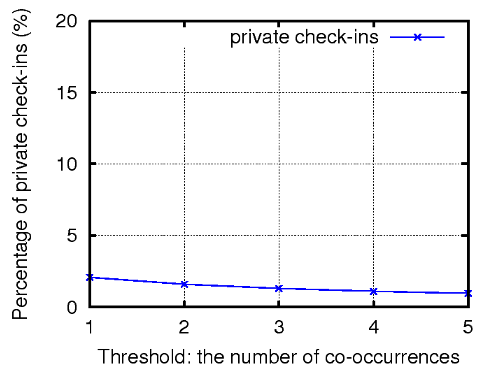 Figure 1 & 2: Evaluation of modular multiplication and exponentiation on a smartphone, proving the feasibility of local crypto computation.
3. Defending Against Location Inference
Even if the social graph is hidden, an SP could observe that Alice and Bob check in at the same "private venue" (like Alice's home) or consistently hang out at the same bars at the same time. The authors identify three Inference Attacks:
- Private-venue attacks
- Co-occurrence attacks
- Shared venue feature attacks
The defense? Private Check-ins. When a user detects they might exceed a "co-occurrence threshold," they encrypt the venue information using a "Friendship Key." The SP still logs the check-in (maintaining its database size) but cannot see where it happened.
Experimental Validation
Using the Gowalla dataset (57k users, 1.8M check-ins), the authors proved that the "privacy tax" is surprisingly low:
- Performance: High precision in friendship detection by SP is possible with just 2+ co-occurrences.
- Utility: Encrypting these risky check-ins (only ~1.6% of total data) results in a negligible drop in recommendation accuracy (<0.4%).
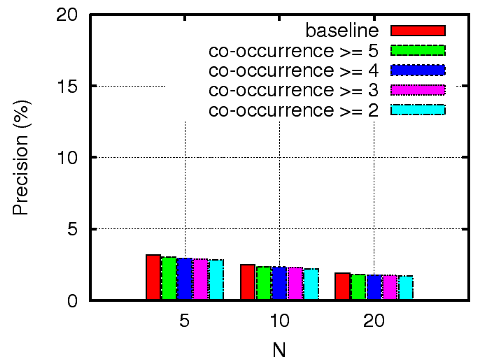 Figure 5 & 6: The impact of private check-ins on Precision and Recall is minimal, showing that privacy doesn't have to break the system.
Critical Insight & Conclusion
The genius of this paper lies in its pragmatism. By acknowledging that SPs are "honest-but-curious" and business-driven, the authors designed a protocol that is likely to be adopted in the real world.
However, there are limitations. The approach relies on a Mix Network for anonymous communication; if the anonymity layer is compromised, the SP can still link requests to specific users. Furthermore, as smartphones become more powerful, the "local computation" barrier vanishes, making this decentralized architecture a viable standard for future privacy-first social networks.