
Verifiable Graph Intersection: Balancing Privacy and Truth in Social Networks
Privacy-Preserving Verifiable Graph Intersection Scheme With Cryptographic Accumulators in Social Networks
This paper introduces a Privacy-Preserving Verifiable Graph Intersection (PPVGI) scheme designed for social networks, leveraging cryptographic accumulators and homomorphic encryption. The method enables a third-party cloud server to compute graph intersections while ensuring data confidentiality and providing a mechanism for requesters to verify result correctness, achieving a secure delegatable computation framework.
TL;DR
As social networks grow increasingly complex, the need to find "common connections" without revealing private friend lists has become a critical challenge. This paper proposes a robust framework that allows an untrusted Cloud Server to compute graph intersections. By combining ElGamal Homomorphic Encryption and Bilinear-map Accumulators, the system ensures that the cloud learns nothing about the social graph, and the requester can mathematically verify that the result is 100% accurate.
Background: The Trust Gap in Cloud Computing
In the Social Internet of Things (SIoT), devices and users represent their relationships as graphs. Finding commonalities (Graph Intersection) is essential for recommendation engines and social discovery. However, two major hurdles exist:
- Privacy: Users don't want to expose their entire contact list to the cloud or each other.
- Verifiability: An "untrusted" or "lazy" cloud server might return a partial result or a random graph to save resources.
While prior works addressed privacy through anonymization, they lacked a mechanism for integrity verification—the ability for a user to call out a cheating server.
Methodology: The "Trust but Verify" Architecture
The proposed scheme relies on a four-entity model: the Requester (R), Data Owners (Di), the Cloud Server (CS), and a Trust Authority (TA).
1. Privacy through Multi-layered Encryption
To hide the nature of the vertices and edges, the authors employ:
- Keyed Hash Functions: Vertex identities are hashed using a secret key known only to owners and the requester.
- ElGamal Encryption: Adjacency matrices (edges) are encrypted. Thanks to ElGamal's multiplicative homomorphic property, the cloud can "multiply" the encrypted matrices to find the intersection of edges without ever seeing the raw data (1s and 0s).
2. Verifiability through Cryptographic Accumulators
This is the "secret sauce." A Bilinear-map Accumulator creates a short cryptographic "digest" of a set.
- Subset Proof: The cloud provides a witness to prove that every element in the intersection actually exists in the original graphs.
- Completeness Proof: Using the extended Euclidean algorithm, the cloud proves that no common elements were omitted.
 Fig 1: The proposed system architecture showing the flow from Data Owners to the Cloud Server and finally to the Requester.
Performance and SOTA Comparison
The authors compared their work against existing protocols like those by Chang et al. and Zhou et al. The primary differentiator is that this scheme is the first to achieve Privacy, Authentication, Integrity, and Verifiability in a single graph intersection package.
Experimental Insights
- Verification Efficiency: One of the biggest wins is the low burden on the requester. Even if there are 500 data owners, the verification process takes less than 20 seconds.
- The Cost of Privacy: The encryption phase at the Data Owner side is quite heavy. For a graph with 1,000 vertices, the ELGamal encryption process takes nearly 1,500 seconds, suggesting that this method is best suited for applications where data is updated infrequently but queried often.
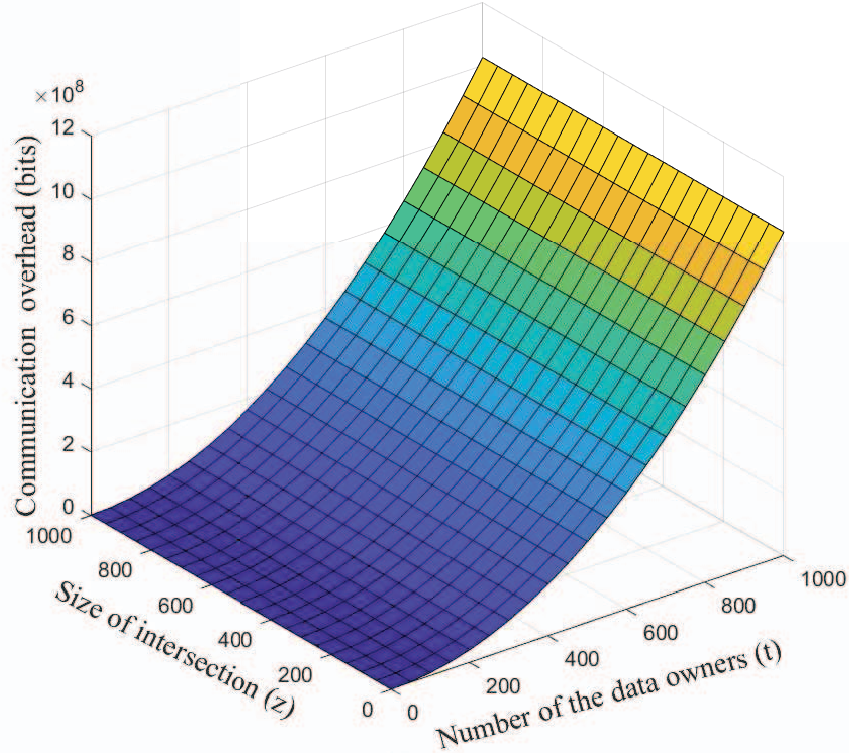 Fig 2: Computational cost trends. Note how the verification cost is manageable even as the number of data owners increases.
Deep Insight: Why Does This Matter?
The move from simple "Set Intersection" to "Graph Intersection" is non-trivial. Graphs contain topological information (who is connected to whom). By treating the edges as a homomorphic matrix and the vertices as an accumulated set, the authors bridge the gap between Boolean logic (is it an intersection?) and Graph Theory (is the structure preserved?).
Critical Analysis & Conclusion
Strengths:
- Provides a formal mathematical proof of correctness.
- Resists "Lazy Server" attacks where the cloud tries to bypass computation.
- Ensures that even if the CS is compromised, user privacy remains intact.
Limitations:
- Computation Bottleneck: The complexity of matrix encryption makes it difficult to scale to massive social networks (like Facebook's global graph) without massive parallelization.
- Dummy Sets: While the use of dummy sets prevents the cloud from guessing graph sizes, it adds some communication overhead.
Future Outlook: This research highlights the potential for Verifiable Outsourced Computation. Future iterations might seek to replace standard ElGamal with more efficient Fully Homomorphic Encryption (FHE) schemes or Zero-Knowledge Proofs (ZKPs) to further reduce the signature and verification time.